Iranian missile and drone strikes: Which countries have been targeted the most?
Escalating tensions across the Middle East have drawn renewed attention to the scale and reach of Iran’s missile and drone operations in the region.
Escalating tensions across the Middle East have drawn renewed attention to the scale and reach of Iran’s missile and drone operations in the region.
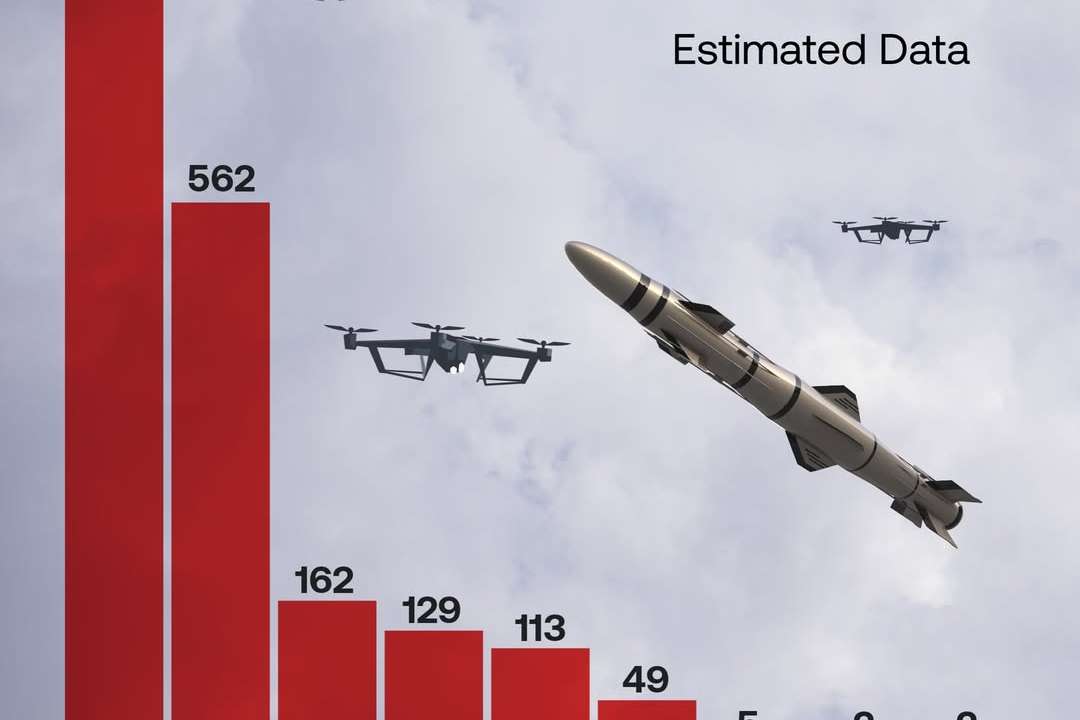
According to estimated figures cited by the Institute for National Security Studies (INSS), the United Arab Emirates (UAE) and Kuwait have faced the highest number of Iranian missile or drone targets, followed by Qatar, Bahrain and Israel. The data reflects how the regional conflict increasingly involves countries hosting foreign military bases or strategic infrastructure.
The INSS estimates suggest that the UAE has been the most targeted country, with around 863 incidents, followed by Kuwait with 562.
Both countries host major US military facilities and play critical roles in regional logistics and defence cooperation. The UAE is home to Al Dhafra Air Base, which hosts US and allied forces, while Kuwait serves as a key staging hub for US operations in the Middle East.
RECOMMENDED FOR YOU

Israelis rally against Netanyahu government ahead of October election
According to The Guardian, Iran and its allies have increasingly relied on drones and ballistic missiles in recent years because they are cheaper, harder to intercept and capable of reaching targets across the region.
The INSS data also indicates that Qatar and Bahrain have experienced significant numbers of missile and drone targets, with 162 and 129 incidents, respectively.
Both countries host major US military installations. Qatar’s Al Udeid Air Base is the largest US military base in the Middle East, while Bahrain hosts the headquarters of the US Navy’s Fifth Fleet.
Because of their strategic importance, these locations are often viewed as potential targets during periods of regional escalation.
Israel is also listed among the countries affected, with an estimated 113 missile and drone targets.
The country has long been a central actor in regional tensions involving Iran and Iranian-backed groups. Iran has repeatedly denied directly targeting Israel in some incidents, while Israel has accused Tehran of orchestrating attacks through allied groups across the region.
Other neighbouring countries, including Jordan, Cyprus, Oman and Saudi Arabia, appear in the data with lower numbers of incidents.
Experts say unmanned aerial vehicles (UAVs) have become a defining feature of modern Middle Eastern conflicts.
RECOMMENDED FOR YOU
Asia produces the largest share of global GDP
According to Al Jazeera, Iran has significantly expanded its drone programme in recent years, developing systems capable of long-range strikes and supplying similar technology to allied groups across the region.
“Iran’s military strategy is derived from its political structure. Their political aim is to safeguard their own territorial integrity and stop foreign intervention targeted at overthrowing their rule,” a military specialist and former defence official, speaking to Al Jazeera on condition of anonymity, said.
These drones, including models such as the Shahed series, have been used in conflicts across the Middle East and beyond.
Analysts say the relatively low cost of drones compared with conventional missiles makes them attractive for asymmetric warfare.