Iraq holds first local elections in a decade, 41% turnout
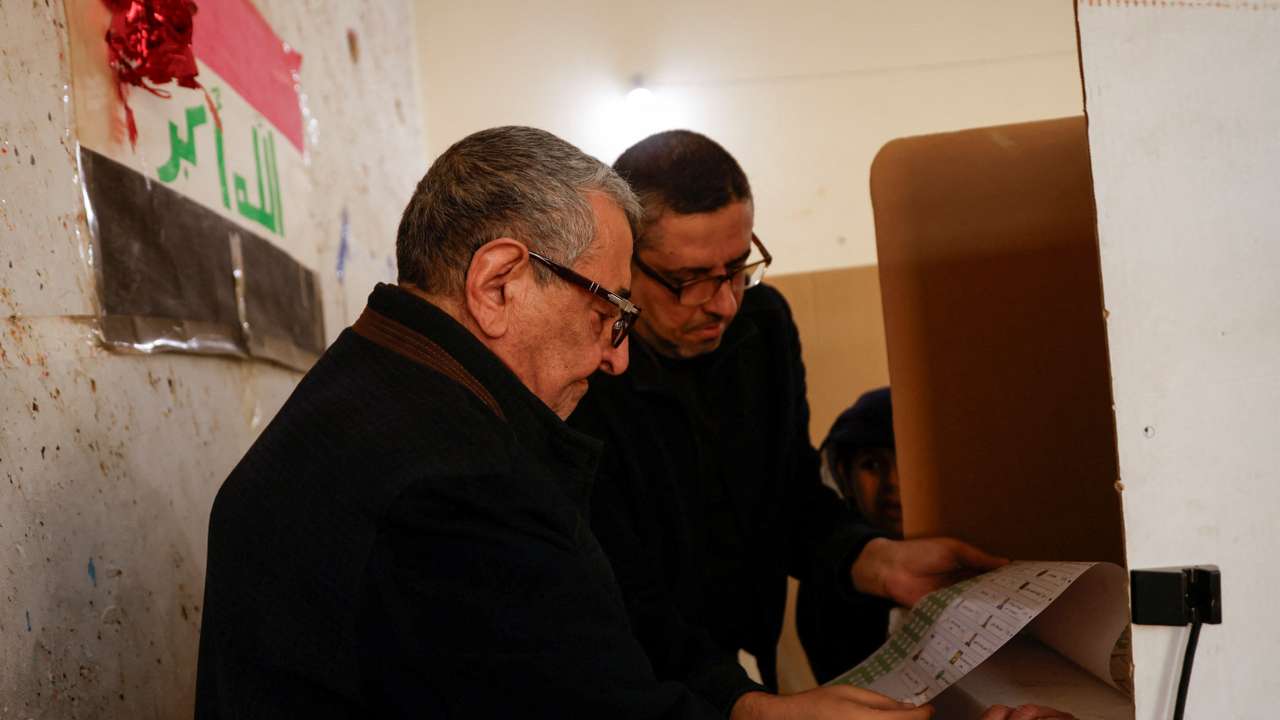
Iraq holds first local elections in a decade, 41% turnout
By Ahmed Rasheed and Timour Azhari
Around 41% of eligible voters cast ballots in Iraq's first local elections in a decade on Monday, state media said, in a vote where the ruling Shi'ite Muslim alliance is expected to extend its hold on power amid a boycott by their main political rival.
The election is seen as an indicator of the balance of power in a country where groups close to Iran have steadily gained influence, as well as being a test of Iraq's young democracy installed by the U.S. after the toppling of Saddam Hussein in 2003. It comes ahead of a 2025 general election.
RECOMMENDED FOR YOU
A wake-up call: The countdown for Latin American democracy — Opinion
Around 6.6 million voters cast ballots out of more than 16.1 million who were eligible, state media reported Monday evening, ahead of the announcement of preliminary results on Tuesday.
Voter turnout closely matched that of the 2021 parliamentary vote, also 41%.
Apathy has increased among a young population that feels it has not seen the benefits of Iraq's massive oil wealth, much of which is misdirected or stolen in a country ranked among the world's most corrupt.
Senior politicians had called for a high turnout after casting their votes at a plush centre in one of Baghdad's finest hotels.
Preparing a cup of sweet tea by his kiosk near a polling centre in central Baghdad, Ali Aswad, 39, said voting was a waste of time.
"I won't vote any more. They have been telling us democracy will help improve our lives but nothing happened," he said.
"Elections are a competition of words without actions and democracy is a big lie."
Some voters, however, retain faith in the system.
RECOMMENDED FOR YOU

New Asia Forum: Indonesia to set out progress on sustainable AI data centres
"I have never missed a chance to vote since 2005 because I believe in change," said Aqeel al-Assadi, a 58-year-old high school headmaster. "One day democracy will be served; if not for us, then for our children."
Local elections last took place in 2013. They were postponed because of a war against Islamic State militants who took over large parts of Iraq but were eventually defeated.
Security in the country has improved and public focus has shifted to decrepit government services, high unemployment and rampant corruption - issues at the heart of 2019 mass protests that were violently suppressed by security forces.
Observers were closely watching the oil city of Kirkuk, where elections are taking place for the first time since 2005 and tensions between communities and ethnic groups - including Kurds, Arabs and Turkmen - recently escalated into deadly violence.
The vote passed with no major security incident.
GROWING POWER
A boycott by populist cleric Moqtada Sadr means that his Shi'ite rivals are likely to take control of most local councils, especially in the mainly Shi'ite southern provinces.
This would further consolidate the power of the ruling Shi'ite alliance, which is close to Iran and known as the Coordination Framework, via access to state oil wealth that can be spent on local projects and services.
RECOMMENDED FOR YOU

Are universities failing us? Global South Thinkers LIVE
The alliance forms the single-largest bloc in parliament after members of Sadr's party withdrew.
Sadr, a populist who has positioned himself as a staunch opponent of Iran and the United States, has said the elections would reinforce the dominance of a corrupt political class.
Voting took place in 15 of Iraq's 18 provinces to select 285 council members who appoint powerful provincial governors and oversee local administration.
Members of the Shi'ite alliance, including former Prime Minister Nouri al-Maliki and Iran-backed groups with armed wings, competed on several lists but have said they will rule together.
The country's two most powerful Sunni Muslim leaders, ousted parliament speaker Mohammed Halbousi and business mogul Khamees Khanjar, ran together.
Sajad Jiyad, an Iraqi analyst and fellow at The Century Foundation think tank, said low voter turnout was not a threat to political parties, many of whom also retained armed wings and had deep interest in the state.
"The political elite are not too fussed, they are not too concerned," he said.
"(Among the public) there is a sense that election results don't really matter because, in the end, it's the same faces who will ultimately dominate politics."
RECOMMENDED FOR YOU
Africa's not boring enough. And it's definitely not 'mineral rich': Bright Simons
This article was produced by Reuters news agency. It has not been edited by Global South World.