Japanese, Italian, and Chinese lead as Australia’s top school languages
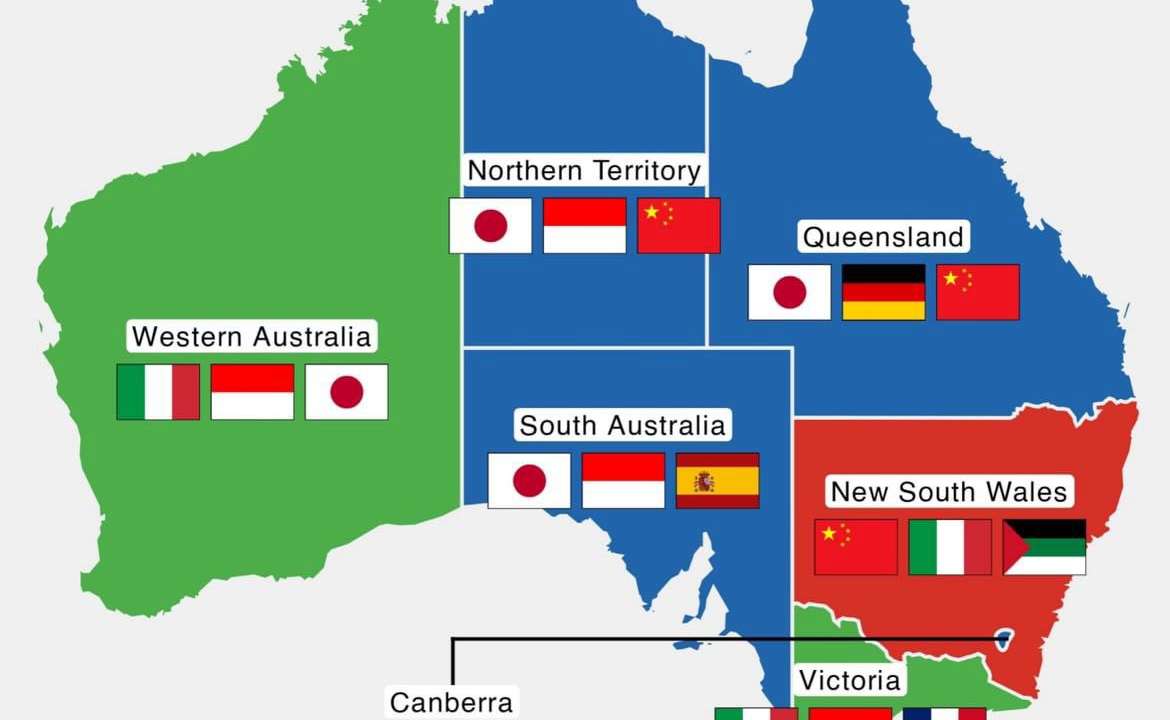
From Tokyo to Milan, classrooms across Australia reflect the country’s global connections. A newly-released infographic reveals that in several states and territories, the top three languages taught in schools are as diverse as the country itself, led by Japanese, Chinese, Italian, German and Spanish.
For example, in Queensland the top trio includes Japanese, German and Chinese, while in Western Australia it’s Italian, Indonesian and Japanese. In Victoria, Italian leads the way, with Indonesian and French close behind. These patterns underscore how the Australian Curriculum, Assessment and Reporting Authority language courses mesh with migration, trade and community language trends.
Official data shows this mix of modern priorities and tradition: while over 20 languages are taught in Australian primary and secondary schools, Chinese (Mandarin), Italian, Japanese, Indonesian, French, German, Spanish and Auslan remain the most common picks.
At the same time, studies reveal that participation in government-priority Asian languages such as Chinese, Japanese and Indonesian has declined in recent years — for instance, one 2024 study found that enrolment in these dropped from 4.25 % of HSC students in 2001 to 3.43 % in 2021.
RECOMMENDED FOR YOU

France split into three nearly equal populations shows how unevenly the country is settled
So what’s driving the state-by-state differences? Several factors like the strength of local migrant communities (Italian in Victoria, Indonesian in WA), the links schools maintain with trade partners (Japan and China), and state education policy.
The Australian Curriculum explicitly encourages students to learn another language alongside English, citing expanded cultural, social and employment opportunities.
Current global trends add urgency to these choices. With Australia aiming to deepen trade and diplomatic ties across Asia and Europe, knowing Japanese or Mandarin is more than cultural; it’s strategic.
At the same time, community languages such as Italian or German continue to thrive in regions with strong heritage linkages. Notably, Australia’s Prime Minister Anthony Albanese, in April this year, committed A$25 million to support 600 community-language schools teaching more than 84 languages nationwide.
This story is written and edited by the Global South World team, you can contact us here.