Jordan's King Abdullah appoints U.S.-educated technocrat as PM, royal court says
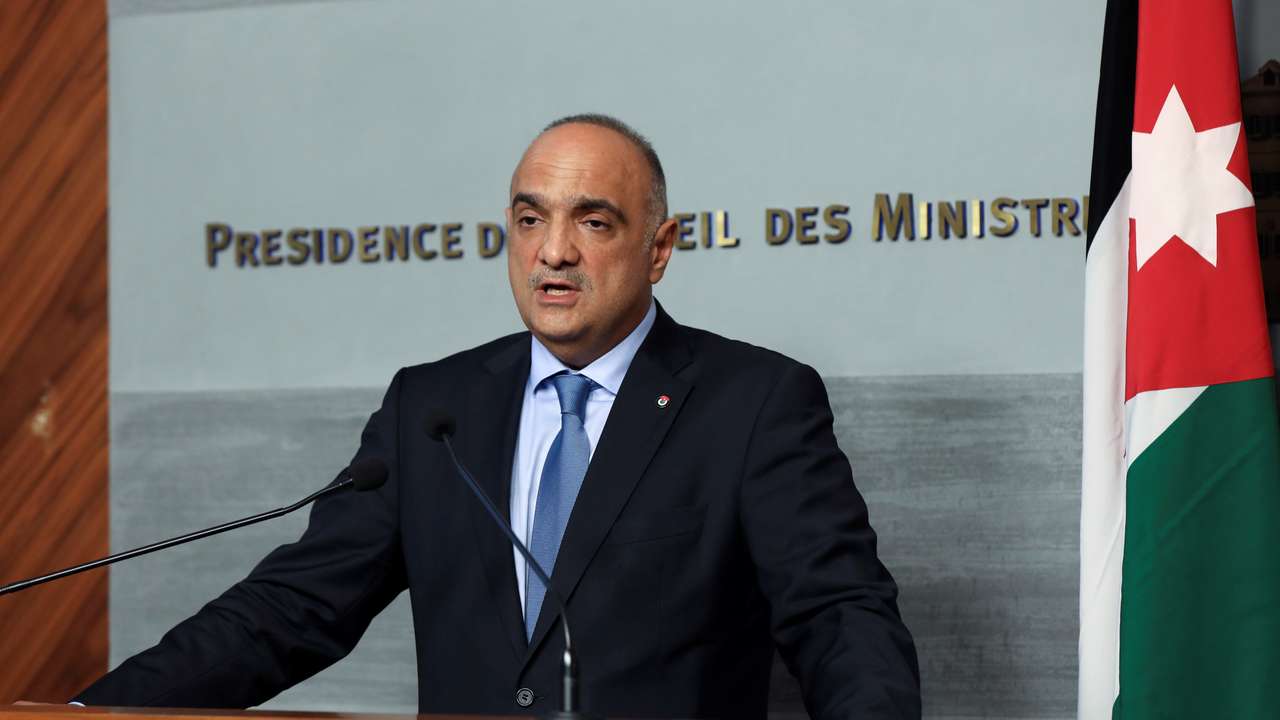
Jordan's King Abdullah appoints U.S.-educated technocrat as PM, royal court says
By Suleiman Al-Khalidi
Jordan's King Abdullah has designated key palace aide Jafar Hassan as prime minister after the government resigned on Sunday, the royal court said, days after a parliamentary election in which the Islamist opposition made some gains in the U.S.-allied kingdom.
Hassan, now head of King Abdullah's office and a former planning minister, replaces Bisher Khasawneh, a veteran diplomat and former palace adviser who was appointed nearly four years ago, a royal court statement said.
RECOMMENDED FOR YOU

New Asia Forum: Indonesia to set out progress on sustainable AI data centres
Khasawneh will stay on in a caretaker capacity until the formation of a new cabinet, the statement said.
Harvard-educated Hassan, a widely respected technocrat, will face the challenges of mitigating the impact of the Gaza war on the kingdom's economy, hard-hit by curbs to investment and a sharp drop in tourism
In Hassan's appointment letter, the king said democracy should be strengthened in the country and that its economic future hinged on pushing ahead with donor-backed mega-infrastructure projects in energy and water.
The outgoing prime minister had sought to drive reforms pushed by King Abdullah to help reverse a decade of sluggish growth, hovering at around 2%, that was worsened by the pandemic and conflict in neighbouring Iraq and Syria.
The traditional conservative establishment had long been blamed for obstructing a modernisation drive advocated by the Western-leaning monarch, fearing liberal reforms would erode their grip on power.
Politicians say a key task ahead is accelerating IMF-guided reforms and reining in more than $50 billion in public debt in a country with high unemployment and whose stability is supported by billions of dollars of foreign aid from Western donors.
The Muslim Brotherhood opposition and ideological allies of Palestinian militant group Hamas made significant gains in Tuesday's election, boosted by anger over Israel's war in Gaza.
The Islamists won 31 seats, the most since parliamentary life was revived in 1989 after decades of martial law, leaving them the largest political grouping in parliament.
RECOMMENDED FOR YOU

‘Hamas could reach Paris’ - Netanyahu warns Macron amid France protests
In a country where anti-Israel sentiment runs high, they have led some of the largest protests in the region in support of Hamas, which their opponents say allowed them to increase their popularity.
Although the new composition of the 138-member parliament retains a pro-government majority, the more vocal Islamist-led opposition could challenge IMF-backed free-market reforms and foreign policy, diplomats and officials say.
Under Jordan's constitution, most powers still rest with the king, who appoints governments and can dissolve parliament. The assembly can force a cabinet to resign by a vote of no
confidence.
This article was produced by Reuters news agency. It has not been edited by Global South World.