New Zealand to explore AUKUS benefits, boost security ties with Australia
New Zealand to explore AUKUS benefits, boost security ties with Australia
By Renju Jose and Lucy Craymer
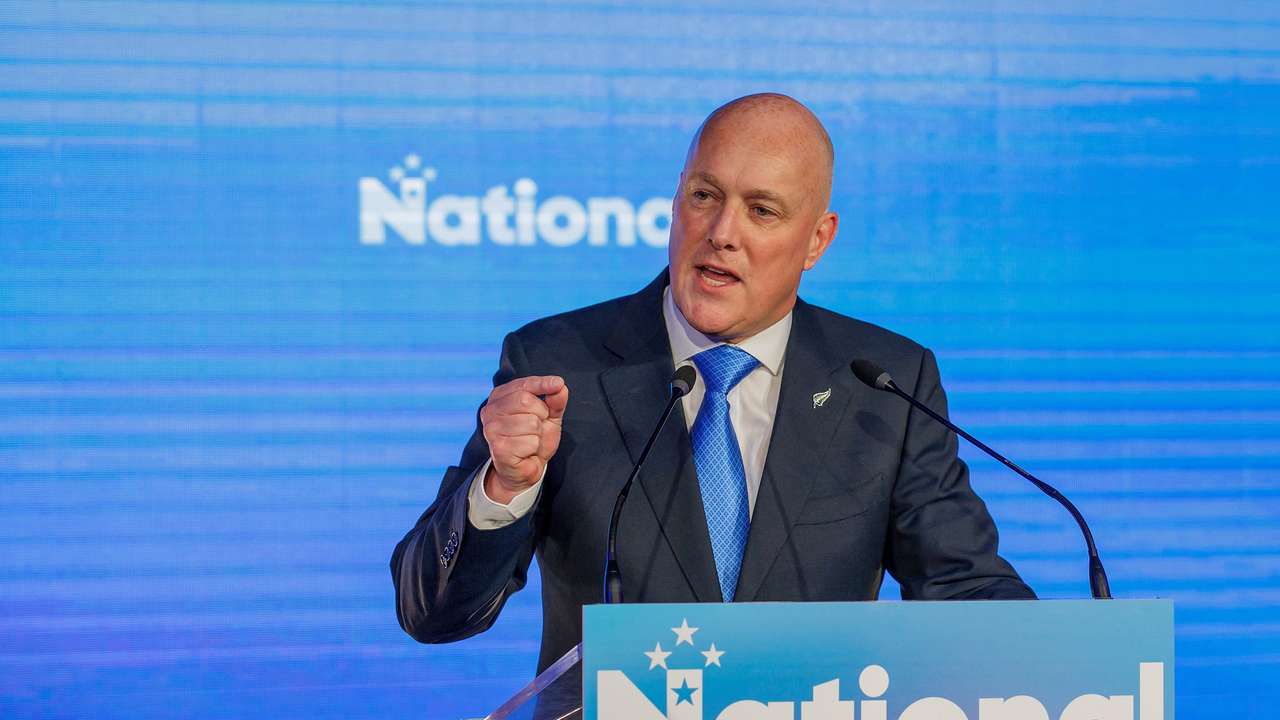
New Zealand's new prime minister, Christopher Luxon, said on Wednesday he would look into the benefits of joining a part of the AUKUS defence pact that focuses on shared military technology amid a "more challenging" world order.
Luxon, visiting Australia on his first official trip abroad since he was sworn in as prime minister last month, said the AUKUS weapons development and procurement project between the U.S., Britain and Australia would help ensure peace and stability in the Pacific region.
RECOMMENDED FOR YOU

A wake-up call: The countdown for Latin American democracy — Opinion
The "pillar two" of the AUKUS pact is separate from the first pillar designed to deliver nuclear-powered attack submarines to Australia.
"We're interested in exploring pillar two, particularly in AUKUS, and the new technologies and the opportunities that may mean for New Zealand to participate," Luxon said during a joint press briefing with his Australian counterpart Anthony Albanese.
New Zealand is not a party to the trilateral pact though the U.S. has said the door was open for it to engage on AUKUS.
But Luxon reiterated New Zealand's nuclear-free stance which he said was "non-negotiable". New Zealand and the U.S. describe themselves as close strategic partners, although their alliance was suspended in the 1980s when New Zealand barred visits from U.S. nuclear-powered or armed warships.
Close security ties with Australia, New Zealand's only formal defence ally, are "very foundational" as the country faces "a more challenging and complex world," said Luxon, a former airline executive.
Both New Zealand and Australia would "work together as bedrock partners in the region together working with our Pacific Island nations partners," he added.
Albanese said he had a long working relationship with Luxon and Australia would continue to deepen its trade and economic ties with New Zealand and work together to respond to shared challenges, including climate change.
"On a personal level, Christopher and I are perhaps the two leaders of nations who are more than anyone else aviation nerds, having built the relationship when Prime Minister Luxon was the head of Air New Zealand and I was Australia's transport minister," Albanese said.
RECOMMENDED FOR YOU
New Asia Forum: Indonesia to set out progress on sustainable AI data centres
Foreign policy and defence largely have a bipartisan consensus in New Zealand, and the current government is following a similar path to the previous Labour government, which had become increasingly concerned about China's growing influence in the Pacific.
David Capie, director of the Centre for Strategic Studies at Victoria University, said he expected the new government to pay more attention to its traditional partners such as those in the Five Eyes intelligence-sharing group including Australia, Britain, Canada and the United States.
"While it's tempting to focus on what's new, I think on a host of foreign policy trade and security issues there is bipartisan shared ground and there will be a lot of continuity as well," he said.
This article was produced by Reuters news agency. It has not been edited by Global South World.