Pakistan's former President Zardari wins another term
Pakistan's former President Zardari wins another term
By Asif Shahzad
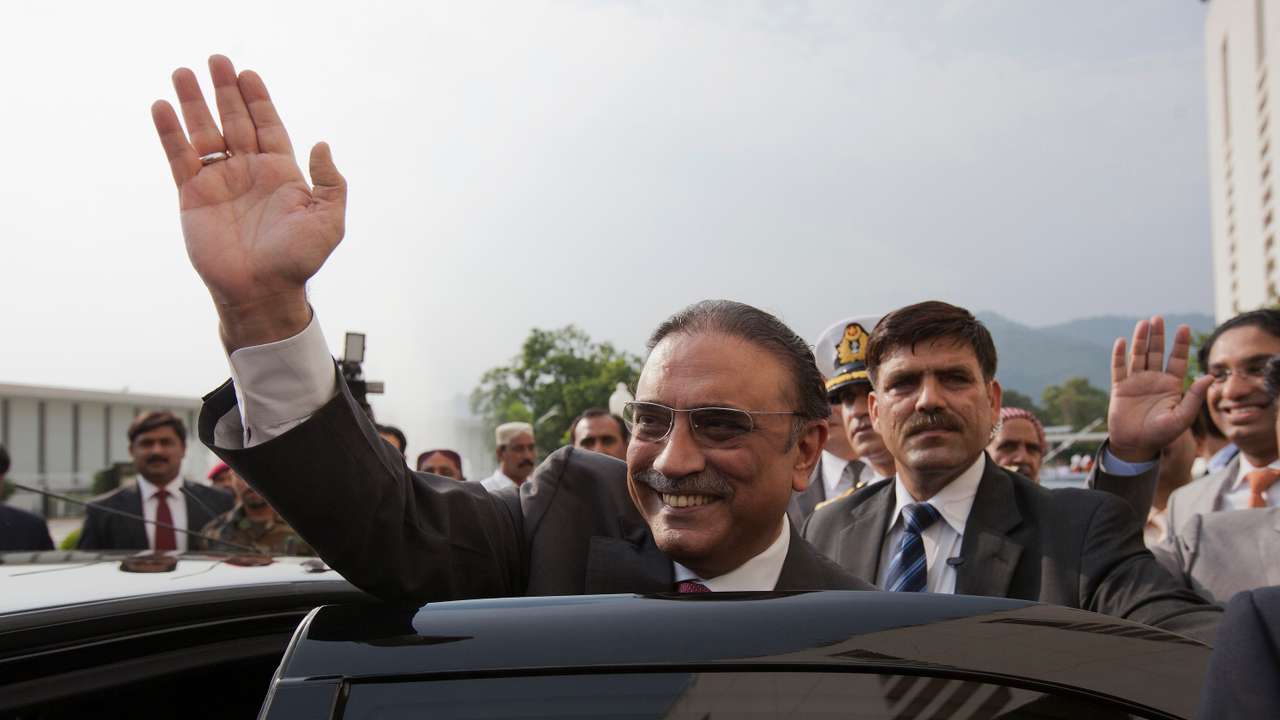
Pakistan's former President Asif Ali Zardari won a second term on Saturday, supported by the ruling coalition in a vote by parliament and regional assemblies, the election presiding officer said.
The role of president is largely ceremonial in Pakistan but Zardari is known as a master of reconciliation and could help the governing coalition partners reach a consensus to steer the broken economy on a stabilisation path ahead of seeking a new IMF bailout.
RECOMMENDED FOR YOU
Fertilizer shipments through Strait of Hormuz fall to zero as food security fears grow
As president, Zardari will also be the supreme commander of the country's armed forces, which play an oversized role in making or breaking governments.
Presiding officer Justice Amir Farooq announced the winner in a live TV broadcast.
Zardari got 411 votes, easily defeating the 181 votes cast for nationalist leader Mehmood Khan Achakzai, according to a statement from the parliament.
Achakzai was backed by jailed leader Imran Khan's party.
The president is elected by votes in the lower and upper house of the parliament and four provincial legislative assemblies.
Zardari is the widower of former Prime Minister Benazir Bhutto and gained political stature after his wife's assassination in a suicide bombing in December 2007, taking control of the PPP Party, in line with wishes expressed in her will.
He became president in 2008 and served until 2013, a period in which a U.S. special forces raid inside Pakistan found and killed Osama bin Laden in 2011.
Zardari's greatest achievement during his first term was seen as the building of a rare political consensus on adopting a new legal and political framework to decentralise power and curb the presidential powers wielded by former military leaders.
RECOMMENDED FOR YOU

Brazil's electoral court threatens Meta with US$198,000 daily fine over election content
From the early 1990s to 2004, he spent 11 years in jail on graft charges, which were never proven in any court and that he and his party called military-backed political victimisation, a charge the army denies.
This article was produced by Reuters news agency. It has not been edited by Global South World.