Philippines' Black Nazarene procession draws hundreds of thousands of devotees
By Jay Ereno
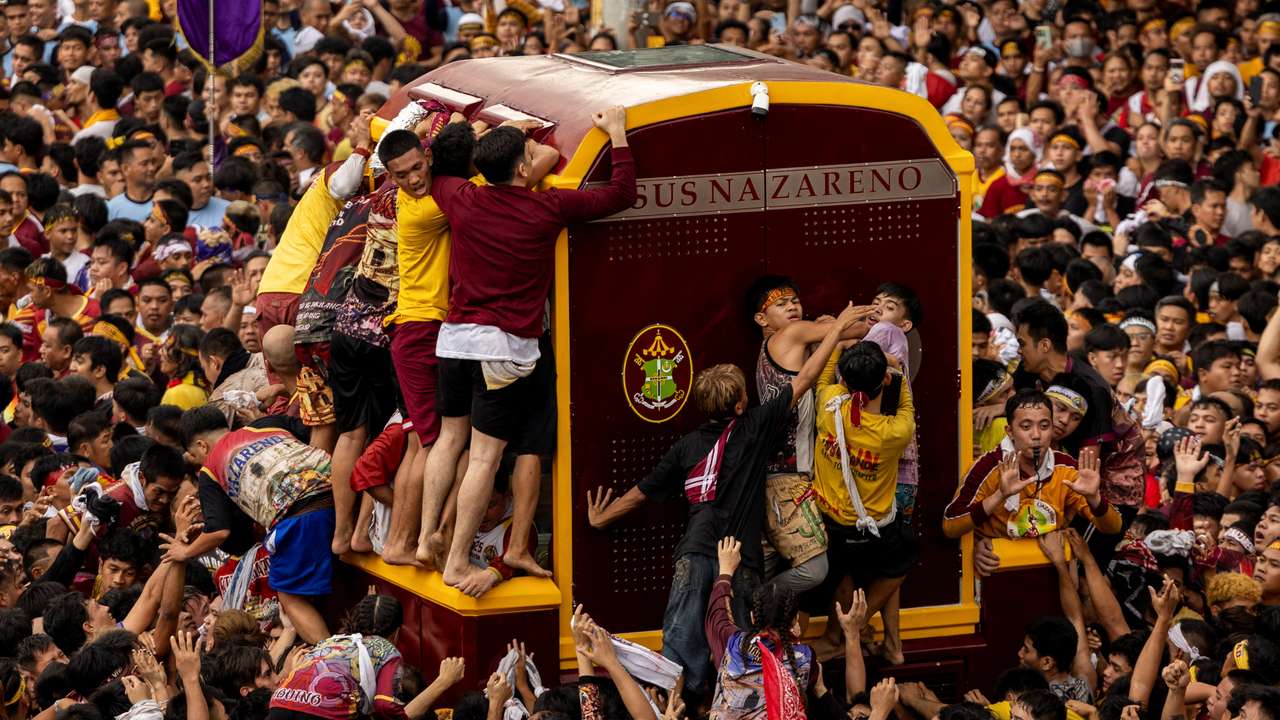
Hundreds of thousands of barefoot devotees joined an annual procession in the Philippines on Thursday of a centuries-old statue of Jesus Christ in one of the world's grandest displays of Catholic devotion and expression of faith.
Filipinos turned the streets of Manila to a sea of maroon and gold and swarmed the "Black Nazarene", a life-sized image of Jesus Christ bearing down a cross, as devotees jostled for a chance to pull the thick rope towing the carriage across the Philippine capital.
The procession's organisers have estimated about 220,000 people attended mass before the procession, while over 190,000 people were estimated in the march and around church grounds as of midday (0400 GMT). That number is expected to swell as it moves along its 5.8 km (3.6 mile) route.
RECOMMENDED FOR YOU

RSF index reveals that press freedom gaps widened globally in 2025
Among them was 79-year old Victoriano Tayuni, a devotee for much of his life, who was leading a small group of fellow believers to help deepen their devotion.
"I have not seen anyone from among us whose lives got worse. Everyone's lives have improved, so more people are joining every year," Tayuni said.
Rowena Bustamante, a 56-year-old seamstress, said she named her daughter after the image.
"I tell him (Black Nazarene) all my problems, especially with my child Nazarena. I named her after him, so she's called Nazarena," Bustamante said.
Some devotees threw white towels at the image as marshals wiped them of its surface, believing that touching the statue would bless them and heal their illnesses. Others broke through a barricade of policemen to move closer to the procession early in the march.
Nearly 80% of Filipinos identify as Roman Catholic, a key legacy of Spanish colonisation in the Philippine archipelago for more than 300 years.
The late Filipino priest and theologian Sabino Vengco said in 2019 the statue's revered black colour was due to the mesquite wood used in its construction, debunking a longstanding myth its blackened image was due to a fire on the ship that carried it to the Philippines from Mexico in the early 17th century.
The procession, called the "traslacion", or translation, commemorates the transfer of the Black Nazarene from a church inside the old Spanish capital of Intramuros to its present location in Quiapo church.
RECOMMENDED FOR YOU

G7 and European leaders discuss Ukraine plan on margins of G20, sources say
Cardinal Jose Advincula, Manila's archbishop, told devotees on Thursday to turn away from evil, greed and vices and follow the teachings of Jesus Christ.
"Let us live up to his commandments, embrace his teachings and follow his example. It is better to follow the Beloved Lord," Advincula said in his homily ahead of the procession.
This article was produced by Reuters news agency. It has not been edited by Global South World.