Portugal rejects far-right bid to charge president with treason over slavery reparations
- #Africa
- #Americas
- #Asia
- #Pacific
- #Central Africa
- #Fundamental Rights
- #Civil Liberties
- #Conflicts
- #War
- #Peace
- #Debt
- #Fixed Income Markets
- #Diplomacy
- #Foreign Policy
- #East Africa
- #Europe
- #Middle East and Africa
- #Emerging Market Countries
- #European Union
- #Euro Zone
- #Human Rights
- #Civil Rights
- #South America
- #Central America
- #government
- #Politics
- #Race Relations
- #Ethnic Issues
- #Southern Africa
- #South Asia
- #Society
- #Social Issues
- #West Africa
- #Western Europe
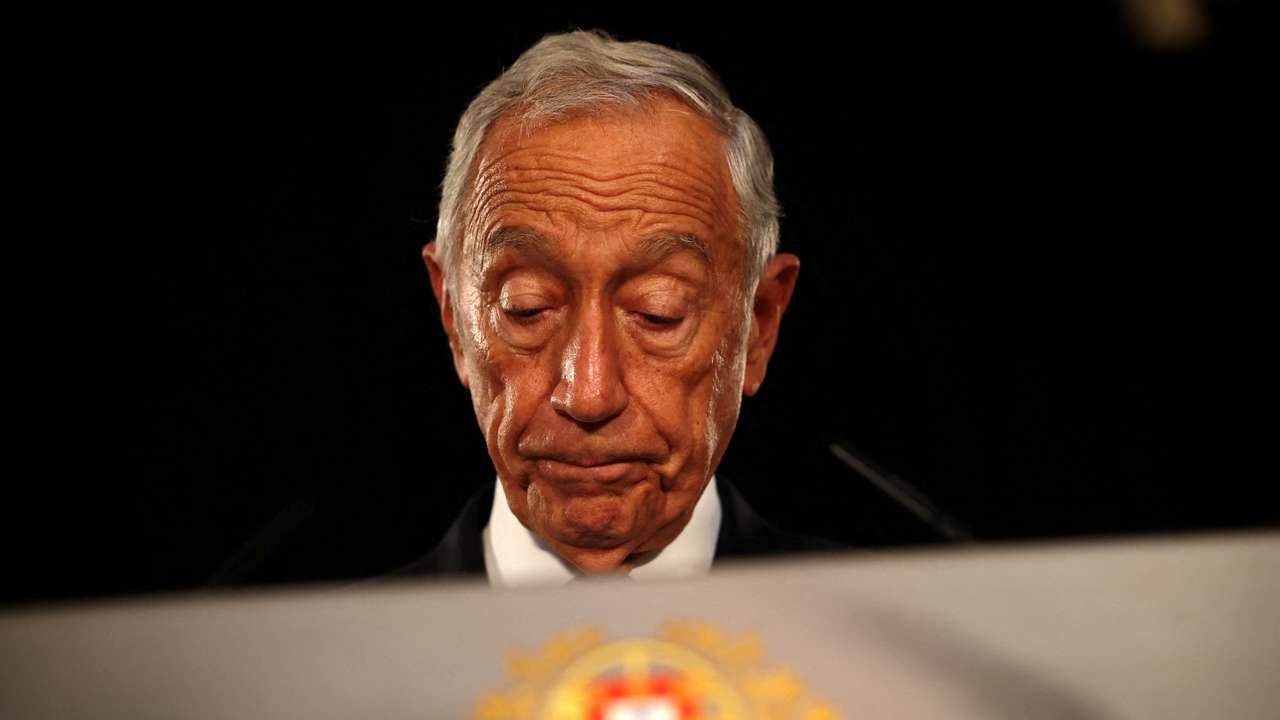
Portugal rejects far-right bid to charge president with treason over slavery reparations
By Catarina Demony
Portugal's parliament on Wednesday dismissed a proposal by the far-right to charge the country's president with treason over his support for reparations for transatlantic slavery and colonialism.
President Marcelo Rebelo de Sousa said last month there was a need to address the wrongs of the past, sparking a national debate and strong criticism from right-wing parties, particularly from far-right Chega.
RECOMMENDED FOR YOU
Madagascar's Gen Z 'betrayed' after ushering in new rule
Rebelo de Sousa suggested cancelling the debt of former colonies and providing financing.
After the remarks, the government, which has executive powers, said it would not initiate any reparation process and Chega - Portugal's third-largest party - suggested a criminal lawsuit against the president for treason.
"Parties are free to propose whatever they want," Rebelo de Sousa said, adding it was "part of democracy".
For over four centuries, at least 12.5 million Africans were kidnapped, forcibly transported by mainly European ships and merchants, and sold into slavery.
Portugal trafficked nearly 6 million Africans, more than any other European nation, but has done little to confront its past.
Instead, the colonial era, during which countries including Angola, Mozambique and Brazil were subjected to Portuguese rule, is often perceived as a source of pride.
"The president's statements represent a profound betrayal of our history," Chega's leader Andre Ventura told parliament in a debate called to discuss the issue.
All parties, including the ruling Social Democrats (PSD), said they would not support Chega's proposal. Without that support, the case cannot move forward.
RECOMMENDED FOR YOU
The war in Iran is still ongoing: how much more can the global economy take?
Left Bloc lawmaker Joana Mortagua said that Black people still suffer the legacies of transatlantic slavery and colonialism, including racism. "We are not just talking about the past," she said.
PSD lawmaker Regina Bastos argued the past should be left behind and priority should be given to what can be done now. Bastos and other lawmakers accused Ventura of political opportunism.
Foreign Minister Paulo Rangel reiterated the government's position but said there would be "apologies" when appropriate.
The idea of paying reparations or making other amends for transatlantic slavery and colonialism has a long history and remains deeply disputed, but has been gaining momentum worldwide.
This article was produced by Reuters news agency. It has not been edited by Global South World.