Russia's Kaliningrad digitises hometown philosopher Kant's works
Russia's Kaliningrad digitises hometown philosopher Kant's works
In a once-German corner of Russia, an ambitious project to digitise hundreds of rare and ancient books is under way.
"The principal mission of libraries is to preserve books," said Ruslan Aksyonkin, an expert at the culture and education centre at Baltic University in the city of Kaliningrad.
"A huge project is currently under way in Russia aimed at scanning all pre-Revolution [of 1917] books."
RECOMMENDED FOR YOU

Six countries account for three-quarters of Europe’s unicorn startups
In Kaliningrad, sandwiched between Poland and Lithuania on the Baltic coast and separated from the rest of Russia, around 450 books dating from the 15th to the 20th centuries, some more accessible than others, are to be digitised.
The centrepiece are the books that once belonged to German Enlightenment philosopher Immanuel Kant, best known for his "Critique of Pure Reason" of 1781 - a ground-breaking but dense 800-page treatise on the relationship between knowledge and experience or perception.
Kant spent his entire life, from 1724 to 1804, in what was then the Prussian city of Koenigsberg, and the project is part of citywide celebrations of next year's 300th anniversary of his birth.
Little of the city Kant would have known is left today, much of the historic centre having been flattened by British air raids in 1944, in World War Two.
After Germany's surrender, the city was ceded to the Soviet Union and resettled with Soviet newcomers, while its German population were expelled.
Even so, modern-day Kaliningrad remains fond of its most famous German resident, despite the abstruseness of his ideas.
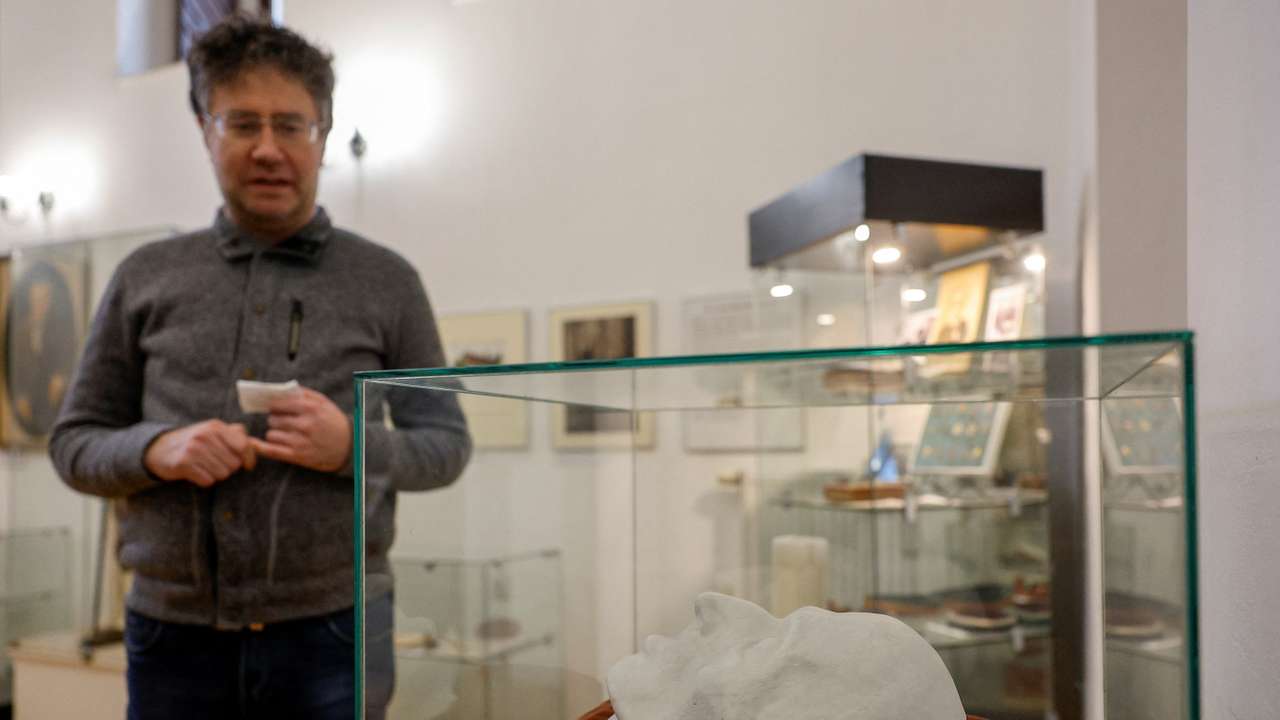
The city's university bears his name, and Kant's tomb and a small exhibition on the philosopher have pride of place in the restored German cathedral.
"There are very few authentic items linked to Kant," said Marina Yadova, deputy director at the cathedral's museum. "But we do have certain items, and they are Kant's works published during his lifetime."
RECOMMENDED FOR YOU

Olympic flame arrives on African soil for first time as Senegal begins Dakar 2026 countdown
Some of the books being digitised, unopened for centuries, contain dried leaves or handkerchiefs, as well as scribbles in the margins of their fragile pages.
"Ancient books can be particularly finicky. They're not always stable. Typically, they're very thick, often with more than 600 pages," said Aksyonkin.
"There are books that seem resistant to scanning."
This article was produced by Reuters news agency. It has not been edited by Global South World.