US officials meet China's vice foreign minister after sanctions warning
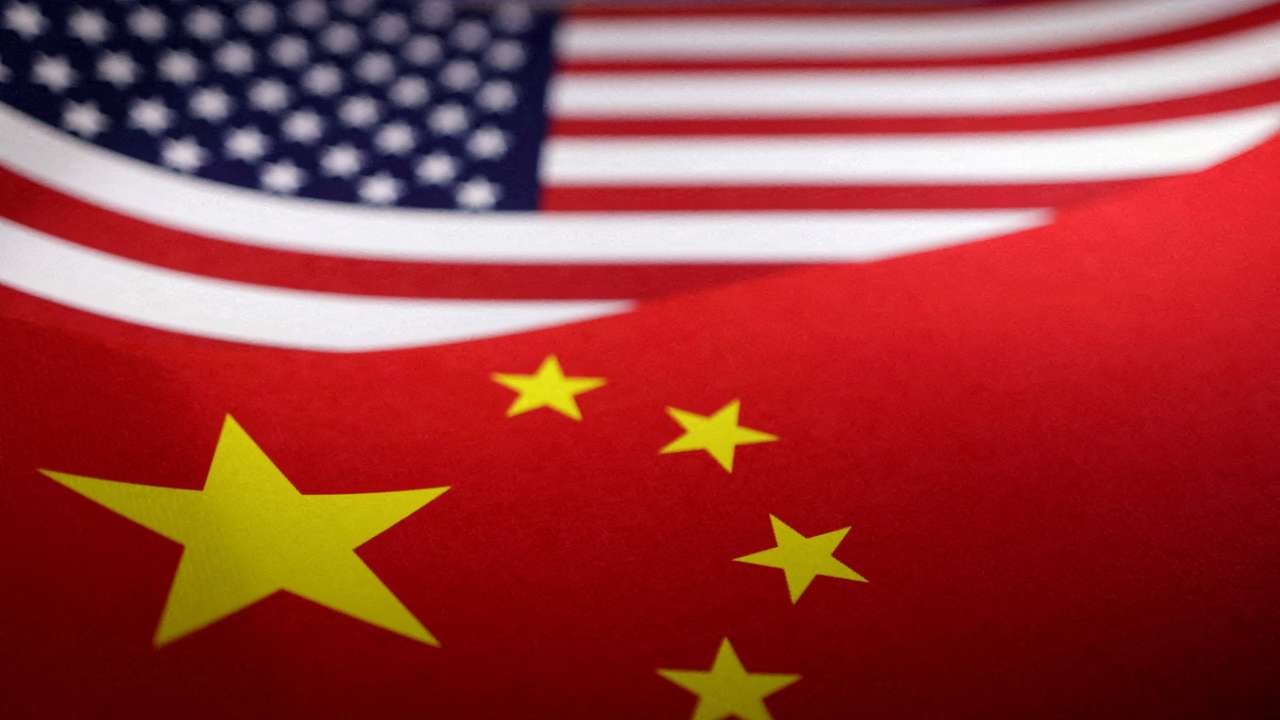
US officials meet China's vice foreign minister after sanctions warning
U.S. Deputy Secretary of State Kurt Campbell and deputy national security adviser Jon Finer met China's Vice Foreign Minister Ma Zhaoxu in Washington on Thursday, a day after Washington accused Beijing's leadership of supporting Russia's war in Ukraine and warned that China could face further Western sanctions.
State Department deputy spokesperson Vedant Patel told a news briefing that Campbell's meeting was part of intensive diplomacy in the past year to responsibly manage competition in U.S.-China relationship and the U.S. expected more such senior-level engagement.
Patel said the U.S., its G7 partners and other EU and NATO countries shared the view that China's support for Russia "not only threatens Ukrainian security, it threatens European security."
RECOMMENDED FOR YOU
Senegal’s Sonko slams government over G20 debt restructuring plan
He declined to provide details of any future sanctions when asked whether those might target Chinese leaders given Campbell's comments, but added: "If China does not curtail its support for Russia's defense industrial base, the U.S. will be prepared to take further steps."
Separately, the White House said Finer also met Ma on Thursday and the two discussed topics including counternarcotics, the Taiwan Strait, the Ukraine war and efforts to denuclearize the Korean Peninsula.
Ma and Finer had "candid, in-depth and constructive" talks, according to a post on X by Chinese Ambassador to the U.S. Xie Feng. Ma stressed that Washington should "earnestly respect China's sovereignty, security and development interests", Xie wrote.
Ma also met U.S. National Security Adviser Jake Sullivan to discuss "important issues in bilateral relations," the post said.
However, Chinese media sounded a more negative note after the meetings concluded.
"Negative factors between China and the U.S. are still rising and accumulating, mainly because... (U.S.) methods of suppressing China are constantly being refreshed," a social media account affiliated with state broadcaster CCTV wrote in a post Friday morning Beijing time, citing "relevant insiders".
"If the U.S. continues to try to infringe on and endanger China's sovereignty and security interests on China's core issues... then China has more abundant and stronger countermeasures to be introduced," it warned.
Speaking to reporters on a visit to Brussels on Wednesday, Campbell said there was an urgent need for European and NATO countries "to send a collective message of concern to China about its actions, which we view are destabilizing in the heart of Europe."
RECOMMENDED FOR YOU
‘It is Bolsonaro!’ - Supporters rally against Lula ahead of Brazil runoff
The Biden administration has stepped up warnings about China's support for Russia and issued an executive order in December that threatened sanctions on financial institutions helping Russia skirt Western sanctions.
Campbell said Chinese support was helping Moscow reconstitute elements of its military, including long-range missile, artillery and drone capabilities, and its ability to track battlefield movements.
Last month the U.S. imposed sanctions on 20 companies based in China and Hong Kong, following repeated warnings from Washington about China's support for Russia's military.
After those steps China's embassy in Washington said Beijing oversees the export of dual-use articles in accordance with laws and regulations and that normal trade and economic interactions between China and Russia were in line with World Trade Organization rules and market principles.
In a speech in Berlin on Friday, U.S. Deputy Treasury Secretary Wally Adeyemo is expected to call for further action to stem Russia's sanctions evasion and deliver a warning on China's role, highlighting the December executive order.
In April, a U.S. official told Reuters that Washington had preliminarily discussed sanctions on some Chinese banks but did not yet have a plan to implement such measures.
This article was produced by Reuters news agency. It has not been edited by Global South World.