Trump, Musk watch SpaceX launch Starship, booster misses landing
By Joey Roulette
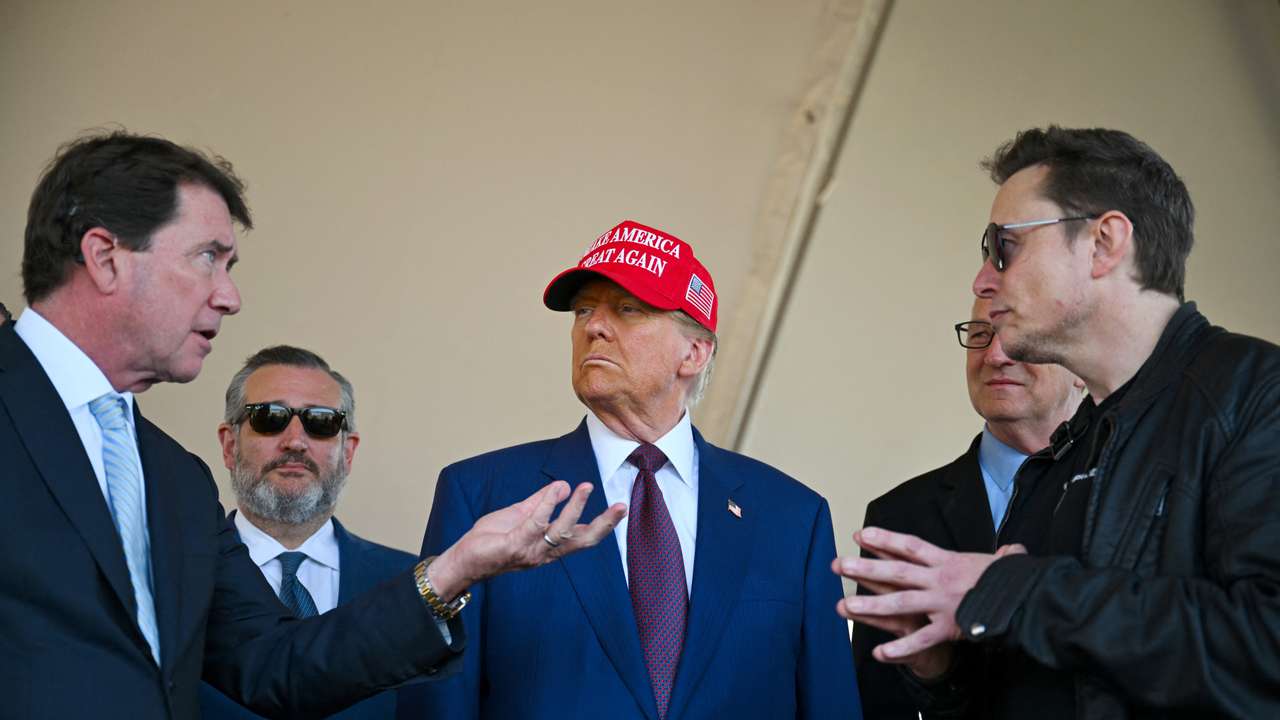
Elon Musk's SpaceX launched its giant Starship rocket to space from Texas on Tuesday, advancing the ship's spaceflight abilities but botching an attempt to bring its booster back to land as U.S. President-elect Donald Trump watched from the company's rocket facilities.
The roughly 400-foot-tall (122-meter-tall) rocket system, designed to land astronauts on the moon and ferry crews to Mars, lifted off at 4 p.m. CT (2200 GMT) from SpaceX's sprawling rocket development site in Boca Chica, Texas.
The rocket's 233-foot-tall (71-metre-tall) first stage booster, called Super Heavy, detached from its second stage, Starship, at roughly 40 miles (62 km) in altitude, sending the craft into space.
RECOMMENDED FOR YOU

RSF index reveals that press freedom gaps widened globally in 2025
Super Heavy unexpectedly splashed down in the Gulf of Mexico instead of returning to land, where it was expected to fall into large mechanical arms attached to the tower it launched from. The last-minute diversion to water indicated something went wrong.
A live stream separate from SpaceX's and hosted by space blogger Everyday Astronaut showed the Super Heavy booster exploding into a massive fireball on the Gulf horizon after splashing down.
Starship last month demonstrated the novel catch-landing method for the first time, achieving a key milestone in its reusable design. Tuesday's catch-landing was supposed to be "faster/harder," Musk had written on social media before the launch.
After the Oct. 14 Starship test, Trump was intrigued, fixating on the booster's novel catch-landing technique - "Did you see the way that sucker landed today?," he said at a rally that day.
The rest of the mission appeared successful.
In space, Starship traveled around Earth for a daytime splashdown in the Indian Ocean roughly an hour later. It reignited one of its onboard engines in space for the first time, an early test of its maneuverability in space that SpaceX had tried but failed to do in past flights.
NASA chief Bill Nelson, who is expected to leave his role once Trump takes office in January, congratulated SpaceX in a post on X and said Starship's in-space engine reignition marked "major progress towards orbital flight."
Trump's attendance signals a deepening alliance with Musk, who stands to benefit from Trump's election victory. The billionaire entrepreneur and CEO of SpaceX and Tesla is expected to wield extraordinary influence to help his companies and secure favorable government treatment.
RECOMMENDED FOR YOU

G7 and European leaders discuss Ukraine plan on margins of G20, sources say
The world's wealthiest person, Musk was a prominent supporter of Trump's presidential election campaign, appearing with him at rallies and backing him with at least $119 million in political support.
"I'm heading to the Great State of Texas to watch the launch of the largest object ever to be elevated, not only to Space, but simply by lifting off the ground," Trump wrote on social media, wishing Musk luck on the launch.
Trump on Nov. 13 appointed Musk as co-leader of a new government efficiency project that the SpaceX founder and Tesla CEO has said will rid the federal government of wasteful spending and regulations he has called burdensome.
The U.S. Federal Aviation Administration's regulation of commercial rocket launches has been a source of frustration for Musk, who has complained that the agency impedes his company's progress in getting to Mars.
But the FAA's license approval of Tuesday's Starship launch a little over a month after the rocket's previous flight was its quickest regulatory turnaround yet for SpaceX, as the agency develops new launch-approval processes meant to keep pace with the U.S. space industry's growth.
Musk on Tuesday listed four core objectives for the test flight: restarting Starship's space-tailored engine during flight, making a more visible ocean landing during the daytime - past attempts have been at night - putting Starship through more intense heat during reentry, and making the booster landing faster.
"There are thousands of small design changes also being tested," Musk said.
SpaceX is eyeing swift advances in Starship development during a second Trump administration. The administration's space agenda is expected to give NASA's Artemis program, which is due to return astronauts to the lunar surface, a greater focus on the more ambitious goal of landing people on Mars, Musk's premier space aspiration.
RECOMMENDED FOR YOU

US hires 50,000 federal workers under Trump, boosting immigration roles
"We just passed 400 launches on Falcon, and I would not be surprised if we fly 400 Starship launches in the next four years," SpaceX President and COO Gwynne Shotwell said at the Baron Investment Conference in New York last week, referring to the company's workhorse rocket.
This article was produced by Reuters news agency. It has not been edited by Global South World.