These countries skip the May 1 Labour Day holiday
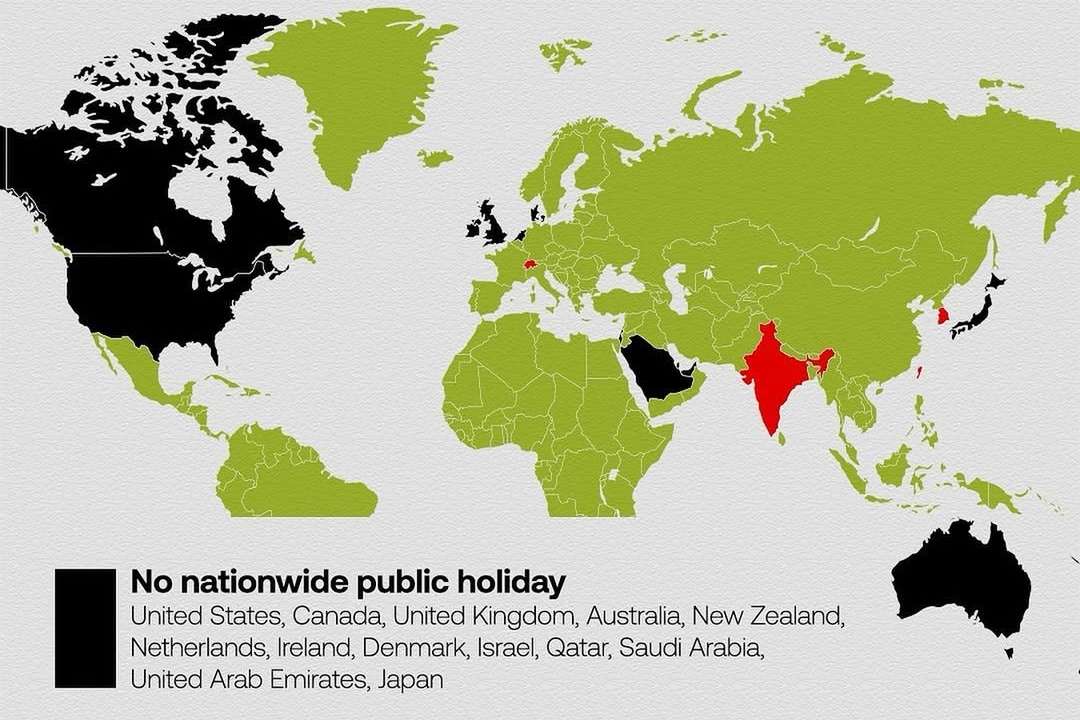
While much of the world marks International Workers’ Day on May 1, several major economies do not observe the date as a nationwide public holiday.
Main Points
- May 1 is not a public holiday in several major countries
- Some countries celebrate Labour Day on different dates
- Labour Day observance varies based on national history and policy
While much of the world marks International Workers’ Day on May 1, several major economies do not observe the date as a nationwide public holiday.
Countries including the United States, Canada, the United Kingdom, Australia and Japan do not officially celebrate Labour Day on May 1, according to data compiled from Office Holidays.
Instead, many of these nations recognise workers on alternative dates. The United States and Canada observe Labour Day on the first Monday in September, a shift that dates back to the late 19th century when governments sought to distance the holiday from socialist and labour movements associated with May Day.
RECOMMENDED FOR YOU

France split into three nearly equal populations shows how unevenly the country is settled
The United Kingdom and Ireland mark a bank holiday on the first Monday of May, rather than May 1 itself.
Global norm with notable exceptions
May 1 is recognised as a public holiday in more than 150 countries worldwide, making it one of the most widely observed international holidays, according to Office Holidays. The date commemorates the Haymarket affair of 1886 in Chicago, a pivotal event in the global labour movement advocating for an eight-hour workday.
Across Europe, Africa, Latin America and much of Asia, May Day is typically marked by public holidays, rallies and demonstrations celebrating workers’ rights.
The map also highlights countries where May 1 is only partially observed. In nations such as Switzerland, India, South Korea and Taiwan, the holiday may apply only to certain regions, industries or worker groups, rather than being a universal public holiday.
This fragmented approach reflects differences in labour laws, economic structures and political traditions. In India, for example, Labour Day is recognised in several states but not uniformly nationwide. Similarly, Switzerland observes the day in some cantons, while others treat it as a normal working day.
The divergence in Labour Day observance is deeply rooted in history. In Western countries like the United States, shifting the holiday to September was seen as a way to separate it from radical political movements. In contrast, many countries embraced May 1 as a symbol of worker solidarity and social progress.
RECOMMENDED FOR YOU
Asia produces the largest share of global GDP
This story is written and edited by the Global South World team, you can contact us here.