Underground hideout from nearly 2,000 years ago unearthed in Israel
Underground hideout from nearly 2,000 years ago unearthed in Israel
By Ari Rabinovitch
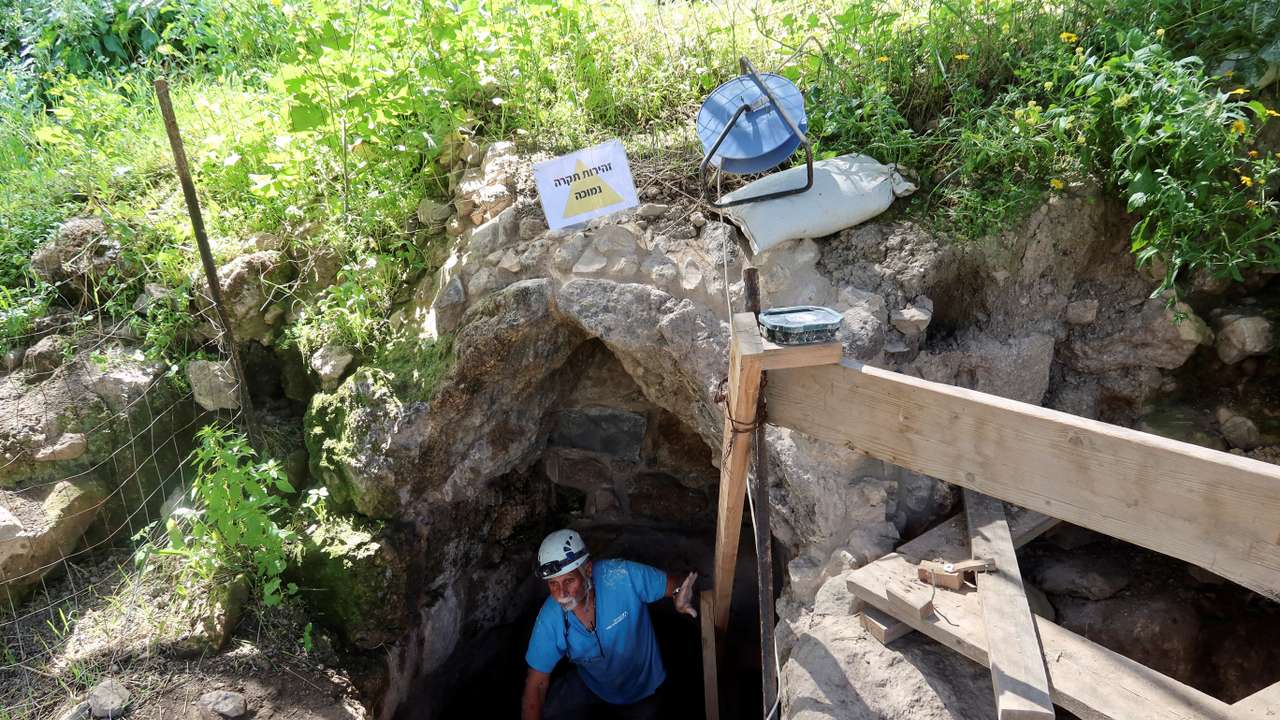
Archaeologists in northern Israel have uncovered an immense underground hideout comprising narrow tunnels and bigger rooms that were dug by Jewish villagers nearly 2,000 years ago at a time of revolt against the Roman empire.
The labyrinth is evidence, the experts said, that Jewish communities as far north as the hills of the Galilee, where Jesus is believed to have preached, prepared for the Roman legions quashing rebellions closer to Jerusalem.
RECOMMENDED FOR YOU

'The era of Bibi is over!' - Tel Aviv rally demands Netanyahu's ouster
They carved a hideout that winds at least 100 meters (yards) under their village, said Yinon Shivtiel, a historian at Zefat Academic College who specialises in caves.
Cramped burrows, too tight for an armoured legionnaire, run between larger cavities where there is room to stand, gather and store precious goods. The cave system was designed to save entire families.
During the excavation, the team found a bronze ring that would fit a child's finger.
There were two ill-fated revolts against the Romans in the Holy Land during that period. The first culminated with the destruction of the Second Temple in Jerusalem in the year 70.
Decades later, famed leader Bar Kokhba led an uprising that was also soundly defeated. Similar hideouts from that time have been found in the foothills of Jerusalem, along with evidence of destroyed villages.
But this was the first Bar Kokhba-era hideout of such scope to be unearthed much further north, in a spot called Huqoq. There were no signs of destruction, Shivtiel said, suggesting the fighting did not reach the area.
"We were amazed to see how big this complex is," said Uri Berger of the Israel Antiquities Authority, brandishing a small iron blade that was found buried in the hideout and dates from around the time of Bar Kokhba.
Their work is not done yet, he said.
RECOMMENDED FOR YOU

Flávio Bolsonaro rejects Brazil election results, seeks annulment of Lula's victory
There are still more burrows to be cleared from the dirt, he said, and perhaps, more artefacts that offer a glimpse into life in the Holy Land 2,000 years ago.
This article was produced by Reuters news agency. It has not been edited by Global South World.