US Senate may work on Russia sanctions bill this month
By Patricia Zengerle and David Morgan
The Republican leader of the U.S. Senate said on Monday the chamber could begin work this month on a bill imposing stiff sanctions on Russia - and secondary sanctions on countries that trade with Russia - over its war in Ukraine.
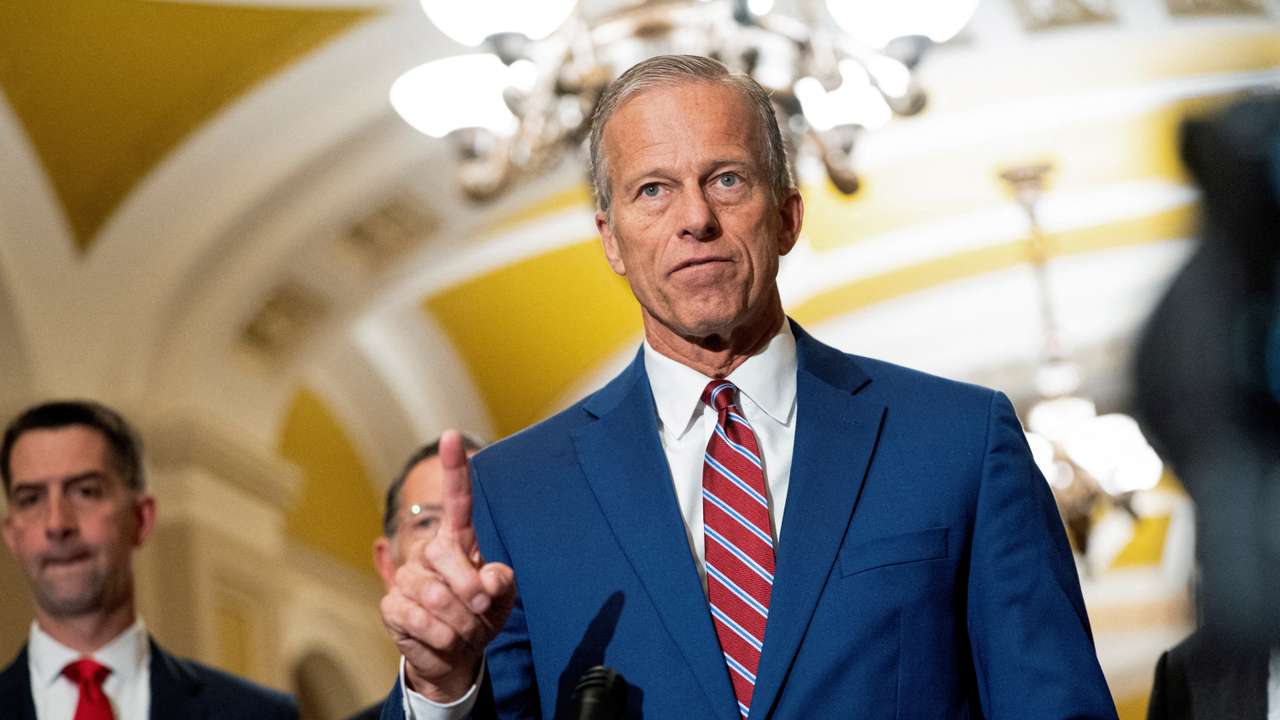
Majority Leader John Thune said President Donald Trump's administration still hopes for an agreement to end the three-year-old conflict, but the Senate is prepared to help put pressure on Moscow.
"We also stand ready to provide President Trump with any tools he needs to get Russia to finally come to the table in a real way," Thune said in a speech opening the Senate.
RECOMMENDED FOR YOU

A wake-up call: The countdown for Latin American democracy — Opinion
Thune told reporters afterward he has been discussing the sanctions legislation with the White House.
The measure would impose 500% tariffs on countries that buy Russian oil, gas, uranium and other exports. China and India account for about 70% of Russia's international energy business, which helps fund its war effort.
The bill, whose lead sponsors are Republican Senator Lindsey Graham of South Carolina and Democratic Senator Richard Blumenthal of Connecticut, now has at least 82 co-sponsors in the 100-member Senate.
Graham said in Kyiv last week he thought the Senate could take up the bill as soon as this week, but Thune did not set that timeframe.
"I think right now they're still hopeful they'll be able to strike some sort of a deal. But as you might expect, there's a high level of interest here in the Senate, on both sides of the aisle, and moving on it, and it very well could be something that we would take up in this work period," Thune said.
He was referring to the weeks before lawmakers leave Washington ahead of the July 4 Independence Day recess.
"We're working with the White House to try and ensure that what we do and when we do it, it works well with the negotiations that they've got under way," Thune said.
Graham has said the legislation would impose "bone-breaking sanctions" on Russia and its customers if Moscow does not engage in talks, or if it initiates another effort undermining Ukraine's sovereignty after any peace deal.
RECOMMENDED FOR YOU

New Asia Forum: Indonesia to set out progress on sustainable AI data centres
The measure is a rare example of bipartisanship in the bitterly divided U.S. Congress. Trump appears to be growing increasingly impatient with what he has suggested might be foot-dragging over a wider agreement with Moscow to end the war.
To become law, the legislation must pass the Senate and House of Representatives and be signed by Trump. Trump has said he worries more sanctions would hurt prospects for a peace deal.
There has been no indication from the House's Republican leaders of any plan to allow a vote on the sanctions package.
This article was produced by Reuters news agency. It has not been edited by Global South World.