Africa will not integrate sustainably amid endless conflict — Opinion
Agenda 2063, the African Union’s strategic master plan, acknowledges the movement of people and capital as fundamental in fast-tracking Africa’s integration and development.
Initiatives such as the African Continental Free Trade Area (AfCFTA) and the African Passport are geared toward bringing down what is widely viewed as colonial-imposed borders, and facilitating social, economic and cultural exchange.
Africa’s cross-border mobility has grown significantly over the years. But protracted wars, from the Great Lakes to the Sahel, the Horn of Africa, the Lake Chad Basin and northern Mozambique, disrupt movement and stall integration efforts.
According to the International Committee of the Red Cross (ICRC), Africa accounts for about 40% of the world’s active armed conflicts – a deeply troubling statistic, illustrated by the death of thousands of innocent people and unprecedented displacement.
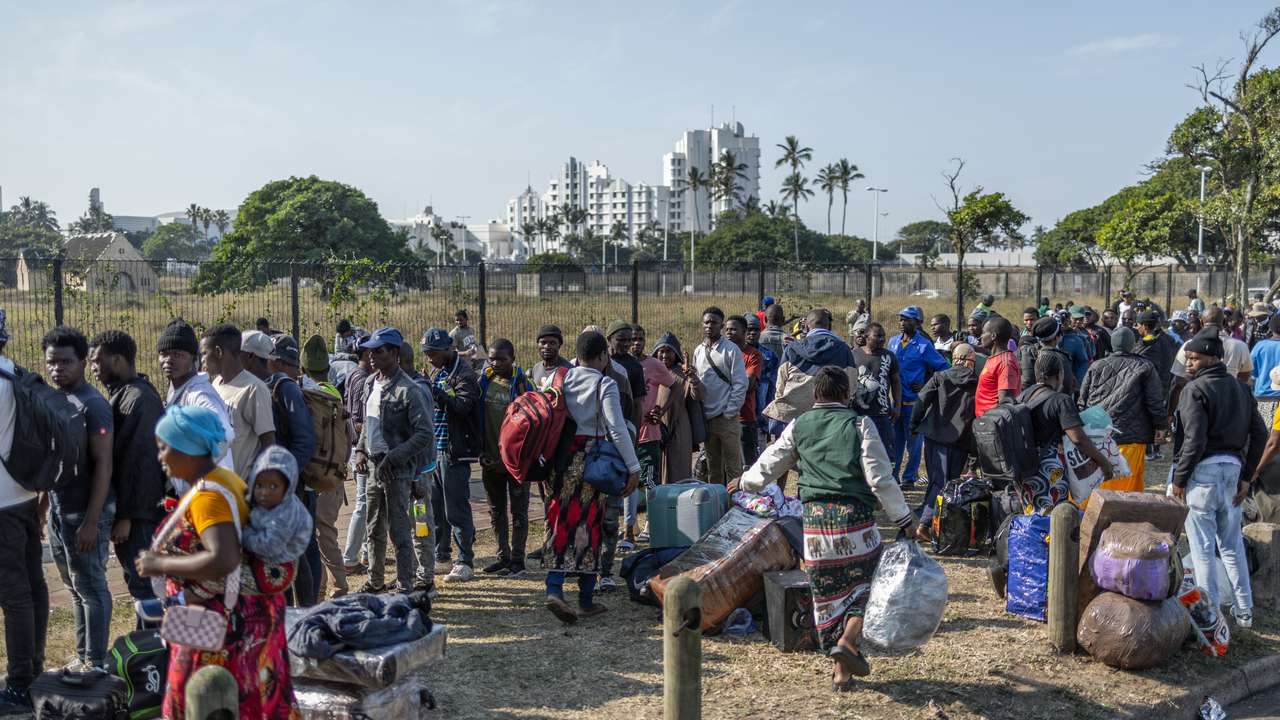
Millions of civilians have been forced to leave their homes and seek refuge across borders, fleeing with only trauma and the impossible task of rebuilding their shattered lives.
RECOMMENDED FOR YOU
Mauritania Roundup: Green hydrogen deal advances, schools prepare for new term and 100,000 livestock targeted
The civil war in Sudan, regarded as the world’s worst humanitarian crisis, has displaced almost a million into neighbouring Chad. Within Goudrane camp, located in the country’s eastern region, half a million refugees struggle with severe shortages of clean water and other basics.
The insecurity in eastern Democratic Republic of Congo (DRC) is constantly pushing civilians towards Uganda, a host to nearly 2 million refugees, whose resources are already under strain owing to humanitarian aid cuts. The situation has been exacerbated by the deadly Ebola crisis in DRC. Displaced persons face an increased risk of infection, and efforts to contain the virus’s spread have proved challenging.
Somalia’s Islamist insurgency is another scenario. The two-decade-old conflict continues to drive scores into neighbouring Kenya, Djibouti and Ethiopia, stretching the host countries’ economies.
“With millions of people on the move, durable solutions to Africa’s displacement crisis have become increasingly elusive,” experts observe, adding that due to budgetary constraints, many African countries “are resorting to restrictive measures, including border closures and refoulements, further exposing vulnerable populations to serious harm and, in some cases, even death.”
But why does Africa have so many conflicts in the first place? Are Africans inherently conflicted? Can the crisis be turned around?
Well, the answers to these questions cannot be straightforward, given the complexity and diversity of African armed disputes. But there are hints, and these are embedded in appreciating the multidimensionality of the driving factors.
Some sources point to Africa’s mismanagement of its critical mineral reserves, which make up at least 30% of the global deposits. Plus, the youth bulge opportunity-turned-problem – thanks to governance gaps that drive unemployment rates, laying a fertile ground for conscripting young people into armed groups.
To counter such threats, states must work as a unified force. The continent should focus on cultivating an accurate understanding of the underlying factors.
RECOMMENDED FOR YOU
Spain’s migration minister faces protests during Ceuta visit
“Getting the diagnosis right is critical for effective country ownership and eventual success. Traditional conflict assessments could be replaced with dynamic conflict analysis that more fully incorporates the effects of layering,” analysts recommend.
For Africa to leverage its market of close to 1.6 billion people, it must harmonise contradictions, reduce inequality, relentlessly pursue social justice for all, and explore approaches that foster peaceful resolution to disputes.
A peaceful and stable Africa – where mobility is by will, not by force – could facilitate seamless and safe movement of people and goods and attract domestic and foreign investment, deepening integration and spurring development.
The article solely represents the views of Simpson Muhwezi, a Ugandan freelance writer and development practitioner.
RECOMMENDED FOR YOU
Niger rolls out AES travel document as Sahel trio moves beyond ECOWAS
