Armenia's PM says he must return disputed areas to Azerbaijan or face war
Armenia's PM says he must return disputed areas to Azerbaijan or face war
By Felix Light
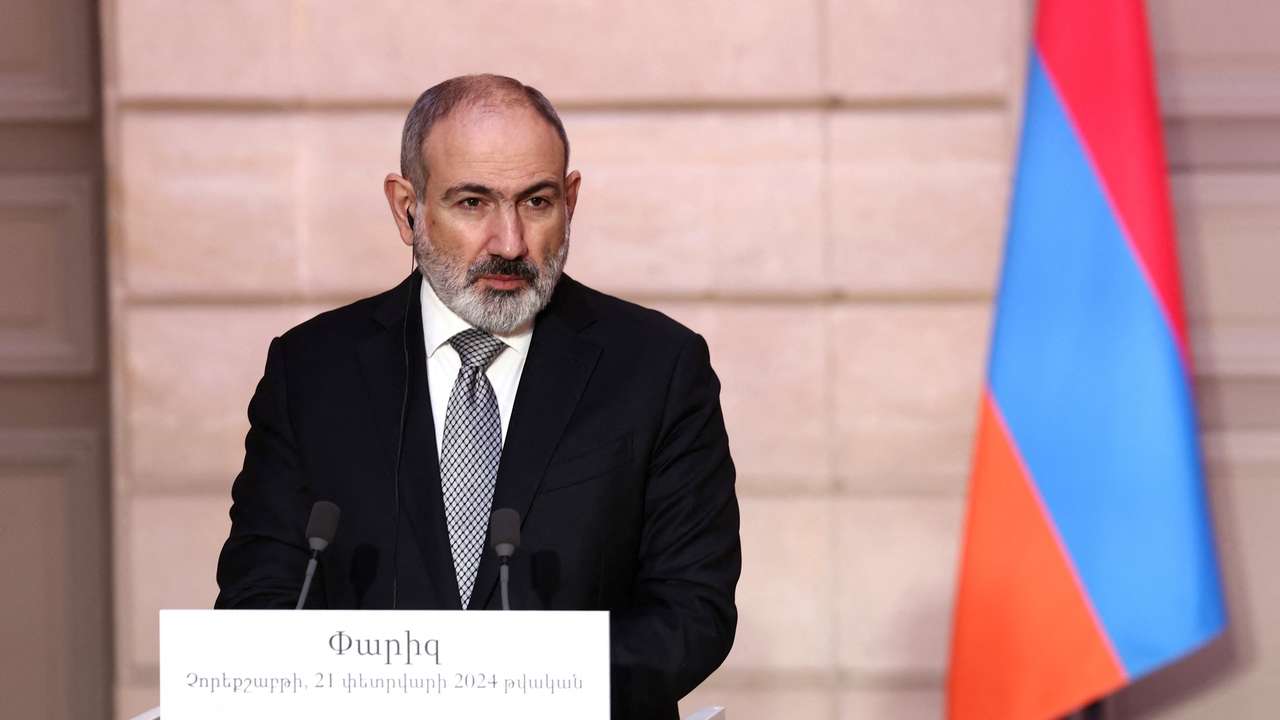
Armenia could face a war with Azerbaijan if it does not compromise with Baku and return four Azerbaijani villages it has held since the early 1990s, Prime Minister Nikol Pashinyan said in a video published on Tuesday.
Pashinyan was speaking during a meeting on Monday with residents of border areas in northern Armenia's Tavush region, close to a string of deserted Azerbaijani villages that Yerevan has controlled since the early 1990s.
RECOMMENDED FOR YOU

Europe hit by wave of protests as rising living costs, housing crisis fuel unrest
The four villages, which have been uninhabited for over 30 years, are of strategic value to Armenia as they straddle the main road between Yerevan and the Georgian border.
Azerbaijan has said the return of its lands, which also include several tiny enclaves entirely surrounded by Armenian territory, is a necessary precondition for a peace deal to end three decades of conflict over the region of Nagorno-Karabakh, which Baku's forces retook last September.
Russia's TASS state news agency quoted Pashinyan as telling residents in the video clip that was circulated by his government that failure to compromise over the disputed villages could lead to war with Azerbaijan "by the end of the week".
"I know how such a war would end," he added.
Yerevan suffered a major defeat last September when Baku's forces retook Nagorno-Karabakh in a lightning offensive, prompting almost all of that region's estimated 100,000 ethnic Armenians to flee to Armenia.
Though Karabakh is recognised internationally as Azerbaijani territory, the region's ethnic Armenians had enjoyed de facto independence from Baku since the war of the early 1990s.
PEACE TREATY
Baku and Yerevan have said they now want to sign a formal peace treaty, but talks have become bogged down in issues including demarcation of their 1,000 km (620 mile) shared border, which remains closed and heavily militarised.
RECOMMENDED FOR YOU

Helsinki, Tallinn and Stockholm among European capitals with shortest winter daylight
Pashinyan has signalled in recent weeks that he is willing to return Azerbaijani land controlled by Armenia, and suggested rerouting Armenia's road network to avoid Azerbaijani territory.
Mainly Muslim Azerbaijan also continues to control areas internationally recognised as part of Christian Armenia.
Azeri President Ilham Aliyev said on Sunday his country was "closer than ever" to a peace with Armenia, in remarks made after holding talks with NATO Secretary-General Jens Stoltenberg in Baku.
Stoltenberg held talks on Tuesday with Pashinyan in Armenia, which is nominally a Russian ally though its relations with Moscow have deteriorated in recent months over what Yerevan says is Russia's failure to protect it from Azerbaijan.
As a result, Armenia has pivoted its foreign policy towards the West, to Moscow's chagrin, with senior officials suggesting it might one day apply for European Union membership.
In a statement posted on Tuesday on the Telegram messaging app, Russian Foreign Ministry spokeswoman Maria Zakharova suggested Yerevan's deepening ties with the West were the reason for Armenia having to make concessions to Azerbaijan.
This article was produced by Reuters news agency. It has not been edited by Global South World.