Europe hit by wave of protests as rising living costs, housing crisis fuel unrest
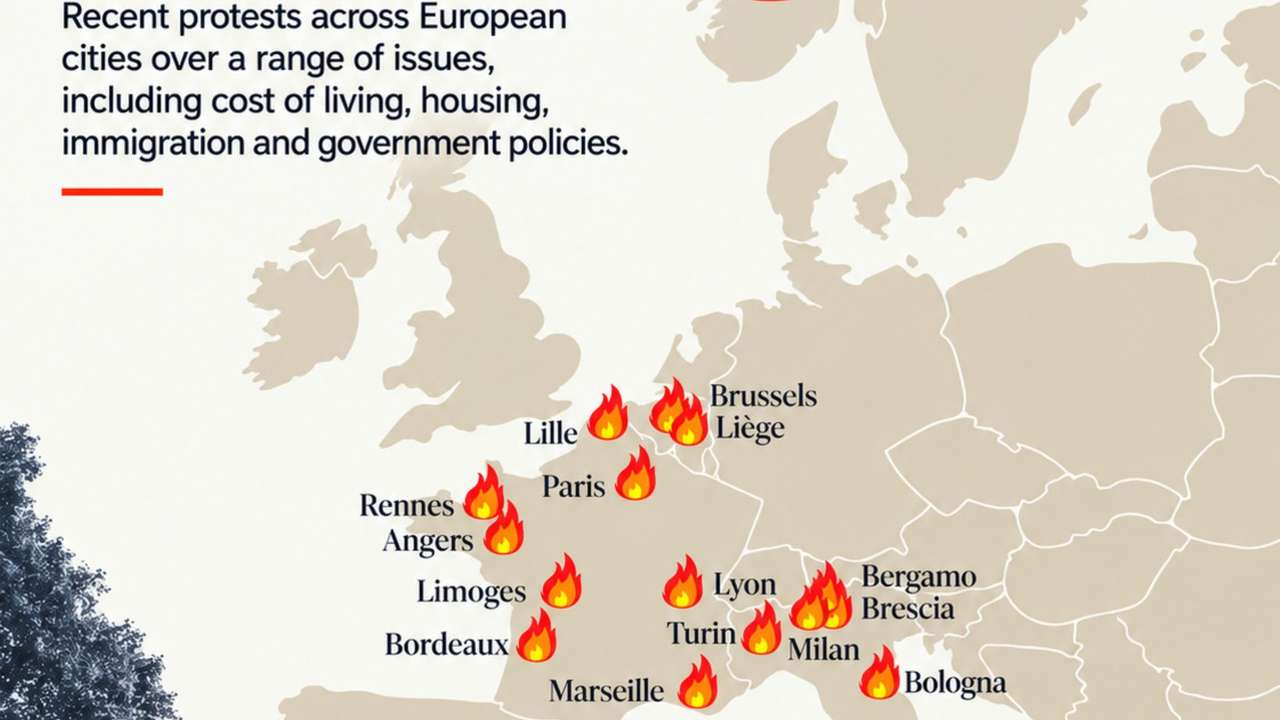
Protests have spread across several European countries, with hundreds of thousands of people taking to the streets over rising living costs, expensive housing, low wages and declining public services.
Key points
- Hundreds of thousands protest across Europe over rising living costs and government policies.
- France sees major unrest as demonstrations spread to Belgium, Italy and other countries.
- Housing costs, low wages and education funding drive growing public anger.
Protests have spread across several European countries, with hundreds of thousands of people taking to the streets over rising living costs, expensive housing, low wages and declining public services.
Demonstrations have taken place in France, Belgium, Italy, Spain, Portugal, Albania and Greece, putting pressure on governments already facing economic and political challenges. Although the protests have different causes, many reflect growing frustration over household finances and government policies.
France has seen some of the largest demonstrations. More than 550,000 people joined protests on 17 October, according to figures reported by the Interior Ministry. What began in September as student protests over poor school conditions and education funding has grown into a wider movement demanding action on living costs and public services. Some demonstrations turned violent, with clashes between police and protesters and damage to buildings in Paris, Lyon, Marseille and other cities.
In Belgium, police used tear gas and water cannon during demonstrations in Brussels, while protests also took place in Liège. Students have opposed rising education costs and reforms they fear could make higher education less accessible.
RECOMMENDED FOR YOU
Europe's rainfall divide: Norway's coast receives over 3,000 mm while parts of Spain remain dry
Italy has experienced protests over wages, employment, healthcare and housing, with clashes reported in Milan, Turin and Bologna. Meanwhile, demonstrators in Portugal and Spain have demanded action on rising rents and the shortage of affordable homes.
Greece became another focus of demonstrations on 21 October, when thousands of students and teachers marched to demand better education funding, improved school facilities and relief from rising living costs. Police estimated that about 10,000 people demonstrated in Athens and its suburbs.
Economic pressures have helped fuel the unrest. Eurostat figures show that consumer prices increased by 59% in France, 68% in Italy, 71% in Portugal and 78% in Spain between 2000 and 2026. Rising energy and housing costs have added to the pressure on households, particularly younger people struggling to afford accommodation.
The demonstrations are not part of one organised European movement, and most protesters have marched peacefully. However, the scale of the unrest highlights growing dissatisfaction with living standards and public services, presenting another challenge for European governments ahead of upcoming elections.
This story is written and edited by the Global South World team, you can contact us here.