Asia and Africa account for nearly 85% of global births in 2026
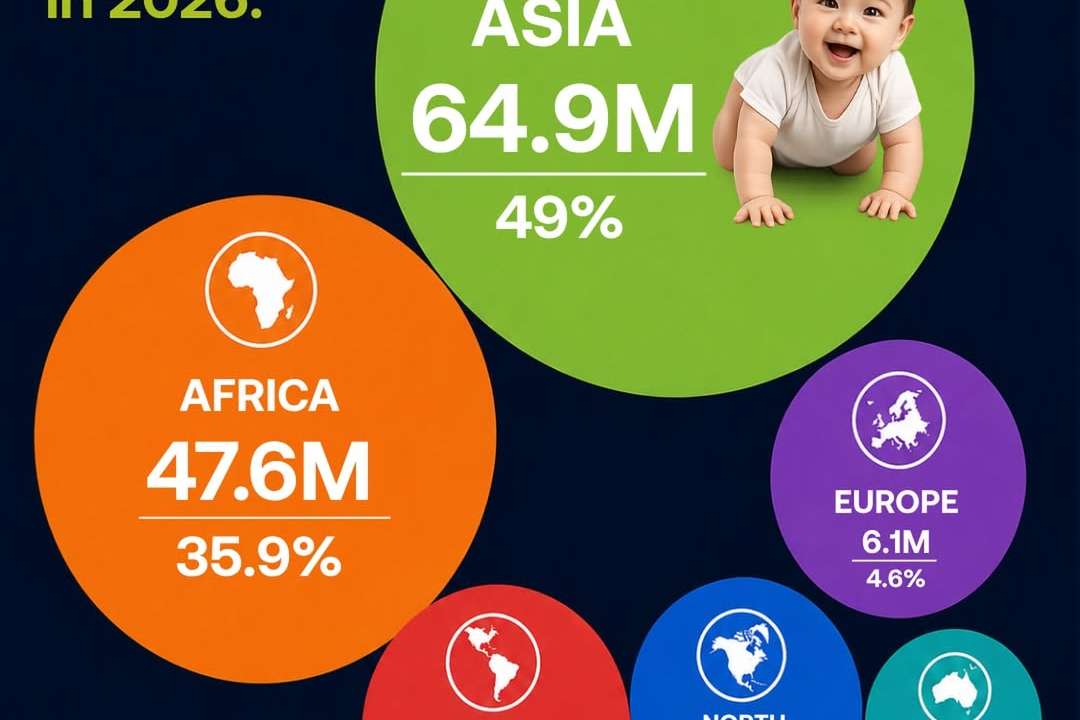
Asia and Africa are expected to account for nearly 85% of all births worldwide in 2026, highlighting the growing demographic weight of the world's two most populous continents, according to United Nations population projections.
Main Points
- Asia is projected to record 64.9 million births in 2026 (49% of the global total).
- Africa is expected to register 47.6 million births (35.9%).
- Together, the two continents account for 84.9% of births worldwide.
Asia and Africa are expected to account for nearly 85% of all births worldwide in 2026, highlighting the growing demographic weight of the world's two most populous continents, according to United Nations population projections.
UN estimates indicate that approximately 64.9 million babies will be born in Asia in 2026, representing 49% of global births. Africa is projected to record 47.6 million births, or 35.9% of the worldwide total.
Combined, the two continents will account for 84.9% of all births globally, underscoring a long-term demographic shift that is increasingly concentrating population growth in developing regions.
The projections reflect contrasting demographic trends across the world. While birth rates remain relatively high in many African and South Asian countries, fertility levels have fallen sharply across Europe, East Asia and parts of North America.
RECOMMENDED FOR YOU

Democrats expand 2026 senate battlefield, Republican-held seats come under pressure
Europe is expected to record around 6.1 million births in 2026, accounting for just 4.6% of the global total. Latin America and the Caribbean are projected to account for 9.3 million births, while North America is expected to record about 4 million births. Oceania's share is estimated at roughly 700,000 births.
The figures align with the UN's World Population Prospects, which projects that nearly all future global population growth will occur in Africa. At the same time, several countries in Europe and East Asia face shrinking populations and rapidly ageing societies.
The demographic transformation is already reshaping economic and political priorities. Governments across Africa are investing in education, healthcare and job creation to accommodate expanding young populations, while wealthier nations are increasingly confronting labour shortages and rising pension costs linked to lower birth rates.
India, now the world's most populous country, remains a major driver of global births alongside other populous Asian nations such as Pakistan, Indonesia and Bangladesh. Across Africa, Nigeria, Ethiopia and the Democratic Republic of Congo are expected to play an increasingly significant role in global population growth over the coming decades.
According to the United Nations, the world's population surpassed 8 billion in 2022 and is projected to continue growing for several more decades before stabilising later this century. Much of that growth will be determined by demographic trends unfolding in Asia and Africa.