Barbados is turning problem seaweed into fuel for the cars people already own
Key Takeaways
- Barbados-based Rum & Sargassum is developing renewable biogas from sargassum and rum distillery wastewater for transport.
- In September 2024, its Test Drive Zero used the renewable gas to power a generator that charged an electric vehicle.
- The company is now working to use purified biomethane in converted internal-combustion vehicles; its CEO, Dr Legena Henry, tells Global South World the system is about 85% developed.
- Sargassum across the tropical Atlantic reached a record 38 million metric tonnes in July 2025, according to University of South Florida researchers.
- Rum & Sargassum hopes to prove the technology in Barbados before licensing it in other sargassum-affected countries, including potential applications in West Africa.
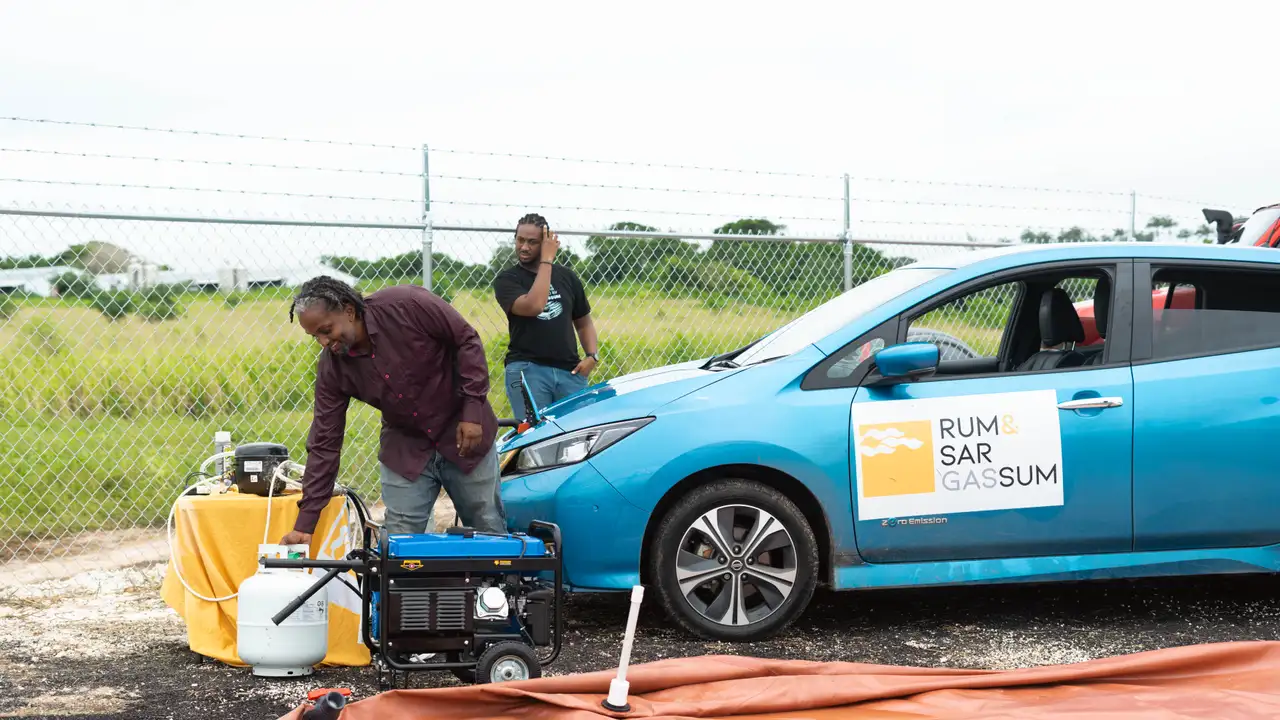
At around 2 a.m., just hours before Dr Legena Henry was due to demonstrate a new way of powering transport in Barbados, the generator refused to work.
Henry and her team had spent hours trying to feed purified biogas into the machine. Eventually, they changed how the gas was compressed.
“We switched it on, the generator started running, and the car began to charge,” Henry told Global South World. “It was two o’clock in the morning. We were just saying, ‘Thank God.’”
Hours later, the electric vehicle drove before an audience of policymakers and energy specialists.
The September 2024 demonstration, called Test Drive Zero, was powered by biogas made partly from sargassum, the brown seaweed that has washed onto Caribbean shores in huge quantities and wastewater from Barbados’ rum industry.
RECOMMENDED FOR YOU

Six countries account for three-quarters of Europe’s unicorn startups
Rum & Sargassum, the company Henry founded after research at the University of the West Indies, uses anaerobic digestion to break down the organic material without oxygen and produce biogas. The gas is then purified to obtain methane.
For Test Drive Zero, the renewable gas powered a generator, which charged an electric vehicle.
But Henry’s bigger ambition is to use purified biomethane in converted internal-combustion vehicles.
“I would say we are about 85% of the way there,” she said.
For Henry, the project is not just about finding a use for unwanted seaweed. It is also about affordability.
When she and her husband first considered buying an electric vehicle in Barbados, both were earning above-average salaries.
“We looked at the numbers and the financing and said: we are not doing this. We did not buy the electric car,” she said.
That experience shaped her argument that if an EV was difficult to afford even on above-average incomes, an electric-only transition could be out of reach for many ordinary Caribbean households.
RECOMMENDED FOR YOU

Burkina Faso to stop importing armoured vehicles, Traore says
Barbados has around 150,000 vehicles, most still powered by fossil fuels. Henry questions whether replacing them all quickly with EVs is realistic or environmentally sensible.
“You cannot simply throw away 150,000 cars on a small island without creating another environmental problem,” she said.
Instead, Rum & Sargassum is developing a model in which some existing vehicles could be converted to run on renewable gas.
The company’s financial projections are built around substantially reducing the cost of driving per kilometre, although those savings have not yet been demonstrated at commercial scale.
The feedstock itself is unlikely to disappear soon.
University of South Florida researchers estimated that sargassum across the tropical Atlantic reached a record 38 million metric tonnes in July 2025.
Henry believes energy may be one of the few uses capable of absorbing the biomass at meaningful scale.
“There are many useful things people are making from sargassum,” she said. “But the question is: how much biomass can each market realistically absorb?”
RECOMMENDED FOR YOU

Sheinbaum rings historic bell as thousands fill Zocalo for Mexican Independence Day
The idea may also travel beyond the Caribbean.
Ghana and other West African countries are affected by the same Atlantic sargassum system. Henry said the technology could eventually be adapted to different local waste streams and energy needs.
“There is sargassum on beaches in Ghana as well as on beaches in the Caribbean and Florida,” she said.
For now, the biggest challenge is moving from prototype to industry.
Collecting and transporting seaweed, building digesters, cleaning and compressing gas, and converting vehicles all require capital.
Henry said the next phase will require millions of dollars in investment.
Her long-term goal is to prove the system in Barbados, protect the intellectual property and eventually license the technology across other countries affected by sargassum.
“If you are asking which kind of solution can meet the sargassum crisis at something close to the scale at which the biomass is arriving, my answer is energy,” Henry said. “Energy has that potential.”
RECOMMENDED FOR YOU

‘Not a licence for impunity’ - Colombia allows police intervention at universities
This story is written and edited by the Global South World team, you can contact us here.
