Celsius vs Fahrenheit: Why the US still uses a different temperature scale from most of the world
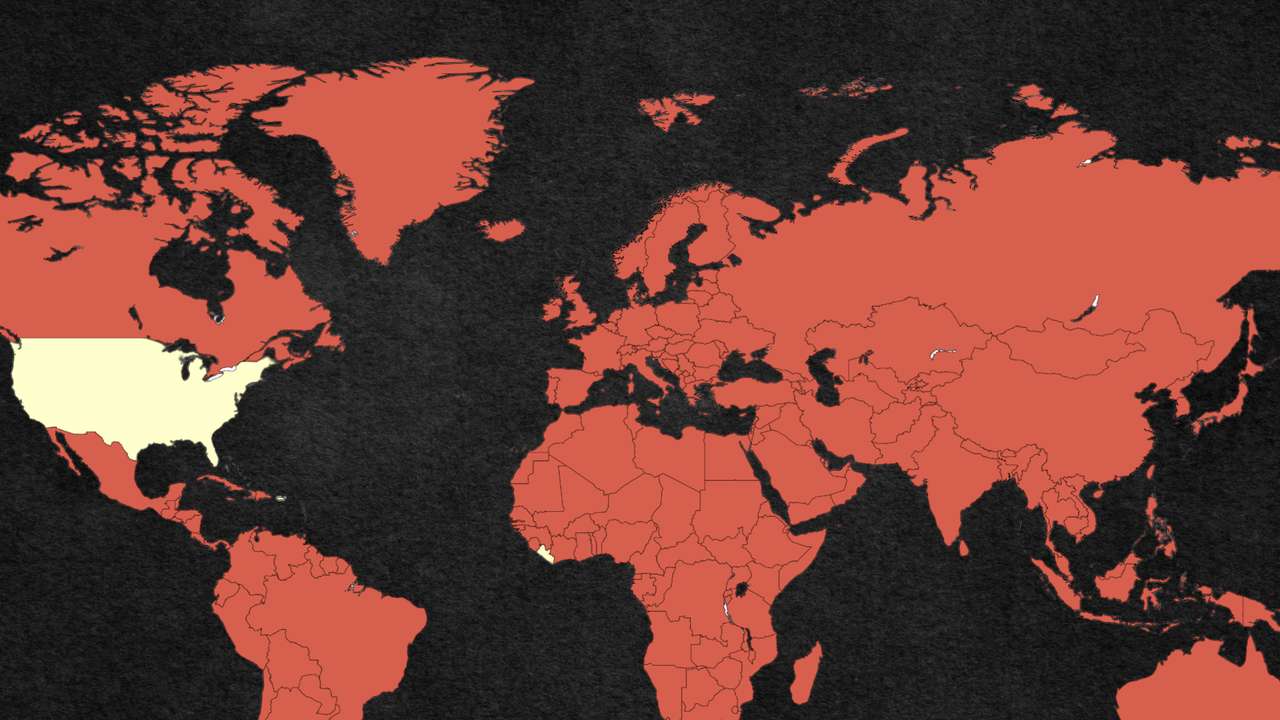
The United States remains one of the few countries that use Fahrenheit as the standard for everyday temperature measurements, while most of the world uses Celsius.
Key points
- Most countries use Celsius for everyday temperature measurements.
- The United States continues to use Fahrenheit for weather forecasts.
- Water freezes at 0°C or 32°F on the two scales.
The United States remains one of the few countries that use Fahrenheit as the standard for everyday temperature measurements, while most of the world uses Celsius.
A world map comparing temperature scales shows a striking divide: the United States stands out in yellow for Fahrenheit, while almost every other country is marked in red for Celsius.
From Europe and Africa to Asia, South America and Australia, Celsius is the standard scale for weather forecasts and everyday temperature measurements.
The United States is the most prominent exception. Americans commonly use Fahrenheit for weather reports, household thermostats and cooking temperatures, although Celsius is also used in scientific and some technical settings.
RECOMMENDED FOR YOU

‘Trying to make Ukraine surrender’ - EU's Kallas challenges Trump's Russia strategy
Canada presents a contrast to its southern neighbour. Despite its close economic and geographical ties to the United States, Canada generally uses Celsius for weather forecasts.
The two scales use different reference points. Water freezes at 0°C and boils at approximately 100°C under standard atmospheric pressure. On the Fahrenheit scale, the equivalent temperatures are 32°F and 212°F, according to the US National Institute of Standards and Technology (NIST).
The widespread use of Celsius is linked to the international adoption of the metric system. The United States has retained customary measurements for many everyday activities, helping explain why Fahrenheit remains familiar to American households.
For scientific measurements, however, the International System of Units uses kelvin as its base unit of temperature, with Celsius also widely accepted for expressing temperatures.
The difference is largely one of convention rather than accuracy. Both scales measure the same physical quantity, but express it using different numbers.
This story is written and edited by the Global South World team, you can contact us here.