China has become cool around the world. This is how: Opinion
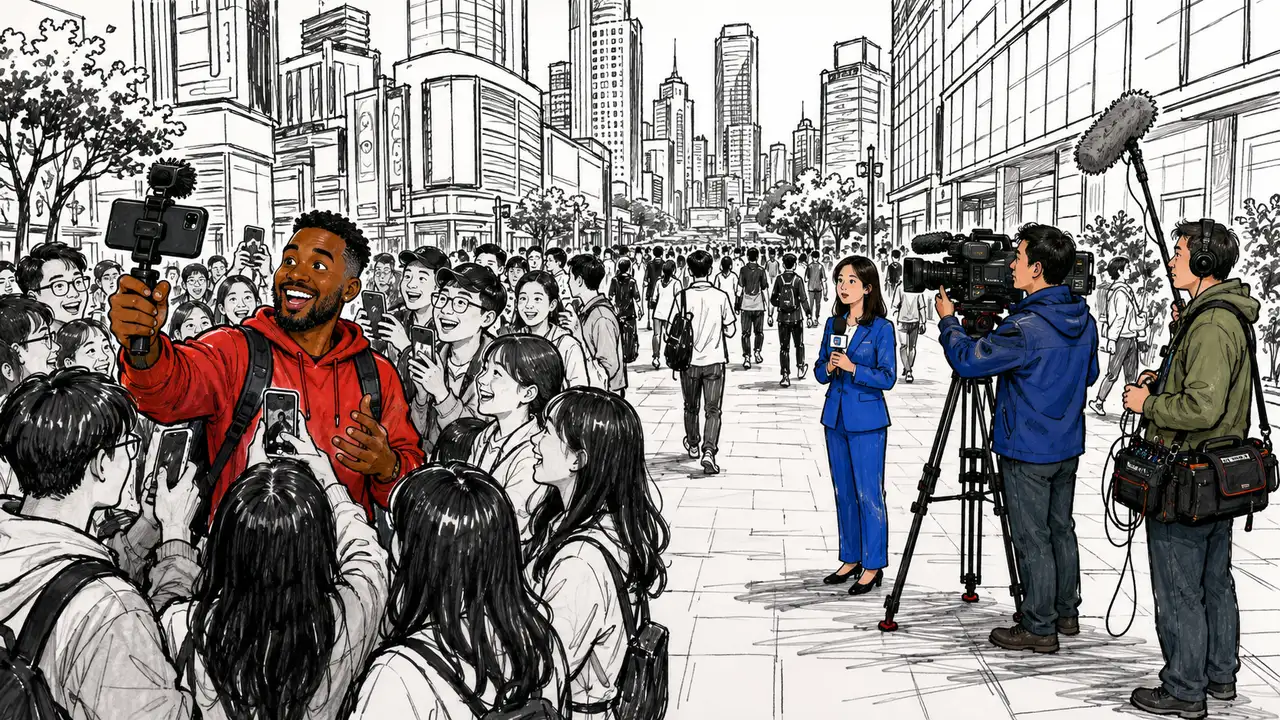
Three 2026 reports show us that the world has changed fundamentally. Two are about what has changed and the third explains how.
Gallup and the Pew Research Center released polls signalling a historic shift: global approval and recognition of China's leadership have surpassed the United States in the two benchmark reports for the first time.
Concurrently, the Reuters Institute's Digital News Report revealed a different watershed moment: social media and video networks have officially overtaken traditional broadcast television as the world's primary news source.
Are these phenomena connected? For a media observer who has closely tracked these rigorous, highly credible reports for decades, the correlation is sure. The evolution of global media provides not only the backdrop but the lever for this geopolitical polling upset.
RECOMMENDED FOR YOU
China accuses Philippines of ‘false narratives’ after South China sea collision
The "Platformisation" of News
The shift in the international images of the US and China is not a minor fluctuation, but a structural displacement spanning the globe.
The Polling Upset: Gallup notes that in 2025, China's global median approval rating rose to 36%, while the US plummeted to 31%. US approval dropped by double digits among its closest Western allies, with Germany falling by a staggering 39 points. Meanwhile, Pew data shows China overtaking the US even in neighbouring countries like Canada and Mexico. In the Global South, 75% of respondents now view the US as overly interfering, while majorities see China as a reliable partner.
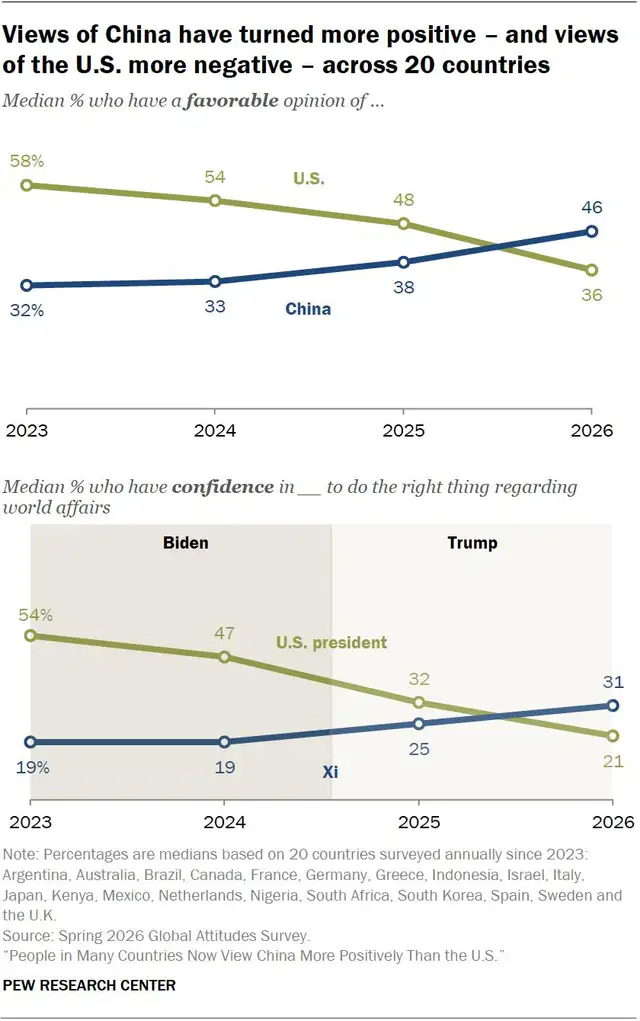
The Media Evolution: The Reuters report explains how this image shift is being delivered. For the first time, 54% of global audiences use social media and video networks as their primary news sources, beating traditional TV. Over a quarter of people now get their news from independent content creators rather than legacy newsrooms.
Platformisation has defeated traditional television. The centralised power of Western legacy media to set the agenda and apply "filters" to China's image is rapidly dissolving.
Why is China "Cool"?
The Economist recently highlighted how China's soft power is rising among younger generations. This "Cool China" phenomenon is driven by a mix of tangible development and algorithm-driven visibility:
1. The US Double-Standard Fatigue
RECOMMENDED FOR YOU
Brazil has a special place in Trump’s tariff plan. How’s it working out?
The US is bogged down in its own unilateralism. On issues like the Gaza conflict and international law, obvious American double standards have made its "rules-based order" look hypocritical, costing the US its moral high ground.
2. High-Quality Tech and Culture Exports
China is transitioning from the "World's Factory" to a "Global Creative Hub." Products like the AAA game Black Myth: Wukong, viral designer toys like LABUBU, and leading AI models and EVs (like BYD) are serving as powerful new engines for cultural soft power.
3. The 144-Hour Visa-Free Policy Meets the Algorithm
This is the ultimate catalyst. China's expanding visa-free policies have allowed massive numbers of foreign vloggers to visit on a whim. In 2025, 30.08 million foreign nationals entered China visa-free, accounting for 73.1% of all inbound foreign visitors, representing a 49.5% year-on-year increase.
They point their smartphones at real Chinese streets, capturing late-night BBQs, seamless cashless payments, and futuristic high-speed trains. Because these unfiltered realities contrast so sharply with the "poor and oppressive" narratives of legacy Western media, algorithms reward the content with massive reach.
This creates a viral, highly credible loop of positive exposure. The influence of content creators on public discourse now rivals, or even exceeds, that of traditional TV networks.
For example, American streamer iShowSpeed—whose 2025 vlog series in China averaged over 5 million views per episode—these figures are triggering massive waves of engagement and shifting perceptions on global social media.
RECOMMENDED FOR YOU
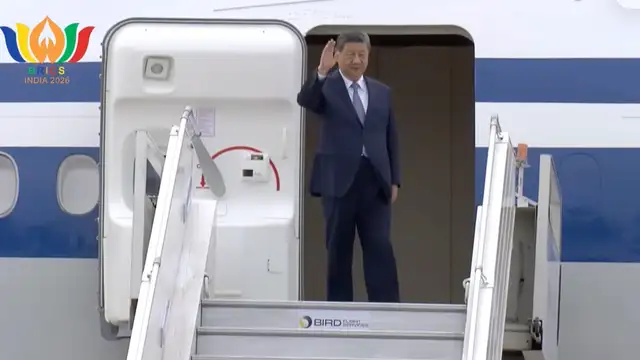
Xi arrives in India for BRICS Summit after seven years
4. Human Empathy Shatters Stereotypes
These vlogs capture the warmth of ordinary Chinese people—friendly shopkeepers, elders exercising, and approachable, helpful police officers (a stark contrast to the heavily militarized policing often seen in the US). This shared humanity resonates globally, shattering old stereotypes.
In today’s digital era, being "cool" means having high-definition visibility on social media.China has always possessed a profound cultural heritage, immense modernising energy, and a safe society. It was always "cool," but that reality was often obscured by the ideological filters of Western traditional media. Today, decentralised social media algorithms and open visa policies have allowed a vibrant, authentic, and futuristic China to reach the screens and hearts of the global public directly. This historic polling reversal is not an accidental diplomatic victory; it is the inevitable result of China's tangible, pragmatic development colliding with a global media revolution.
Yubin Du is a journalist, executive producer, and chief editor at CGTN. He was stationed in Washington, D.C., and London for six years respectively, focusing on US-China and EU-China relations. He has worked in international communications and digital media in China for over 16 years. This article represents the author's personal views.
