What is APEC's 'Heart to Heart Connectivity'? Opinion
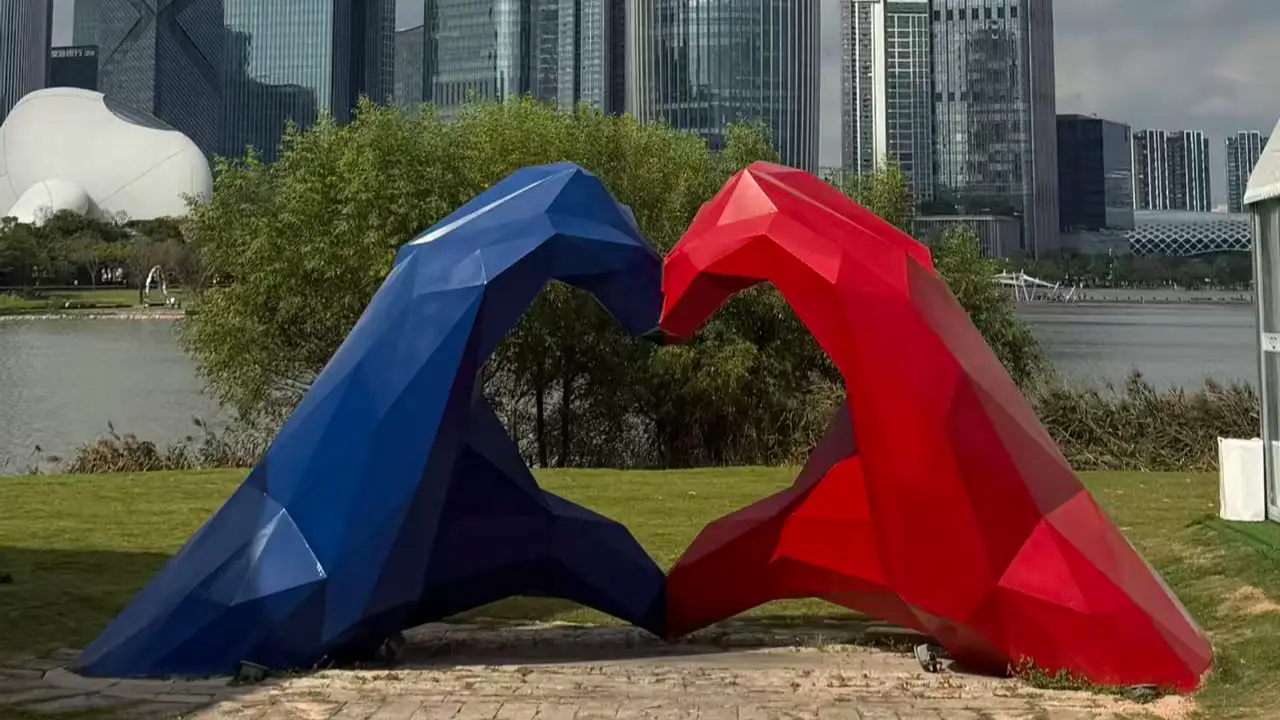
On 13 November, as the sweeping bay and towering skyline came into view through the aircraft window, I touched down in Shenzhen once again. I was here to cover the closely watched 2026 Asia-Pacific Economic Cooperation (APEC) meetings. Following Shanghai in 2001 and Beijing in 2014, this marks China's third time hosting APEC—and its most significant diplomatic event on home soil this year.
An unguarded city
This was my second visit to Shenzhen. Back in May, during a brief lull in a hectic work trip, I went for a solo bike ride along Shenzhen Bay. The sprawling Talent Park, the striking geometric lines of the Universiade Centre, families camping leisurely on vast expanses of green lawn, and young people waiting by a drone delivery kiosk to collect their parcels: all of it formed a vivid snapshot of the future. Although the ride left my arms sunburnt and peeling, that futuristic urban experience left a lasting impression: clean, efficient, green, and pulsing with fierce vitality. Having spent fourteen years as a foreign correspondent stationed in Washington, D.C. and London, I cannot help but compare it with other global metropolises. To me, Shenzhen combines the hyper-dense dynamism of Hong Kong with London's broad international outlook, topped off with the disarmingly warm tropical sunshine of Miami.
Strolling from the wide-open Civic Centre towards Lianhua Hill, I had expected to see nothing but hurried hustlers chasing their next big break. Instead, my eye was caught by a group of locals dancing to Xinjiang folk music on the square. Swaying casually to the exuberant rhythm, I was immediately and warmly pulled into the circle by complete strangers. That unguarded ease and inclusivity instantly shattered the stereotype of Shenzhen as a "cold machine of efficiency".
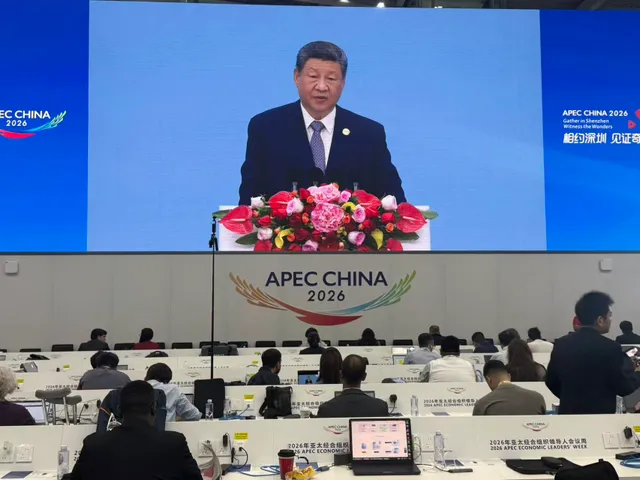
Returning to Shenzhen this time, that relaxed openness felt even more vivid against the grand backdrop of the APEC summit. The city was alive with blossoms and colourful APEC banners. At Talent Park, the international guests we had invited for filming were repeatedly surrounded by friendly passers-by, who greeted them in fluent Chinese and English and confidently asked for photos. Several of these well-travelled guests remarked to me privately that it was these ordinary people strolling the streets of Shenzhen who showed them the most authentic, vibrant face of contemporary China. The civic warmth of a city often mirrors its commercial culture and international stature. Shifting our gaze from the lively atmosphere of Lianhua Hill back to the Qianhai International Conference Centre, the exchange of ideas among Chinese and foreign leaders at the 2026 APEC CEO Summit echoed the very spirit of this city.
RECOMMENDED FOR YOU

Tunisia Roundup: Saïed demands procurement overhaul, parliament advances water and energy bills and fuel strike looms
'Heart-to-Heart Connectivity'
Before heading to Shenzhen, I spoke with Bill Addy, Chief Executive of the Liverpool BID Company, and his visiting delegation. Although the UK is not an APEC economy, they expressed a strong desire to broaden trade and economic channels with China and the wider Asia-Pacific. That hunger for cross-regional cooperation was unmistakable throughout the summit.
On 17 November, the APEC CEO Summit officially opened. Prominent Chinese entrepreneurs—including CATL Chairman Robin Zeng, Baidu Chairman Robin Li, Unitree Robotics CEO Wang Xingxing, and BYD President Wang Chuanfu—took the stage for panel discussions. Watching the live feed from the media centre at the Shenzhen Convention and Exhibition Centre, several moments stood out.
Amid rising undercurrents of deglobalisation and deepening geopolitical rifts, business leaders worldwide are grappling with unprecedented fatigue and uncertainty. Yet on this stage, we heard an Eastern narrative that transcends pure capital logic. Speaking in fluent English during a business dialogue, CATL founder Robin Zeng posed a fundamental question: what do entrepreneurs truly seek, and why do we dedicate ourselves to building businesses? His answer carried a striking idealism: running a business goes beyond making a living or turning a profit; it is about making the world a better, more sustainable place, and bringing greater happiness to everyone around us. Tying commercial ambition so closely to humanity's shared future reflects a maturing sense of responsibility among Chinese enterprises navigating a shifting global landscape.
A story shared by Lin Shunjie, Chairman of the China International Exhibition Centre Group, resonated just as deeply. In a complex global environment, he noted, enterprises seeking supply chain cooperation must clear three hurdles: "finding each other", "matching up", and "trusting each other". The first two can be solved through digital platforms and mutual recognition of standards; only "trust" must be built through the slow accumulation of working side by side. He cited the partnership between Zhejiang's Aijia Food and a Spanish high-pressure sterilisation equipment manufacturer at the China International Supply Chain Expo (CISCE). They first met and exchanged business cards in the green agriculture chain at the inaugural expo in 2023; signed a cooperation agreement at the second; announced a joint smart factory plan at the third; and by the fourth expo, unveiled a smart production line model alongside the world's first huyou citrus juice made using ultra-high-pressure technology. This trust mechanism -which Lin termed "heart-to-heart connectivity" -lays bare the deeper logic of international trade: the Asia-Pacific community transcends mere geography; it is built brick by brick through mutual trust and tangible, completed projects.
This trust-based regional synergy is unleashing remarkable pragmatic potential. During a roundtable on Asia-Pacific connectivity, Soopakij Chearavanont, Chairman of Thailand's Charoen Pokphand (CP) Group, shared two examples that vividly illustrated seamless industrial integration. He noted that while Thailand faces power bottlenecks in building AI computing centres, China has abundant, cost-effective electricity that could be transmitted to Thailand via Laos—creating a win-win-win outcome for all three nations. In agriculture and consumer goods, driven by China's huge appetite for premium Thai durians, bilateral cooperation has moved well beyond simple import-export trade towards a full, deep-processing durian industrial chain jointly built by Chinese and Thai firms. From cutting-edge AI computing power to tropical fruit on the dining table, this cross-border, precision resource integration is what keeps the Asia-Pacific's growth engine humming.
Rejecting zero-sum games
The moment that struck the deepest chord across the entire CEO Summit was a candid, cross-disciplinary dialogue on the green transition. Sitting before BYD Chairman Wang Chuanfu, renowned Columbia University economist Professor Jeffrey Sachs recounted a remarkable journey he and his wife completed this summer: driving a BYD electric vehicle from Rome, Italy, through Croatia and Bulgaria, all the way across Eurasia to Shanghai. To any observer familiar with global energy infrastructure, that sounds like a gamble fraught with range anxiety. Yet Sachs's first-hand experience dismantled that prejudice: the long drive was remarkably smooth, with charging stations available every hundred kilometres or less, allowing them to pull in and recharge effortlessly. His vivid account proved that the grand blueprint of green transition has already become an everyday reality in China, and is now being exported globally at low cost and with high resilience.
Sachs then pivoted, aiming squarely at today's misaligned global governance system. He argued bluntly that vast wealth and capital should be poured into green infrastructure that benefits humanity, rather than squandered on military operations, calling on the international community to abandon this absurd trajectory and return to building a better future. Before he had even finished speaking, the Qianhai International Conference Centre erupted into sustained applause and cheers. As a journalist who has spent years moving through international political capitals, I know the weight of that ovation. It was far more than polite courtesy; it was the collective, long-suppressed voice of the global business community. For too long, multinationals have been worn down by geopolitical zero-sum games and rising barriers. Sachs hit upon the exact pain point of every business leader in the room: commerce is fundamentally about building, humanity's future depends on sustainable development, and no lasting prosperity can take root in the ruins of division and confrontation.
RECOMMENDED FOR YOU
‘We refuse to be scapegoats’ - Chad rejects Niger's deadly drone strike accusations
Piecing these moments together, the core pulse of this year's APEC summit becomes unmistakably clear. Whether in the green tyre tracks stretching across Eurasia, the "heart-to-heart connectivity" reducing friction in digital supply chains, or the locals inviting foreign guests to dance beneath Lianhua Hill, everything speaks to the summit's central theme: openness, innovation, and cooperation.
The true meaning of APEC has never been confined to formal joint declarations and policy initiatives. It lives in the drones crisscrossing Shenzhen Bay, in the charging piles spreading across Southeast Asia, and above all, in every sincere handshake and bond of trust forged across borders. In a city that blends lush greenery with cutting-edge technology, and pairs international vision with everyday warmth, there is every reason to believe that an Asia-Pacific community - one that rejects insularity, embraces cooperation, and shares a common destiny - is striding towards us through the mist.
Du Yubin is a CGTN journalist, producer, and chief editor. Having been stationed in Washington, D.C., and London for six years, he focuses on Sino-US and Sino-European relations, with over 16 years of experience in international communication and new media. This article solely represents the author's personal views.
