China, Russia join Iran in rejecting European move to restore sanctions on Tehran
- #Asia
- #Pacific
- #Central
- #Eastern Europe
- #CIS Countries
- #Commodities Markets
- #Conflicts
- #War
- #Peace
- #Defense
- #Diplomacy
- #Foreign Policy
- #Disasters
- #Accidents
- #East Asia
- #Europe
- #Middle East and Africa
- #Energy Region Europe
- #Middle East
- #Africa
- #Emerging Market Countries
- #International Atomic Energy Agency
- #International Agencies
- #Treaty Groups
- #Energy Region Middle East
- #North Asia
- #Energy Markets
- #Nuclear Armaments
- #Nuclear Proliferation
- #Nuclear Power Stations
- #government
- #Politics
- #US President
- #Power Markets
- #Power Generation
- #International
- #National Security
- #South-West Asia
- #Gulf
- #International Trade
- #Embargoes
- #Sanctions
- #United Nations
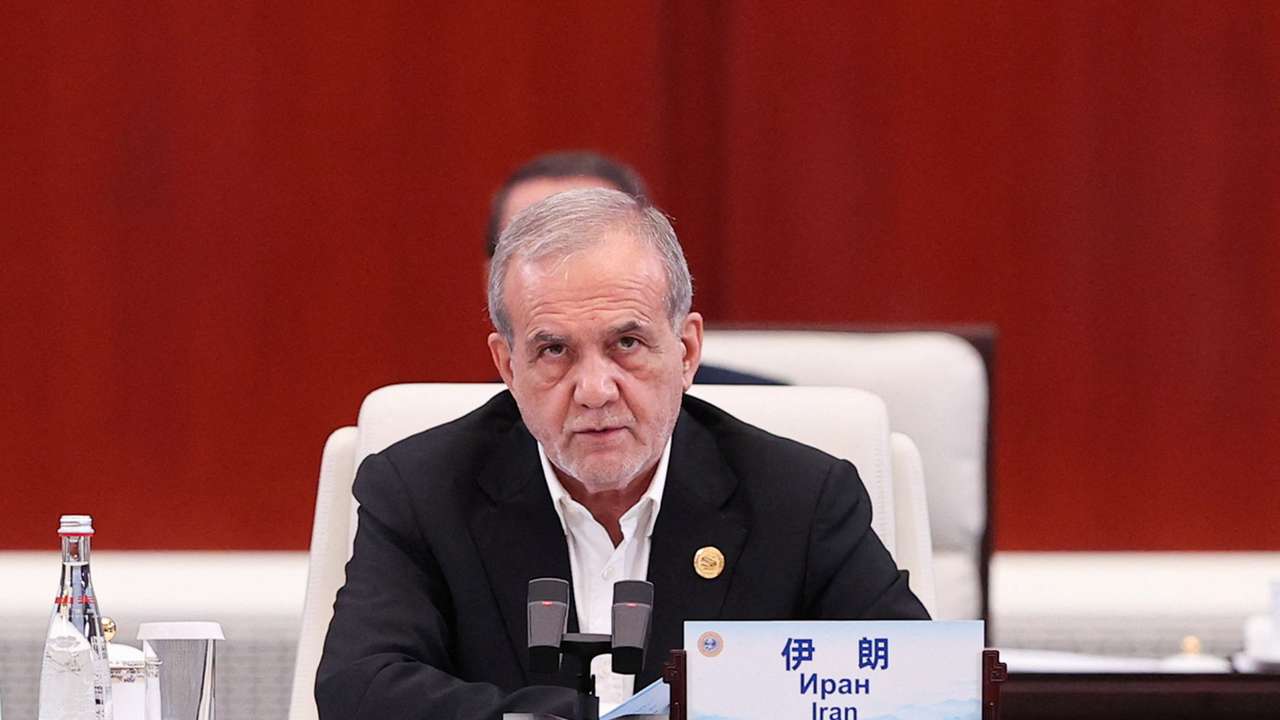
UN Security Council permanent members China and Russia backed Iran on Monday in rejecting a move by European countries to reimpose UN sanctions on Tehran loosened a decade ago under a nuclear agreement.
A letter signed by the Chinese, Russian and Iranian foreign ministers said a move by Britain, France and Germany to automatically restore the sanctions under a so-called "snapback mechanism" was "legally and procedurally flawed".
China and Russia were signatories to Iran's 2015 nuclear deal with world powers, along with the three European countries, known as the E3. U.S. President Donald Trump pulled the United States out of the agreement in his first term in 2018.
The Europeans launched the "snapback mechanism" last week, accusing Iran of violating the deal, which had provided relief from international financial sanctions in return for curbs to Iran's nuclear programme.
RECOMMENDED FOR YOU
Sadio Mane invests $20 million in hometown agro project
The letter published by Iran's Foreign Minister Abbas Araqchi in a post on X on Monday said that the course taken by Britain, France, and Germany "abuses the authority and functions of the UN Security Council".
Iran has long since broken through the limits on uranium production set under the 2015 deal, arguing that it is justified in doing so as a consequence of Washington having pulled out of the agreement. The deal expires in October this year, and the snapback mechanism would allow sanctions that were lifted under it to take effect again.
Iran and the E3 held talks aimed at a new nuclear agreement after Israel and the U.S. bombed Iran's nuclear installations in mid-June. But the E3 deemed that talks in Geneva last week did not yield sufficient signals of readiness for a new deal from Iran.
"Our joint letter with my colleagues, the foreign ministers of China and Russia, signed in Tianjin, reflects the firm position that the European attempt to invoke snapback is legally baseless and politically destructive", Iran's foreign minister said in his post on X.
This article was produced by Reuters news agency. It has not been edited by Global South World.