Colombian armed group Segunda Marquetalia agrees unilateral ceasefire
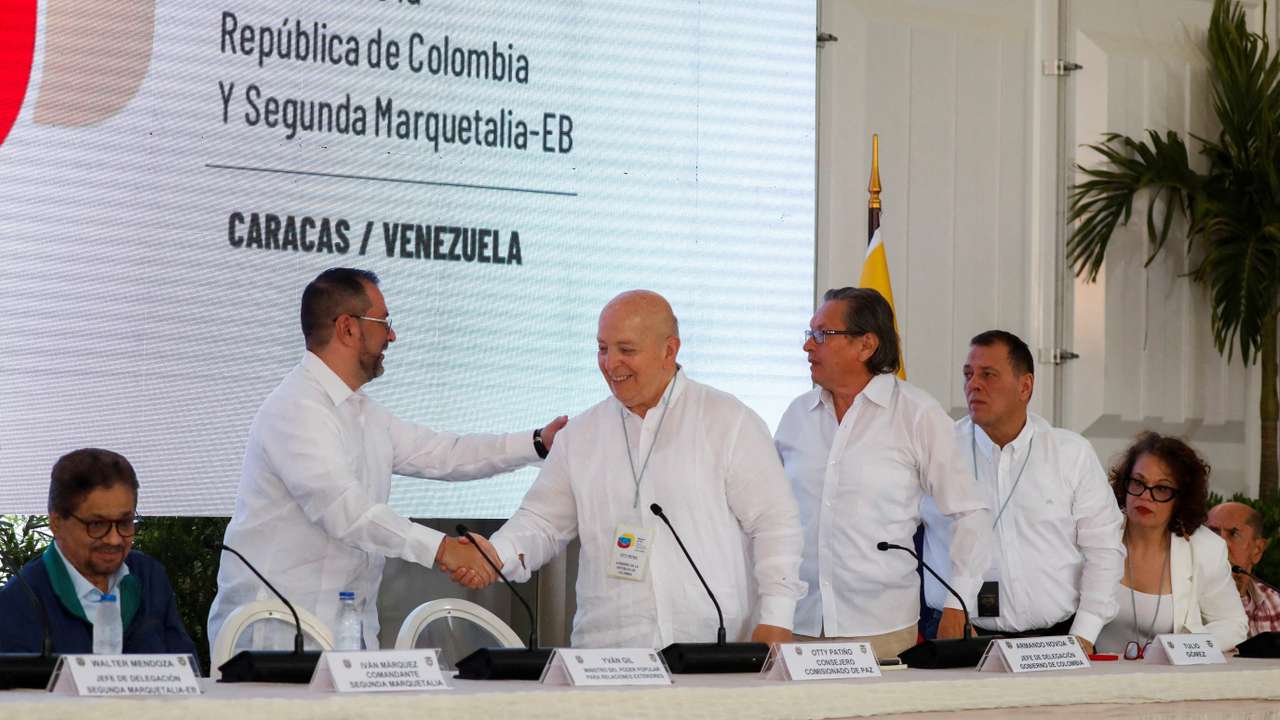
Colombian armed group Segunda Marquetalia agrees unilateral ceasefire
Colombian armed group the Segunda Marquetalia on Sunday agreed to a unilateral ceasefire, after several days of peace talks in Caracas, which are part of President Gustavo Petro's efforts to end 60 years of unrest in his country.
The unilateral ceasefire marks a step towards finally achieving peace in the South American nation, and reducing the violence that has long plagued the country.
The Segunda Marquetalia is a dissident faction of the now-demobilized Revolutionary Armed Forces of Colombia (FARC) rebels whose leaders initially agreed to a 2016 peace deal, but returned to arms citing unfulfilled promises three years later.
RECOMMENDED FOR YOU

Meet Tsunami, the rescue dog who helped locate 26 people after Venezuela’s earthquakes
The Colombian government announced the agreement, saying the guerrilla group agreed to hand over hostages and respect the lives of Colombian civilians and officials in the areas of the country where it still has a presence.
The ceasefire will take effect when a presidential decree is issued to "de-escalate offensive operations," the government said in a statement. The Colombian government added that a meeting to present a "de-escalation agreement" will be held no later than July 20.
The government's chief negotiator, Armando Novoa, told Reuters in mid-June that Colombia hopes to sign and begin implementing a peace agreement with the Segunda Marquetalia before the leftist Petro leaves the presidency in just over two years.
Colombia is holding separate talks with the National Liberation Army rebels and the armed group Estado Mayor Central, another former faction of the FARC, which never signed the 2016 agreement and most of whose units have rejected dialogue.
This article was produced by Reuters news agency. It has not been edited by Global South World.