DR Congo Roundup: Constitutional debate, UN Security Council leadership, strengthened Ebola response

Experts and religious leaders back constitutional reform debate
Debate over constitutional reform is gathering momentum in the Democratic Republic of the Congo, with both political figures and senior Catholic clergy arguing that the country's legal framework should reflect today's political and social realities. Priests from the Archdiocese of Kananga have expressed support for the possibility of a lawful constitutional revision, stressing that any reform must follow democratic procedures and serve the national interest rather than partisan objectives. At the same time, political leaders have argued that the current Constitution, adopted in 2006, no longer adequately addresses the country's evolving governance challenges, security threats and development priorities. The discussion remains politically sensitive. President Félix Tshisekedi has previously suggested that parts of the Constitution may require updating, while opposition parties have warned against reforms they believe could alter the political balance ahead of future elections. Supporters insist that any revision must emerge through a broad national consensus and remain consistent with democratic principles.
DR Congo assumes rotating presidency of the UN Security Council
The Democratic Republic of the Congo has assumed the rotating presidency of the United Nations Security Council for one month, placing Kinshasa at the centre of international discussions on global peace and security. The presidency gives the DRC responsibility for setting the Council's agenda, chairing meetings and facilitating negotiations among its members. Although the role rotates monthly, it provides an opportunity for the country to highlight issues of particular importance, including peacekeeping, conflict prevention, humanitarian crises and security challenges affecting Africa. The appointment comes as the DRC continues to confront armed conflict in the east, humanitarian pressures and regional diplomatic efforts involving the Great Lakes region. Holding the presidency also offers Kinshasa an opportunity to draw greater international attention to instability caused by armed groups, including the M23 rebellion and broader regional security concerns.
Government orders maximum Ebola surveillance in Ituri
Authorities have intensified Ebola prevention measures after the Military Governor of Ituri Province ordered maximum surveillance in the towns of Mongbwalu and Niania, following concerns over a possible resurgence of the virus. The directive includes strengthened health monitoring, increased screening, rapid reporting of suspected cases and closer coordination between provincial authorities and health agencies. Officials are seeking to prevent any spread by ensuring local health facilities remain prepared to identify and isolate potential infections quickly. The renewed alert reflects the DRC's long experience managing Ebola outbreaks. Health authorities continue to rely on surveillance, laboratory testing, contact tracing and community engagement to minimise transmission risks, particularly in eastern provinces where insecurity often complicates public health responses.
South Africa's Ramaphosa visits Kinshasa in solidarity during Ebola response
South African President Cyril Ramaphosa travelled to Kinshasa in a show of solidarity as the Democratic Republic of the Congo responds to renewed Ebola concerns. The visit underscores growing regional cooperation on public health emergencies, recognising that infectious disease outbreaks can quickly become cross-border challenges. Ramaphosa's presence also reflects South Africa's support for regional coordination through the African Union and other continental institutions. Beyond health, the visit highlights the close political and diplomatic relationship between Pretoria and Kinshasa, with both governments continuing to cooperate on peace, security and regional integration in Central and Southern Africa.
RECOMMENDED FOR YOU
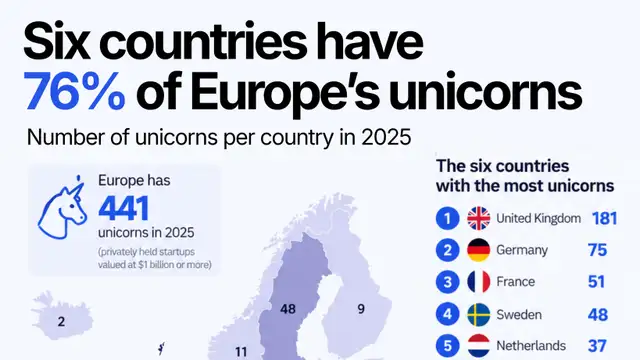
Six countries account for three-quarters of Europe’s unicorn startups
Government strengthens security and trade agenda
Deputy Prime Minister and Interior Minister Jacquemain Shabani arrived in Kisangani to chair an interprovincial security meeting and launch the recruitment of 1,600 new police officers, part of efforts to strengthen public security in the country's eastern provinces. Separately, Trade Minister Julien Paluku used a meeting in Abuja, Nigeria, to urge member states to finalise outstanding tariff concessions under the African Continental Free Trade Area (AfCFTA). He argued that completing the tariff negotiations is essential to unlocking greater intra-African trade and ensuring businesses across the continent benefit from the agreement. Together, the initiatives demonstrate Kinshasa's twin priorities of improving domestic security while advancing regional economic integration. As the DRC confronts armed conflict, public health threats and economic challenges simultaneously, officials argue that stronger institutions and deeper continental cooperation will be critical to the country's long-term stability and development.
This story is written and edited by the Global South World team, you can contact us here.