England flags spark pride and concern amid anti-immigration protests

By Catarina Demony and Vitalii Yalahuzian
The red and white St George's Cross and the Union Jack flags have proliferated along streets across England in recent weeks in what supporters say is a campaign to show national pride, but others fear is part of growing anti-immigration sentiment.
The flags have emerged during a politically charged summer in Britain that has been dominated by the subject of migration, with the YouGov monthly sentiment tracker showing that since the end of June immigration has overtaken the economy as voters' biggest concern.
"It's our flag, we should be able to feel proud to fly it," said Livvy McCarthy, a 32-year-old bartender, as she walked past a pedestrian crossing in the Isle of Dogs, London, painted to resemble the English flag. "Every other country can do the same, so what's the problem?"
RECOMMENDED FOR YOU

New Asia Forum: Indonesia to set out progress on sustainable AI data centres
National flags often hang from public buildings in Britain, but it is rare for them to appear in the streets outside of sporting, royal or military events.
The appearance of flags has coincided with a wave of protests in recent weeks outside hotels sheltering asylum seekers. Fuelled by social media, the movement appears to have originated with the Birmingham-based Weoley Warriors, with several groups now encouraging the display of more flags.
The Warriors call themselves a group of "proud English men" on their fundraising page, which says they want to show how "proud we are of our history, freedoms and achievements". They did not give any further details as to their motives for hanging the flags, which have appeared in several English cities, predominantly in the West Midlands.
In the 1970s, the Union flag was adopted as a symbol by the far-right National Front party, which openly promoted white supremacist views, while the Cross of St George, the patron saint of England, likewise was brandished by English soccer hooligans and extreme right-wing groups.
As a result, while some regard displaying the flag as showing patriotism, others, including those from migrant communities or ethnically diverse backgrounds, are concerned they are being targeted.
Stanley Oronsaye, a 52-year-old hospitality worker from Nigeria and a resident of the Isle of Dogs, said people should be free to express their views on migration policy, so long as it remains within the law.
Yet he felt uneasy. The Tower Hamlets borough, which is home to the Isle of Dogs, is one of the most diverse areas in Britain, with nearly half of residents born outside the UK.
"The worry is from the fact that if it escalates it can turn into something else," Oronsaye said. "It's worrisome when... nationalism is allowed to take a different tone."
RECOMMENDED FOR YOU

US tops Pakistan’s salt export markets by value
Jason, 25, who declined to give his last name, said the flags were about "getting English culture back".
"We are seeing more of other cultures than we are of our own now," he said on the streets of Tower Hamlets.
WAVES OF PROTEST
The protests outside hotels housing asylum seekers in recent weeks were triggered in part after an Ethiopian asylum seeker staying in a hotel north of London was charged last month with sexual assault. He denies the charge.
It follows a wave of riots last summer targeting asylum seekers and ethnic minorities in several British cities, after three young girls were murdered at a Taylor Swift-themed dance event, with social media falsely attributing the attack to a radical Islamist immigrant.
Prime Minister Keir Starmer said at the time the violence was the result of "far-right thuggery".
Asked about the flag movement, a spokesperson for Starmer said the prime minister views flags as symbols of the nation's heritage and values but has recognised that some want to use it to cause conflict.
The prime minister, the spokesperson said on Tuesday, recognises people's frustrations with the economy and the pressures illegal migration is putting on local communities,
RECOMMENDED FOR YOU

Mudslides sweep away vehicles, flood homes in Chile's Santiago
Some councils have removed flags, citing safety reasons.
Tower Hamlets council said flags may be displayed on private property but that any flag attached to council infrastructure would be removed.
"We are aware that some individuals putting up flags are not from our borough and that there have been wider attempts by some coming from outside our borough to sow division," it said in a statement, without providing further details.
The display of flags has been endorsed by several politicians, including Nigel Farage, the former Brexit campaigner whose Reform UK tops opinion polls and the opposition Conservative Party.
Robert Jenrick, a leading Conservative politician, described councils removing the flags as "Britain-hating councils" and said on X: "We must be one country, under the Union Flag."
U.S. billionaire Elon Musk, who has promoted far-right politicians across Europe, including in the UK, posted a picture of the English flag on his X platform on Tuesday.
In the Isle of Dogs, a peninsula in east London near to the Canary Wharf financial district, many of the flags were displayed near the Britannia Hotel, a government-designated hotel for asylum seekers that has been the site of protests.
Local resident Shriya Joshi, a 26-year-old from India, said she remained unsure about the flags' true purpose.
RECOMMENDED FOR YOU
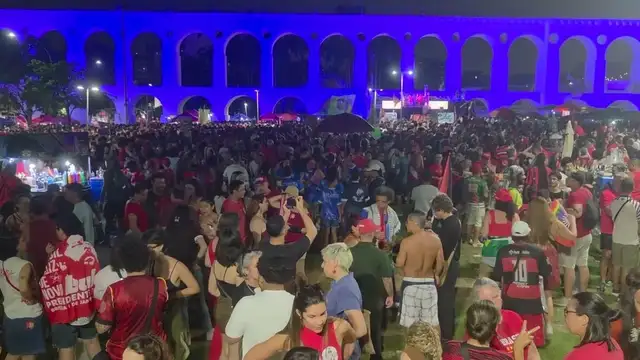
‘We cannot lose our rights’ - Lula supporters rally in Rio ahead of Bolsonaro runoff
"If it's a message to the immigrant community or anything of that sort, then it's not that pleasant," she said.
This article was produced by Reuters news agency. It has not been edited by Global South World.