What are UK political parties offering to voters?
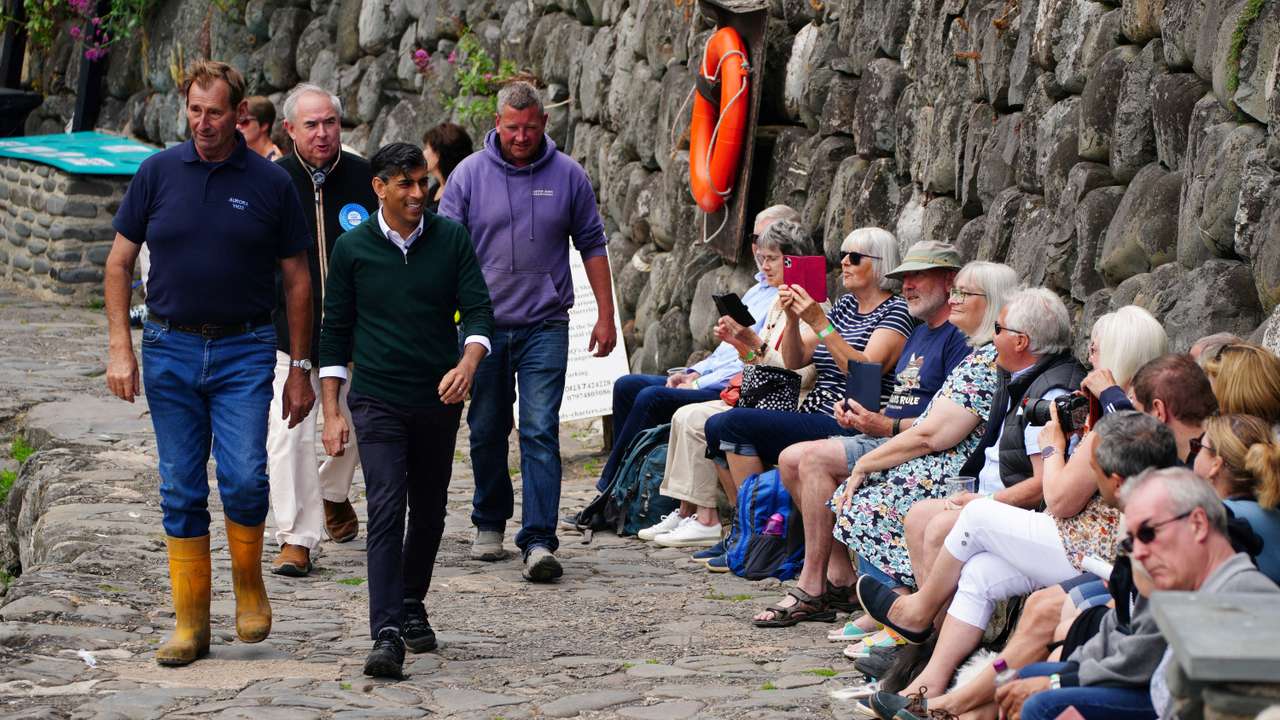
What are UK political parties offering to voters?
LONDON -Britain's political parties vying for votes before a national election on July 4 have published their manifestos - documents which set out their policies and how they will finance them.
With the opposition Labour Party leading in opinion polls by double-digits the other parties, including the governing Conservatives, are hoping to attract voters by offering pledges on everything from healthcare to tax cuts.
Following are what the main parties say on major issues.
RECOMMENDED FOR YOU
Global protests surge as more than 1,000 events are reported in one week
THE ECONOMY
Conservatives - Tax cuts are the centre of its plan to reignite economic growth, while at the same time the party wants to reduce borrowing and debt.
Labour - Its plan focuses on wealth creation. It will be "pro-business and pro-worker" and introduce a new industrial strategy, which will end short-term economic policy.
Liberal Democrats - It wants a better relationship with the European Union and an industrial strategy focused on renewables and other sectors.
Greens - It wants to raise taxes for the wealthy, invest more in health, and bring railways, energy companies and water providers back under state control.
Reform - It would reform the planning system, speed up house building and infrastructure projects and cut red tape, including employment laws in order to make it easier to hire and fire workers.
TAXES
Conservatives - The party has promised to cut taxes by 17.2 billion pounds a year by 2029/30, with a 2-percentage-point cut in National Insurance. Self-employed workers would be exempt from National Insurance by the end of the next parliament.
RECOMMENDED FOR YOU

Spain tops global ranking for latest first marriages as Niger and Liberia marry youngest
Labour - It has pledged not to raise taxes "for working people", with no increase in the basic, higher, or additional rates of income tax, National Insurance, or VAT. It will cap corporation tax at the current level of 25%.
LibDems - Its priority would be to raise the personal allowance when the public finances allow. It plans to reform capital gains tax to raise around 5 billion pounds ($6.3 billion).
Greens - It would introduce a wealth tax on individuals with assets above 10 million pounds.
Reform - It would raise the point at which people begin paying income tax, reduce the tax on buying property and abolish Inheritance Tax on all estates under 2 million pounds. It would also reduce the main rate of corporation tax to 20%.
HEALTH AND SOCIAL CARE
Conservatives - The party has committed to above-inflation increases for the National Health Service (NHS) every year, and will recruit 92,000 more nurses and 28,000 more doctors.
Labour - It will cut waiting times by adding 40,000 more appointments every week. It will also double the number of cancer scanners.
LibDems - It has pledged a 9 billion pound package commitments, including increasing the number of community doctors and higher pay for care workers.
RECOMMENDED FOR YOU

A wake-up call: The countdown for Latin American democracy — Opinion
Greens - The party wants to increase the NHS budget by 8 billion pounds in the first year, rising to 28 billion by 2030.
Reform - It would cut tax for frontline healthcare staff for three years, offer tax relief on private healthcare, and provide some NHS patients with vouchers for private treatment.
DEFENCE
Conservatives - The party wants to boost defence spending to 2.5% of GDP by 2030.
Labour - It will set out a path to the same 2.5% target.
LibDems - It would raise defence spending every year of the parliament, also with an ambition to spend at least 2.5%.
Greens - The party would cancel Britain's nuclear deterrent.
Reform - It would increase defence spending to 2.5% of GDP by year three, and then 3% within six years. It would recruit 30,000 army staff.
RECOMMENDED FOR YOU
Europe’s political crises are exposing vulnerabilities its leaders have acknowledged for years: Opinion
IMMIGRATION
Conservatives - The party has promised to bring in a binding cap for legal migration. On illegal migration, it says monthly flights will take those arriving on small boats across the Channel to Rwanda.
Labour - The party wants to reform the points-based system, by bringing in restrictions on visas and by training workers where there are domestic shortages. On illegal migration, it will scrap the government's Rwanda plan, and focus on stopping people-smuggling gangs and beefing up border security.
LibDems - It will tackle people-smuggling, lift the ban on asylum seekers working and scrap the government's Rwanda scheme.
Greens - It wants to help migrants "put down roots". It would end the minimum income requirement for spouses of work visa holders and provide safe routes for those fleeing persecution.
Reform - It would freeze non-essential immigration and bar international students from bringing dependents. It would detain and deport those arriving illegally, and pick up migrants in small boats and take them back to France.
EUROPEAN UNION
Conservatives - The party said it will "build" on its post-Brexit relationships in Europe, including through new defence treaties.
RECOMMENDED FOR YOU

Lula and Flávio Bolsonaro over economy, crime and personal attacks in final Brazil election debate
Labour - The party wants to reset, deepen and improve its relationship with Europe.
LibDems - It has promised to "fix the UK's broken relationship", ultimately resulting in seeking to join the single market. EU membership remains its longer-term objective.
Greens - It wants Britain to rejoin the European Union as soon as possible.
Reform - It would scrap the more than 6,700 EU regulations which Britain retained after leaving the bloc. It also plans to abandon the so-called "Windsor Framework" deal with the EU and renegotiate the EU Trade and Cooperation Agreement.
CLIMATE POLICY
Conservatives - The party wants to cut the cost of tackling climate change, while sticking with its 2050 net zero target. It pledged to treble offshore wind, scale up nuclear, partly through using new Small Modular Reactors, and promised no new green levies or charges.
Labour - It will aim for clean power by 2030 by doubling onshore wind, tripling solar power and quadrupling offshore wind. It will establish state-owned Great British Energy, backed by 8.3 billion pounds, and it will not issue new licences for oil and gas fields in the North Sea.
LibDems - It has committed to cutting greenhouse gas emissions to net zero by 2045 at the latest.
RECOMMENDED FOR YOU

‘Absolutely not true’ - Zelensky rejects Trump's claims over rising US diesel prices
Greens - The party wants to stop all new fossil fuel extraction in Britain, phase out nuclear power, and rely increasingly on wind power plus solar.
Reform - It plans to ditch the net zero target and related subsidies and fast-track licences of North Sea gas and oil. It was also fast-track clean nuclear energy.
EDUCATION
Conservatives - The party has pledged to protect day-to-day spending per pupil. It will ban mobile phones during the school day and introduce a new "Advanced British Standard" for 16-19 year-olds. For 18-year-olds National Service will become compulsory, with a choice between military or civic duties.
Labour - It will recruit 6,500 new teachers in key subjects, establish 3,000 new primary school-based nurseries, and introduce free breakfast clubs in every primary school. It will also charge fee-paying schools Value Added Tax.
LibDems - The party will put a mental health professional in every school, increase funding and create life-long skills grants to spend on education and training.
Greens - The party wants a 2 billion pound pay uplift for teachers. It would scrap university undergraduate fees, which are currently 9,250 pounds per year.
Reform - It wants children to be taught about their heritage, and plans to ban "transgender ideology" in schools. It would also provide a 20% tax relief on private education to reduce pressure on state schools.
RECOMMENDED FOR YOU

New Asia Forum: Indonesia to set out progress on sustainable AI data centres
This article was produced by Reuters news agency. It has not been edited by Global South World.