Factbox-What happened in Philippine drug war that led to Duterte's arrest?
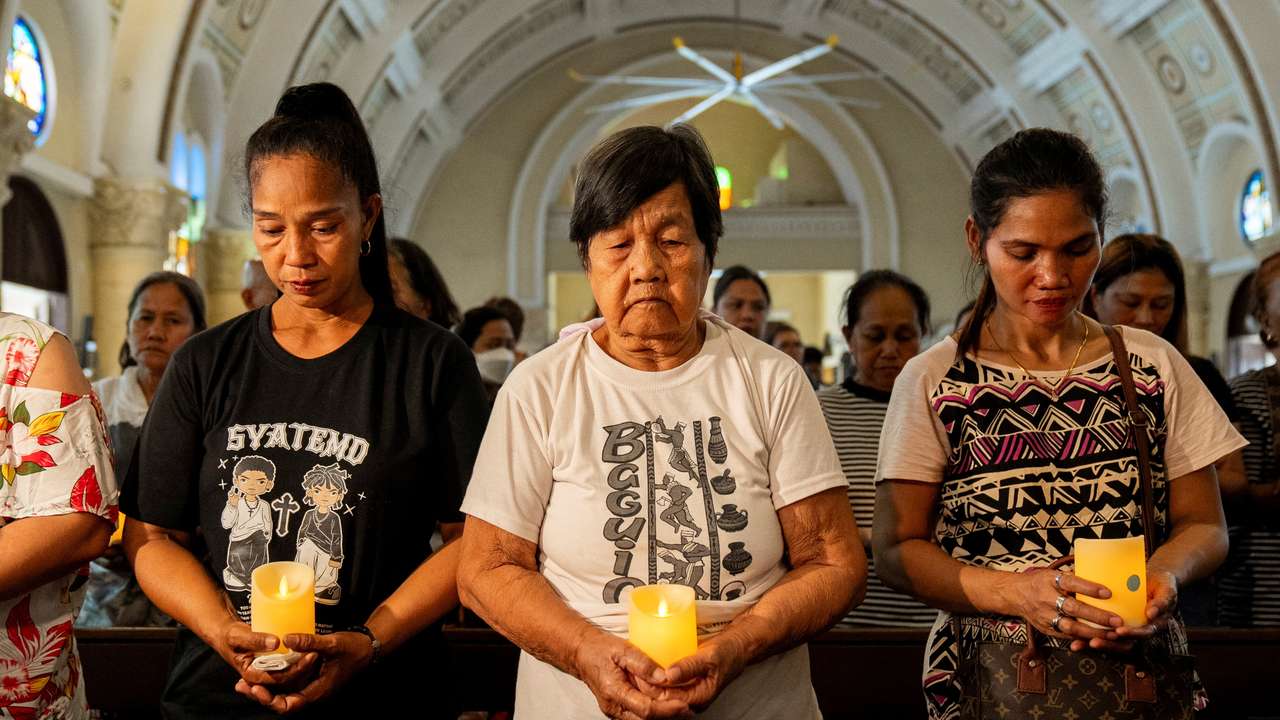
Former Philippine President Rodrigo Duterte was arrested and taken into custody on Tuesday in Manila on an International Criminal Court warrant for the "war on drugs" that defined his term in office and which killed thousands of Filipinos.
Here are some facts about the drug war during Duterte's presidency from 2016 to 2022:
CAMPAIGN VOWS TO 'KILL'
As longtime mayor of the southern Philippine city of Davao, Rodrigo Duterte was known as "the punisher" for his harsh policies. His profanity-packed speeches and death threats to drug gangs were a feature of his successful campaign for the presidency in 2016.
RECOMMENDED FOR YOU
Explosions at Taiwan waste site injure 15, damage dozens of homes
Among his statements during the campaign were: "Forget the laws on human rights. If I make it to the presidential palace, I will do just what I did as mayor. You drug pushers, hold-up men and do-nothings, you better go out. Because I'd kill you."
He said his campaign in Davao kept citizens safe from crime. He also reiterated his intentions for a violent crackdown to Reuters reporters during the campaign.
"I say let's kill five criminals every week, so they will be eliminated," he told Reuters.
NATIONWIDE ROLLOUT
It did not take long for the same kind of police crackdowns to be implemented nationwide.
By the end of 2016, Duterte's war on drugs was well under way across the nation, and the body count was setting records.
Police killed more than 2,000 people in the months after Duterte was inaugurated on June 30 until the end of the year. Most of the deaths were described as shootouts.
The crackdown and death toll did not dent Duterte's popularity.
RECOMMENDED FOR YOU

Djibouti Roundup: EU security ties, tributes to a national statesman, and new UN development partnerships
An opinion poll published by the Social Weather Stations research agency in December 2016 showed 77 percent of Filipinos were satisfied with Duterte's performance.
In 2018, Reuters journalists received a Pulitzer prize for a series of investigative stories on the drug war, including tracking down security camera footage that contradicted official accounts of shootout killings.
FINAL TOLL
By the time Duterte left office in 2022, the drug war's official toll had at least tripled. Police said 6,200 suspects were killed during anti-drug operations.
The Philippine government has officially acknowledged 6,248 deaths due to the anti-drug campaign.
But activists say the real toll of the crackdown was far greater, with thousands of urban and poor drug users, many placed on official "watch lists", killed in mysterious circumstances.
Duterte was unapologetic in his defence of his campaign and says he told police to kill only in self-defence.
Families of some of those killed and human rights advocates later exhumed bodies, sometimes accompanied by Reuters journalists, and compared the remains with death certificates and official reports.
RECOMMENDED FOR YOU
Giant Indonesian flag carried through Yogyakarta ahead of Independence Day
Dozens of cases showed violent deaths where the death certificates listed natural causes. In one case, the death certificate listed pneumonia as the cause of death, although the skull of the exhumed body had a bullet hole.
The ICC prosecutor has said as many as 30,000 may have been killed by police or unidentified individuals over the years.
ICC INVESTIGATION AND ARREST WARRANT
In February 2018, the ICC prosecutor's office said it would conduct a preliminary investigation into deaths in the Philippines.
Barely a month later, Duterte said he would withdraw from the ICC. The exit took effect in March 2019.
But under ICC rules even if a state withdraws as a member it retains jurisdiction over crimes within its jurisdiction committed during the membership period.
The ICC investigation was suspended in 2021 after the Philippines claimed it had a functioning judicial system capable of investigating and prosecuting alleged abuses.
However, in 2023, the ICC investigation was reactivated after the court said it was unsatisfied with Philippine efforts.
RECOMMENDED FOR YOU
Ortega declares end to Nicaragua elections, blames US-backed opposition
The current government of President Ferdinand Marcos Jr initially said it would not cooperate with the ICC, but said in late 2024 it would comply with any arrest warrant.
Its justice minister told Reuters in January the government was open to cooperate with the international body.
This article was produced by Reuters news agency. It has not been edited by Global South World.