Iran's parliament approves Pezeshkian's unity cabinet
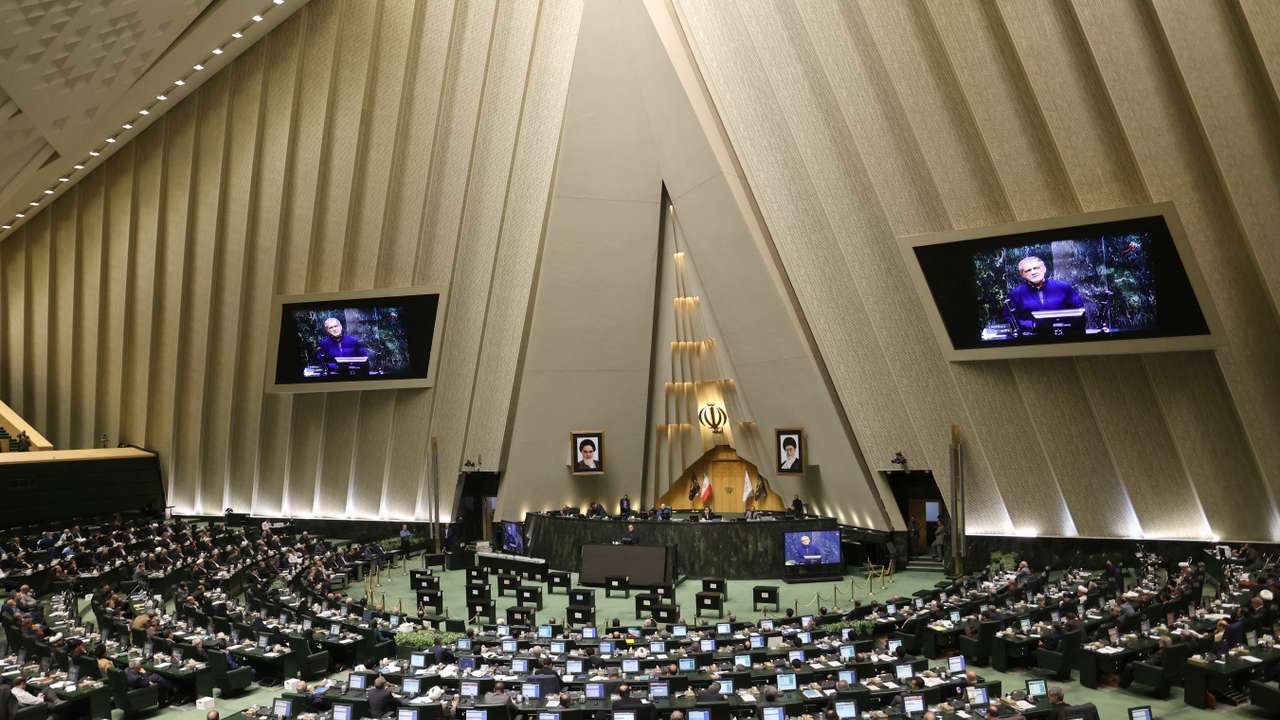
Iran's parliament approves Pezeshkian's unity cabinet
Iran's parliament approved President Masoud Pezeshkian's 19 ministers on Wednesday, state media reported, giving way to a cross-factional cabinet reflecting his focus on consensus after days of debate.
In contrast to former President Ebrahim Raisi's hardline team, the new cabinet includes reformist figures such as Health Minister Mohammadreza Zafarqandi, who secured his position despite receiving the lowest number of votes, at 163.
Approval of the ministerial line-up is not a formality. One minister proposed in 2021 by Raisi, who died in a helicopter crash in May, lost the confidence vote due to lacking experience, meaning a different name had to be drafted in.
RECOMMENDED FOR YOU
A wake-up call: The countdown for Latin American democracy — Opinion
"The road to our salvation is unity and solidarity," Pezeshkian said on Wednesday in his speech to the 285 parliamentarians present to give their vote of confidence to the cabinet, which had been debated since Saturday.
Farzaneh Sadeq was approved as minister of roads and transportation, becoming only the second female cabinet minister since the Islamic Republic's establishment in 1979.
Mohsen Paknejad was approved as minister of oil. He served as deputy minister of oil for the supervision of hydrocarbon resources from 2018 to 2021.
The oil minister told parliament he would actively pursue the issue of joint fields with neighbouring countries and boost oil output to 4 million barrels per day by March 2025.
Abbas Araqchi was approved as minister of foreign affairs with 247 votes, after convincing parliamentarians wary of his key role in negotiating Tehran's 2015 nuclear agreement with six world powers.
During deliberations with the parliament, Araqchi asserted that he holds the same world view he held during his time serving with the Revolutionary Guards and expressed support for a 2020 parliamentary bill hardening Iran's nuclear stance.
The United States under President Donald Trump withdrew in 2018 from the nuclear accord between Iran and six world powers which restricted Tehran's nuclear programme. Indirect talks between the U.S. and Tehran to revive the deal and lift costly U.S. sanctions on Iran have stalled.
In his last address to parliament on Sunday, Araqchi stressed that Tehran would continue its policy of good neighbourliness and negotiations to lift sanctions.
RECOMMENDED FOR YOU
New Asia Forum: Indonesia to set out progress on sustainable AI data centres
"China, Russia, Africa, Latin America and East Asia are priority regions in our foreign policy," Araqchi said at the time, adding that Europe could become a priority if it changed its "hostile behaviour" and that relations with the U.S. would solely be informed by "conflict management".
This article was produced by Reuters news agency. It has not been edited by Global South World.