Kremlin says Moldova's elections were not free and results raise questions
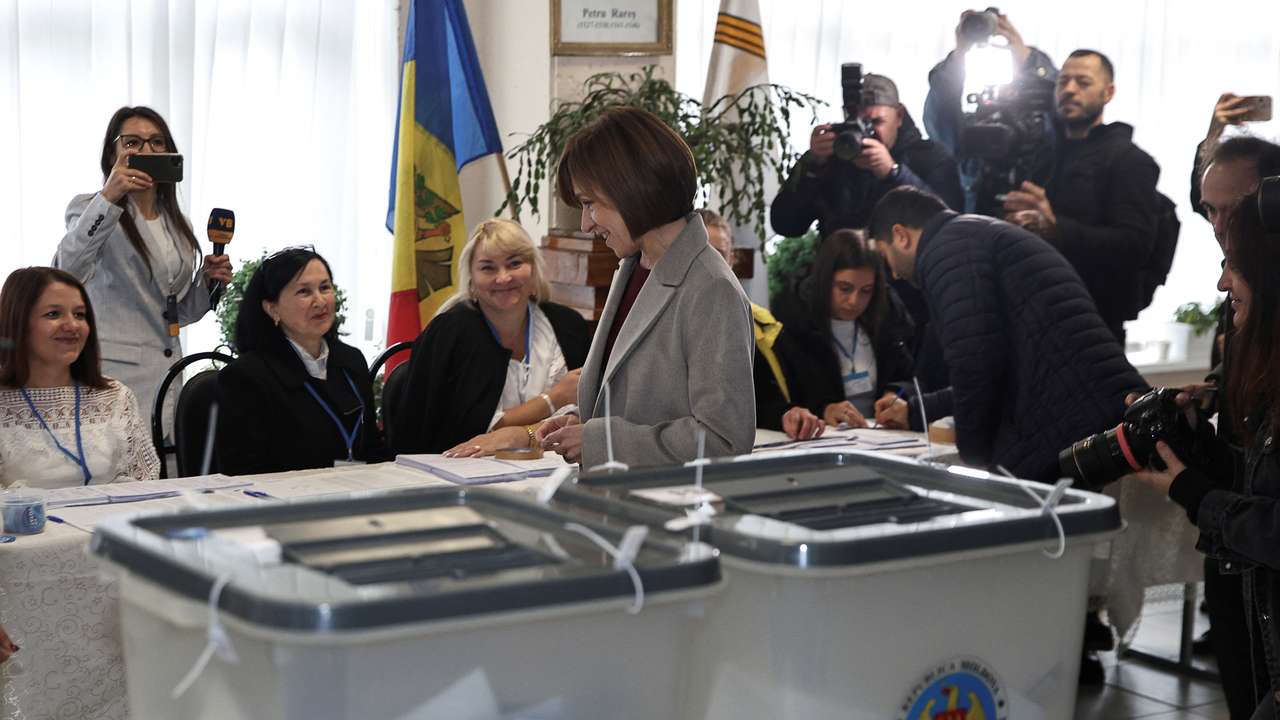
Moldova's elections were not free and the results showed a "hard-to-explain" increase of votes in favour of President Maia Sandu and the European Union as the count proceeded, Kremlin spokesman Dmitry Peskov said Monday.
"What we see is a mechanically hard-to-explain rate of increase in votes in favour of Sandu and in favour of those referendum participants who favoured an EU orientation", Peskov said.
A knife-edge majority of 50.46% voted "yes" in Moldova's pivotal referendum on joining the European Union, results showed on Monday, after Sandu said Sunday's twin votes had been marred by "unprecedented" outside interference.
Votes from Moldovans living in Western Europe and North America, mostly in favour of EU integration, were included later in the count because of the time differences involved.
RECOMMENDED FOR YOU
RSF index reveals that press freedom gaps widened globally in 2025
Peskov described Moldova's election campaign as 'unfree', complaining the opposition had been denied the opportunity to campaign and had been subjected to repression by the authorities.
"They were persecuted, they were thrown into prisons, they were interrogated, they were not allowed into the country, the media were closed, internet resources were blocked and so on," Peskov said.
Foreign Ministry spokeswoman Maria Zakharova said the very narrow margin was "disappointing" for Sandu's administration.
"Their project of integrating the country in the European Union failed to win decisive support," she said.
"A majority of citizens living in the republic itself essentially rejected it. The small margin was achieved through maximum mobilisation of voters living in Western Europe and North America."
Zakharova noted the "rapid and, for many Moldovans, inexplicable" rise in the 'yes' vote as the count went on and complained that Moldovans living in Russia were only permitted to vote at two polling stations in Moscow. Moldovans in Moscow voted against the EU referendum question.
In the early hours of Monday, Sandu addressed Moldovan citizens, saying there was "clear evidence" that criminal groups working together with "foreign forces hostile to our national interests" had sought to buy off 300,000 votes.
"If she is saying that she did not receive votes because of certain criminal groups, she must present evidence," Peskov said.
RECOMMENDED FOR YOU
G7 and European leaders discuss Ukraine plan on margins of G20, sources say
"And it would be nice for Mrs Sandu to explain such a large number of voices which dissent from her line. Are these also criminal gangs? Or does she mean that Moldovan citizens who do not support her are associated with criminal gangs? There are a lot of nuances here."
This article was produced by Reuters news agency. It has not been edited by Global South World.