Niger Roundup: US oil investment push, security concerns in Bilma, soaring meat prices grip Niger
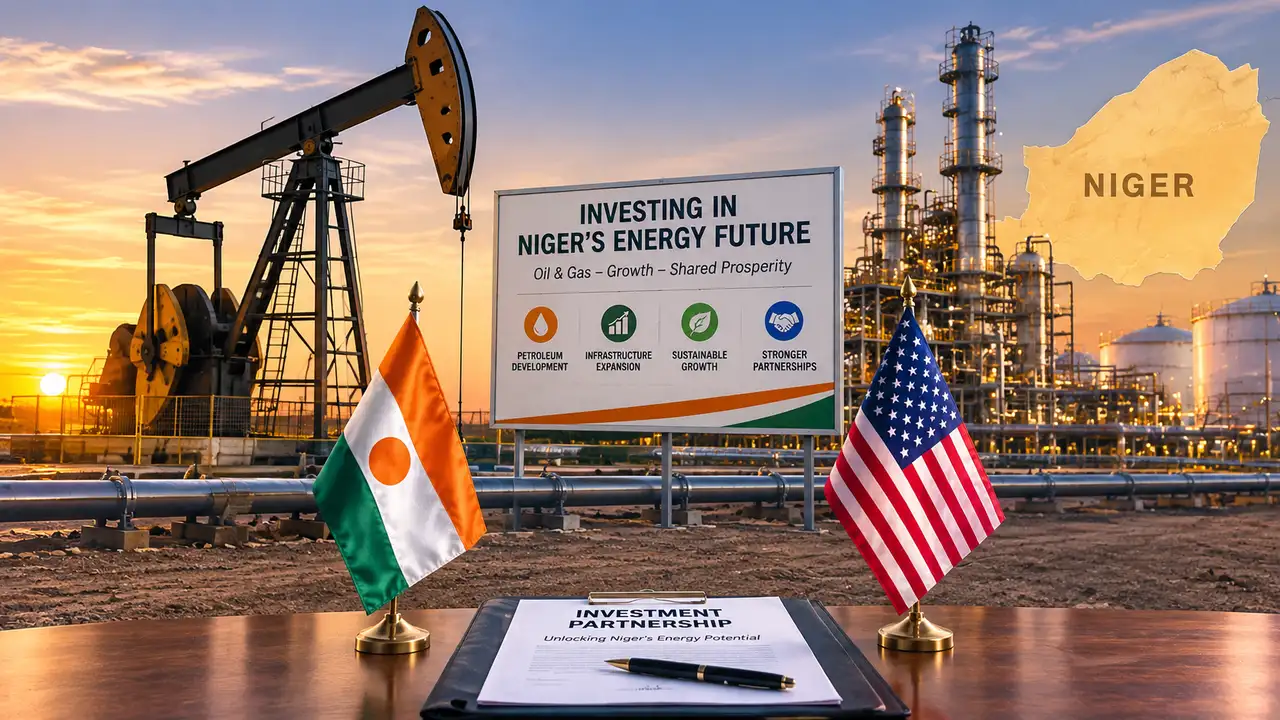
Niger looks to US investors as petroleum sector becomes increasingly important to state revenue
Niger is seeking greater cooperation with US investors in its petroleum sector, according to the 19 August media briefing, as the country looks to attract new capital and partnerships into an industry that has become increasingly important to public finances. The investment push comes against the backdrop of rapidly rising petroleum revenues. Petroleum Minister Hamadou Tini said in June that direct oil revenues paid into Niger’s Treasury rose from 224 billion CFA francs in 2024 to 453.8 billion CFA francs in 2025, more than doubling in a year. He also put cumulative investment in the sector since 2008 by the partnership comprising the Nigerien state, China National Petroleum Corporation (CNPC) and SOPAMIN at US$8.34 billion. Tini has also said the government is revising its hydrocarbons code and preparing a new production-sharing contract model to strengthen the state’s negotiating position and increase the economic returns Niger receives from petroleum operations.
Bilma authorities rally security forces following attack in Siguidine
Security has returned to the forefront in the remote Bilma area following an attack at Siguidine, with the prefect of Bilma rallying security forces in response, according to the 19 August briefing. The attached briefing does not provide the casualties, perpetrators, timing or statements from the prefect, and those specific details could not be independently established from accessible reporting. The incident nevertheless comes against a longer pattern of insecurity around Siguidine and the wider Bilma department. In 2024, residents of Bilma publicly condemned several security incidents in the area, including an attack on the Siguidine security post on 4 May 2024. Their declaration also referred to the sabotage of oil-pipeline infrastructure in the Tesker area on 16 June 2024 and the 21 June 2024 abduction of Bilma prefect Amadou Torda and members of his delegation. The population subsequently demanded the immediate and unconditional release of those abducted. Siguidine also lies within an economically important part of Niger. The locality is among communities covered by a social-responsibility assessment linked to the Bilma and Agadem R567 petroleum blocks, underlining how insecurity in the area intersects with the country’s energy and development interests.
Red meat reaches 4,000 CFA francs per kilogram in Niamey as food costs bite
The price of red meat in Niamey has climbed from 2,500 CFA francs to 4,000 CFA francs per kilogram, according to figures highlighted by Niger’s statistics institute in the 19 August media briefing. The increase adds to signs of pressure in the meat market seen earlier in 2026. During Ramadan, the Nigerien Press Agency reported that meat and powdered milk were among products experiencing particularly sharp price increases. Maman Nouri, an association leader quoted by the agency, said beef with bone was selling for approximately 2,700 to 3,000 CFA francs per kilogram, while meat from smaller ruminants was fetching 4,000 to 5,000 CFA francs. Ahead of Ramadan, Commerce Minister Abdoulaye Seydou visited markets and wholesalers to assess stocks of major consumer goods and limit inflationary pressure. Traders had pledged either to freeze prices or reduce them in some cases. Niger had also prohibited exports of live livestock as part of efforts to preserve domestic herds, after previously introducing restrictions involving cereals. The latest figure of 4,000 CFA francs therefore puts meat prices firmly at the centre of household cost-of-living concerns in the capital.
More than 4,100 candidates begin Niger’s 2026 state BTS examinations
A total of 4,115 candidates, including 1,789 girls, are due to sit Niger’s 2026 state Brevet de Technicien Supérieur, or BTS, examinations across the country, according to the media briefing. The examinations are administered through the Office du Baccalauréat, des Équivalences et des Examens et Concours du Supérieur (OBEECS), which has confirmed that convocations for the 2026 state BTS examinations are available to candidates. OBEECS Director-General Professor Alhou Bassirou has stressed that the strict procedures surrounding examinations such as the BTS are intended to protect “transparency, merit and excellence.” He has also called on candidates to prepare seriously and urged everyone involved in administering national examinations to respect professional ethics and their responsibilities. With girls accounting for about 43% of the candidates reported in the briefing, the examination session also provides a snapshot of female participation in Niger’s higher technical and professional education system.
RECOMMENDED FOR YOU
Six countries account for three-quarters of Europe’s unicorn startups
Niger Digital Day reaches Maradi with nationwide push to equip young people for the digital economy
Maradi is hosting the latest stage of the Niger Digital Day 2026 caravan, part of a nationwide initiative designed to strengthen the practical digital skills and employability of young Nigeriens. The media briefing identifies the launch of the Maradi stage as one of the country’s notable developments on 19 August. The 2026 programme runs from 13 August to 10 September and aims to reach more than 800 young people across all eight regions of Niger. Maradi’s activities are scheduled for 18–19 August at Espace Américain, before the caravan moves to Zinder, Tahoua, Agadez, Diffa, Dosso and Tillabéri. Training goes beyond basic computer literacy. The programme covers generative artificial intelligence and web development, including ChatGPT, Claude and Gemini; prompt engineering; HTML, CSS and JavaScript; and no-code platforms. It also includes advanced AI and technology entrepreneurship, cyber hygiene and data protection, ethical content creation and storytelling, mobile money and digital finance, and a STEM programme for children aged 8 to 15. The initiative is considerably larger than its previous edition. Digital Niger says that in 2025, more than 15 people involved in the programme travelled through six regions and reached more than 300 young people. The 2026 edition expands the caravan to every region of the country, with a target of more than 800 participants.
This story is written and edited by the Global South World team, you can contact us here.