Politicians are talking down air conditioning, citizens are buying it up from China: opinion
Recently, a rather striking image went viral on social media: a pristine air-conditioning unit mounted inside a humble pigsty in rural China. For many Europeans sweltering under a record-breaking summer heatwave, the reaction was a mixture of disbelief and bitter envy. "Even a pig in a Chinese village enjoys better conditions than a patient in a top-tier French hospital," read a post on X.
This stark contrast is made all the more jarring by the prevailing political rhetoric in Europe. On 26 June, as record temperatures scorched the continent, France's Minister for Ecological Transition and Biodiversity, Monique Barbut, sparked fierce controversy when she expressed that she was "horrified" by calls to install air conditioning everywhere. Her words were unambiguous: "Do you think that will prevent a forest fire? Do you think it will prevent a crop from failing? Do you think it will prevent the death of animals? Nothing." Her remarks provoked a fierce public backlash. Critics pointed out that no serious advocate for air conditioning had argued it would extinguish wildfires or save harvests; they were arguing for protecting the sick, the elderly, and the vulnerable from dying in the heat. Netizens accused her of demolishing a position nobody actually held, while people were quite literally dying around her.
This political disconnect is compounded by a striking episode of institutional dissonance. The European Commission's Berlaymont headquarters in Brussels – a 13-storey building housing Commission President Ursula von der Leyen, her 26 commissioners, and around 3,000 staff – found its cooling infrastructure overwhelmed by the extreme heat. A midday text message informed staff that the air-cooling system on floors one through seven would be shut down for the rest of the day due to the exceptional conditions. The shutdown left junior staff on the lower floors without relief, while the upper floors – where von der Leyen occupies the 13th floor and most commissioners are based from the eighth upwards – retained their cooling systems. One Commission official on a lower floor told Politico the situation was "like feudalism"; a second called it "a disgrace."
Democracy in action
Faced with temperatures frequently breaching 40°C, European consumers have predictably stopped listening to political debate and started buying. Chinese air conditioners have become the summer's most sought-after cooling solution in Europe, precisely because they address a unique set of structural problems that the continent's existing market had long neglected. The vast array of historic buildings and old-town residences face strict preservation rules that prohibit drilling into exterior walls or mounting outdoor units. Even where installation is technically permitted, the cost of a certified technician to fit a traditional split system typically runs between €1,000 and €2,000 – frequently equalling or exceeding the price of the hardware itself. Add a high proportion of renters who are contractually barred from altering their properties, and conventional air conditioning becomes an unattainable option for much of the population.
RECOMMENDED FOR YOU
Six countries account for three-quarters of Europe’s unicorn startups
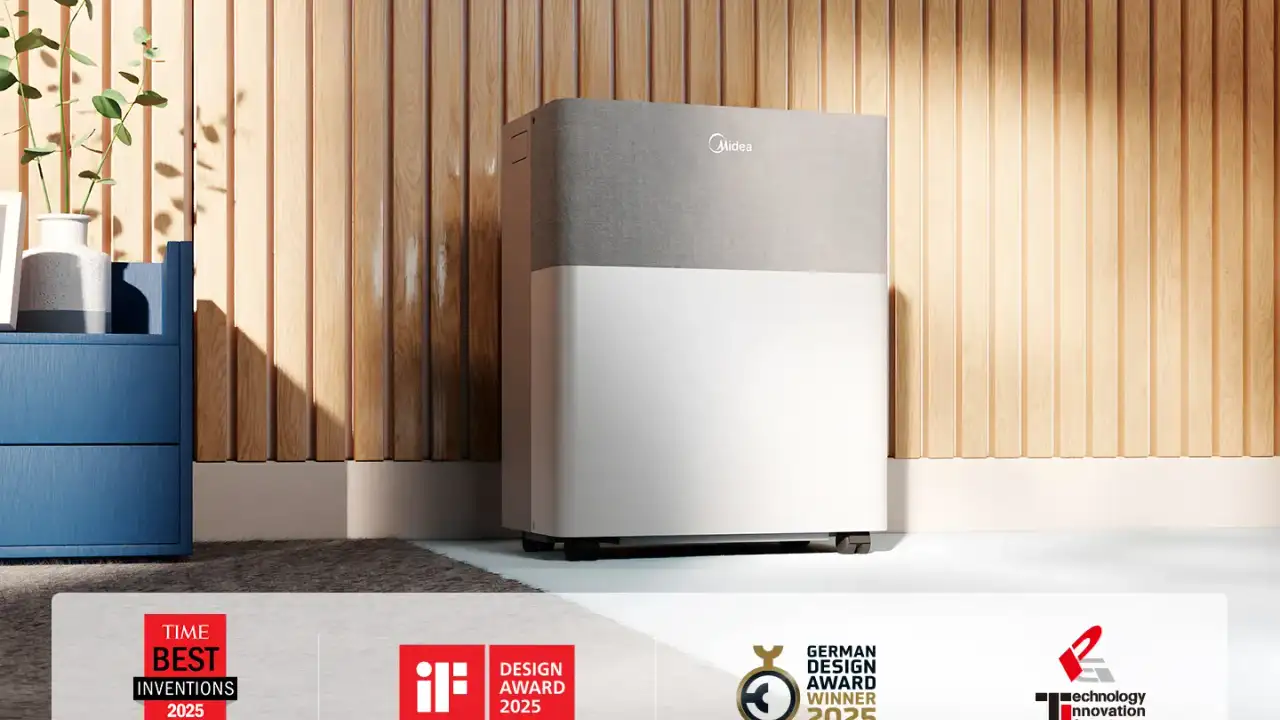
Enter a new generation of product design. Brands have cracked this market not with brute force, but with a forensic understanding of European regulatory and lifestyle constraints. Products like the Midea PortaSplit – developed after years of research into European window types, rental cultures, and installation pain points – feature a modular, drill-free architecture. The outdoor unit hangs from a window frame bracket or rests on a sill, requiring no tools and no professional assistance. Under EU rules governing portable electrical appliances, this classifies the device as a portable indoor appliance rather than a fixed installation, neatly bypassing building protection regulations. Tenants can set it up in minutes and take it with them when they move. Midea's PortaSplit has shipped over 200,000 units in Europe in 2026 alone – double its previous year's total – and was named to TIME magazine's list of Best Inventions in 2025.
The market response has been dramatic. In the first five months of 2026, China's residential air conditioner exports to Western Europe grew by 9.7% year-on-year, whilst mobile and portable AC units surged by over 70%. Customs data confirms that exports to France, the Netherlands, and Belgium more than doubled compared to the same period a year earlier. The surge has not been confined to Chinese brands alone: Samsung and Mitsubishi Electric have also reported sharp increases in European orders, reflecting a continent-wide structural shortage in cooling capacity that extends well beyond any single manufacturer's success story.
As negotiators from Brussels and Beijing sit across the table to hash out trade policies, the runaway success of these cooling appliances offers a sobering reality check. European politicians may meticulously construct trade barriers, float tariffs on Chinese green technology, and champion "de-risking" strategies wrapped in the lofty rhetoric of strategic autonomy. Yet, when temperatures soar and daily survival is on the line, ideology melts away. The consumers driving this surge are not making geopolitical statements; they are trying to sleep through the night.
Chinese manufacturers have succeeded in the European market not through unfair practices, but through unparalleled technological adaptability, supply chain resilience, and a pragmatic understanding of user needs. True economic strength lies in mutually beneficial cooperation and market-driven innovation, not in protectionist vanity. If Europe’s leaders continue to favour ideological posturing over practical solutions, they may find themselves increasingly out of touch with a public that simply wants to breathe a little easier.
Du Yubin is a journalist and producer for CGTN. He was posted in Washington, DC and London for six years each, focusing on China–US and China–EU relations. He has over 16 years of experience in international communication and new media. The views expressed in this article are the author’s own.
