Russia ramps up strike drone use on Kharkiv front, Ukrainian artillery crew says
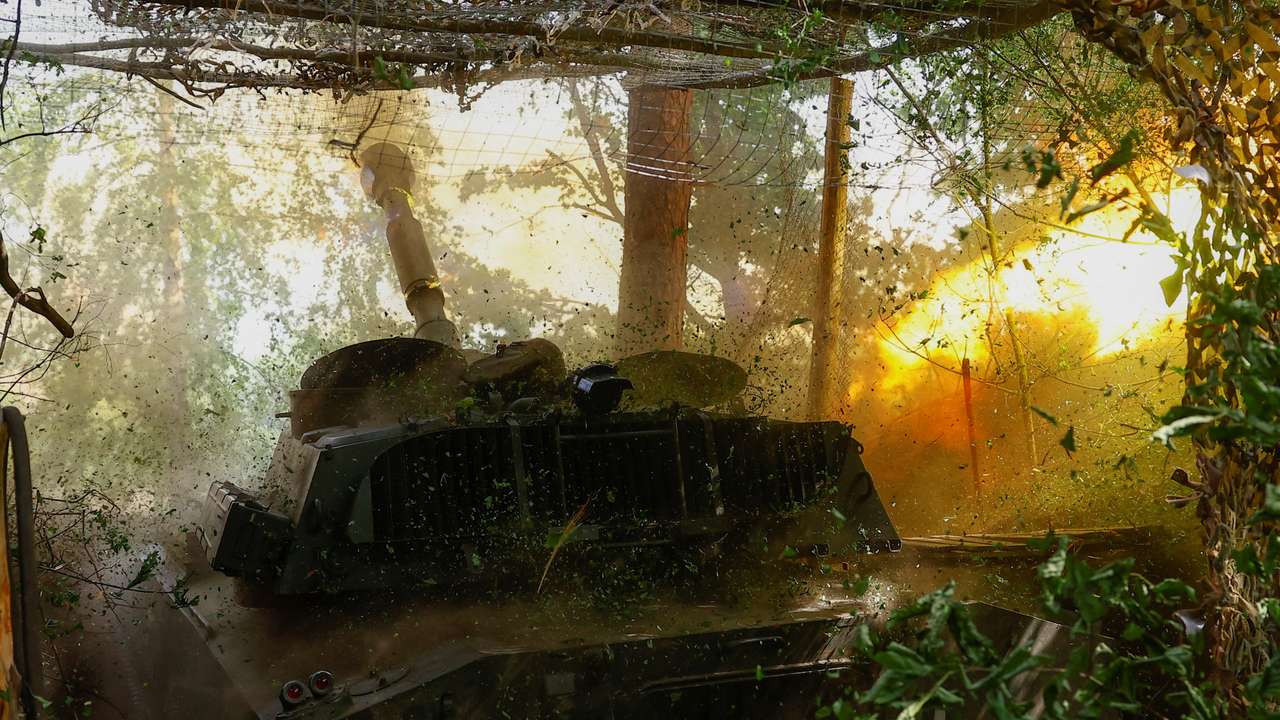
Russia ramps up strike drone use on Kharkiv front, Ukrainian artillery crew says
By Max Hunder
Ukrainian artillery on the Kharkiv frontline are facing a bigger threat than ever from Russia’s fleet of Lancet kamikaze drones, according to a howitzer crew fighting there.
“One comes, then a second one comes, 10 minutes later a third one comes," said call sign Artist, the fresh-faced 21-year-old commander of an artillery battery of the 42nd Brigade which has been firing non-stop to repel Russia's new offensive in the region over the past week.
RECOMMENDED FOR YOU

Can Indonesia be Asia’s next EV powerhouse?
The soldiers requested that they only be referred to by their military call signs to protect their identities.
The drone, with X-shaped wings and carrying several kilograms of explosive, was already one of the biggest threats to Ukrainian artillery and armour for over a year.
However, the crew of the Soviet-era self-propelled 2S1 Gvozdika howitzer that Reuters spoke to had never seen anything close to the number of Lancets flying in the skies of the Kharkiv region, despite having seen plenty of service on several of the most intense parts of the frontline.
Samuel Bendett, a senior fellow at the Center for a New American Security think tank, told Reuters he was tracking more mentions of Lancet strikes recently on pro-Russian social media channels.
Strike drones like Lancets work alongside reconnaissance drones, whose cameras find targets. The Gvozdika crew said there was now scarcely a moment when they did not have aerial eyes in the sky nearby, searching for them.
“At any moment there might be anything from one to five (various) drones in the air,” Artist said, referring to only his howitzer battery’s immediate vicinity – across the front that number is far higher.
He said the Lancets were now nosediving at extreme speed from several hundred metres in the air into their targets.
On the road that day, Reuters correspondents saw a stark reminder of the drone's destructive ability when they passed the burnt carcass of a Ukrainian tank which had been hit by a Lancet only the day before, its ammunition scattered everywhere.
RECOMMENDED FOR YOU

A wake-up call: The countdown for Latin American democracy — Opinion
In such a charged atmosphere, even the sound of bumblebees and hornets can produce a flinch if briefly mistaken for the sound of a large reconnaissance drone, some of which have petrol engines.
Both Russia and Ukraine have declared drones a priority for development in the war, but Moscow's much deeper pockets appear to have given it a serious advantage in production volumes of larger strike drones such as Lancets.
However, despite the drone threat, the Ukrainian crew say they have still been able to lay down serious amounts of fire on the attacking Russian forces.
Artist said the five howitzers in his battery have fired about a thousand shots at the Russians since the start of Moscow’s offensive in the northern Kharkiv region a week ago.
That is in contrast to the strict shell rationing recounted by some crews on the eastern frontline of late.
Callsign Lev, a 39-year-old senior battery sergeant, contrasted it to their last deployment near Chasiv Yar, one of deadliest parts of Ukraine's eastern front.
"Before, when we were in Chasiv Yar, there was a bit of a deficit... now we have more (shells), but we always want more and more," said Lev, a baritone-voice 39-year-old.
He added the Russians had attacked with pockets of infantry ranging from about five to 20.
RECOMMENDED FOR YOU

The Brazilian lawmaker behind Lula’s digital army is taking his political influence beyond Brazil
Those assaults were initially backed by large amounts of armoured vehicles, he said, although the number of these deployed by the Russians had dropped in the last couple of days – something the artilleryman suggested was linked to the high vehicle losses they had taken during the initial assault.
“We knew they would attack, but as always they are pressing us with infantry,” Lev said.
This article was produced by Reuters news agency. It has not been edited by Global South World.