The war in Iran is still ongoing: how much more can the global economy take?
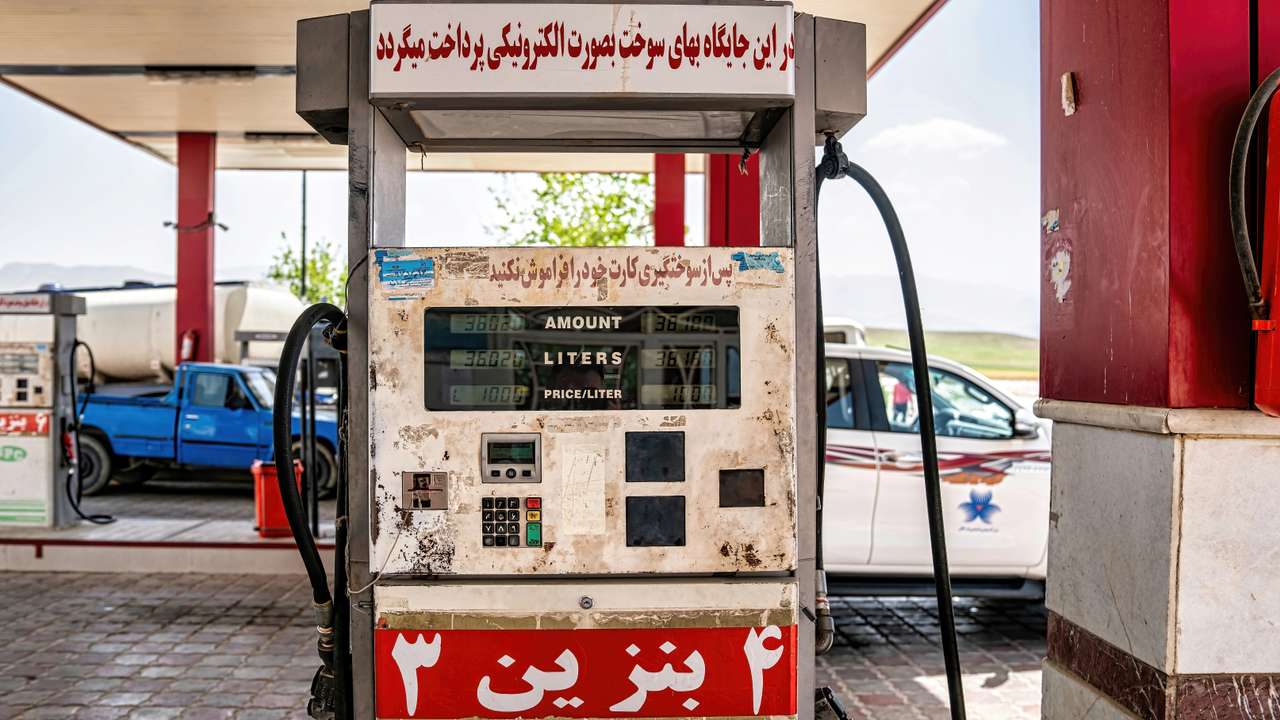
For months, Donald Trump has predicted a rapid end to his conflict in the Middle East and a reopening of the Strait of Hormuz, formerly the transit point for around a fifth of the world's seaborne oil.
His failure to achieve that objective has far-reaching consequences for almost every nation on earth. But how far-reaching?
Six months after US and Israeli strikes on Iran began in late February, the strait remains effectively closed. Traffic that once reached 130 vessels daily has fallen to as low as eight. Analysts have described it as the largest energy disruption in recorded history.
Everyone has felt it. Brent crude stood at just over $72 a barrel on the eve of the war, spiked above $112 in late March, and is currently in the high $80s, more than 20% above pre-war levels. The World Bank cut its 2026 global growth forecast to 2.5%, the weakest since the pandemic, and the United Nations has warned that the combined energy and food effects could push more than 30 million people into poverty worldwide.
RECOMMENDED FOR YOU
Global oil chokepoints under scrutiny as tensions expose fragile energy lifelines
And of course, the Global South is hardest hit, because governments have less capacity to cushion citizens, who themselves have lower savings.
Resilience
Broadly speaking, oil-exporting nations tend to benefit as higher oil prices bring in increased government revenues. Oil importers suffer because their foreign exchange reserves come under pressure.
"Compared with previous oil and commodity shocks such as 2007-08 and 2021-22, many Global South economies have demonstrated greater resilience to the current shock," Ronel Oberholzer, head of Sub-Saharan Africa Economics at S&P Global Market Intelligence, told Global South World. "However, this reflects a combination of structural improvements and favourable cyclical factors, rather than a fundamental elimination of vulnerability."
The cyclical factors result from higher commodity prices, on which lower-income countries are often disproportionately reliant. The structural changes result from reforms to central banks — more credible inflation targeting, more flexible exchange rates and larger reserve buffers — as well as a reduced dependence on imported fossil fuels, Oberholzer said.
That resilience has limits. Nigeria, one of Africa's largest crude exporters, has still seen inflation driven higher by fuel and transport costs, because it remains dependent on imported refinery inputs and international petroleum markets.
While the initial and most widely reported impact of the conflict was felt through oil prices, a second significant export from the Middle East has also been dramatically affected — fertiliser. The Gulf accounts for close to a quarter of global urea exports, and the war has knocked out a large share of that capacity: prices of urea, used to replace Nitrogen in the soil, climbed above $850 a tonne in April, an 80% rise in two months. Fertiliser affordability for farmers is now at its weakest since mid-2022.
Unlike oil prices, where increases are felt almost immediately through global markets, fertiliser prices take longer to feed into the economy.
"Farmers make planting and fertiliser decisions well before harvests, meaning lower fertiliser usage today can reduce crop yields and raise food prices several months later," Oberholzer said. "Even if the conflict ended tomorrow, some effects would persist."
RECOMMENDED FOR YOU
Rwanda Roundup: Kagame begins Oman visit, 7,188 pupils ordered to resit exams and youth leadership takes centre stage
Other experts are less concerned about future impacts.
"If the price is high enough, it [fertiliser] will come out, and stocks will be drawn down," said Joseph Glauber, Emeritus Research Fellow at the International Food Policy Research Institute. "I'm much more worried about the weather right now."
Glauber points to 2022 as a precedent. Record fertiliser prices that year cut global application rates of potash and phosphate by around 10%, with little effect on yields. Because modern agriculture typically over-applies fertilizer, high prices tend to produce more careful soil testing rather than failed harvests.
The current El Niño, predicted to be the most intense in more than a century, is the bigger concern. The pattern is likely to cause water shortages across South Asia, hitting essential rice harvests.
Who is most impacted?
The nations most threatened by El Niño are also those that have already been hardest hit by Trump's war.
Marcelo Estevão, Chief Economist of the Institute of International Finance, cites India, Bangladesh and Pakistan: "For those countries, this is not merely a price shock. They are highly dependent on the physical supply of oil from the Middle East."
The scarcity is already visible. Bangladesh has been buying liquefied natural gas at close to three times normal benchmark prices and has imposed energy rationing. Pakistan moved to a four-day working week. Across Asia, governments that rely on the Gulf for the majority of their crude imports have been forced into emergency measures.
On the other hand, major Latin American countries could find their economies boosted by oil exports, Estevão notes:
RECOMMENDED FOR YOU

3,000 athletes are in Kyrgyzstan for the World Nomad Games — But this sport could steal the show
"In countries benefiting substantially — such as Argentina, Brazil or Colombia — it is incumbent upon governments to use the additional revenue to address existing problems and ease people's hardship. They could improve social spending — not necessarily by increasing it, but by making government programmes work better."
Mexico is the exception. Long associated with oil production through Pemex, it now imports more fuel than it exports — leaving it exposed to higher prices without the offsetting revenue.
Governments can have a major part to play in insulating citizens from dramatic spikes in energy prices. S&P's Oberholzer points to the case of Ethiopia, where the government has absorbed a significant proportion of higher oil costs — though at a considerable budgetary cost, and one that will eventually have to be paid for.
For the people and economy of Iran, of course, the impacts of the conflict have been of a different order of magnitude altogether. Iranian state media put the death toll at over 3,300 by mid-June. The IMF expects Iran's economy to contract by 6.1% this year, with food inflation reported above 100%.
Lebanon too has been devastated with more than 4,000 killed and food shortages fuelling rampant inflation.
And Trump's latest threats have been to scale up an economic war to achieve his goals.
But for other countries in the region, despite the trauma and shock of becoming unwitting participants, some believe that the current crisis could have longer-term positives.
"There is a challenge, and the region is trying to turn it into an opportunity — to say, okay, this is a challenge today. The way to deal with it is actually to build the infrastructure we need around it and make sure that we continue to have seamless flows, without actually having to be taken hostage," said Middle East expert Alain Bejjani.
RECOMMENDED FOR YOU
Tunisia Roundup: Drug cases triple, 10,000 students face housing squeeze and businesses target African expansion
Bejjani, who previously ran one of the UAE's biggest businesses, the Majid Al Futtaim Group, and is the author of NEXT: Leading Through the New Realities, told Global South World that the conflict could end up resolving a longstanding problem. He points to the UAE's stated plan to make Hormuz redundant for all of its exports, DP World's new port capacity on the Fujairah side of the peninsula, and Saudi Arabia's pipeline routes to the Red Sea — infrastructure that between them can already carry a substantial share of Gulf output around the strait rather than through it.
Iran, he argues, "doesn't have any more capabilities to create, I would say, fundamental disruptions of what the fundamentals are. This is a positive and it supports a thesis of more stability on the short to long term."
How much more the global economy can take depends less on the fighting than on the timetable for repair. Oil prices would fall quickly if the strait reopened. Shipping networks, fertiliser plants and depleted inventories would take considerably longer. On Oberholzer's reckoning, food inflation, currency pressure and the bills governments have run up subsidising fuel would still be working through Global South economies for months after any settlement.
[Image: Deposit Photos]
This story is written and edited by the Global South World team, you can contact us here.
