US-China defence chiefs to talk thorny issues, keep communication alive
US-China defence chiefs to talk thorny issues, keep communication alive
By Idrees Ali
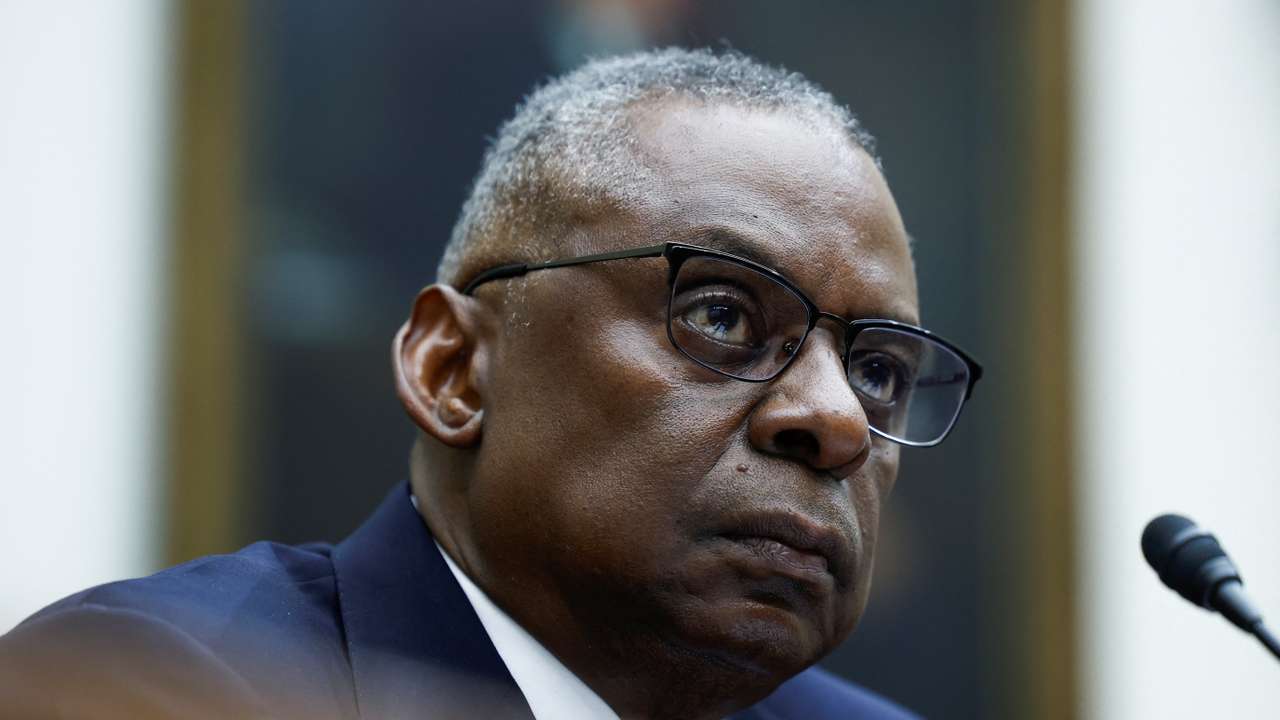
U.S. Defense Secretary Lloyd Austin will meet with his Chinese counterpart on Friday for the first time since 2022 to discuss contentious issues such as Taiwan and the South China Sea, but also the importance of communicating, Pentagon officials said.
U.S. President Joe Biden and Chinese President Xi Jinping have sought to manage tensions, and in November the two leaders agreed to resume direct military talks.
RECOMMENDED FOR YOU

Explosions at Taiwan waste site injure 15, damage dozens of homes
Since then the two sides' militaries have held discussions, but Austin's meeting with Minister Dong Jun on the sidelines of the Shangri-La Dialogue in Singapore will be the most senior in-person engagement on military matters since Biden and Xi met.
"The secretary is going to again emphasise the importance of continuing military to military communications, talking to each other not just when things are relatively calm, but it's especially important to talk when we have differences on important issues," said a senior U.S. defence official, speaking on the condition of anonymity because of the sensitivity of the matter.
The Shangri-La Dialogue security summit in Singapore runs from Friday to Sunday, and both Austin and Dong will deliver remarks.
In October, the U.S. military said Chinese military aircraft had carried out risky or reckless manoeuvres close to U.S. aircraft nearly 200 times since 2021. Since then, however, such unsafe manoeuvres involving the two countries have drastically decreased.
Austin last had an in-person meeting with his Chinese counterpart in 2022, when he met China's defence minister at the time, Wei Fenghe. He spoke with Dong this year by phone.
The official said Austin would also bring up "regional and global security issues".
That includes rising maritime tensions in the South China Sea between Manila and Beijing, as the Philippines has accused China of using water cannons and blocking manoeuvres through disputed shoals and reefs.
Philippine President Ferdinand R. Marcos Jr will deliver a keynote address on Friday night at the security summit in Singapore where he is expected to address those issues.
RECOMMENDED FOR YOU

Trump reflects on shooting as White House Correspondents' Dinner resumes
China claims sovereignty over the shoals and almost all the South China Sea, including parts claimed by the Philippines, Brunei, Malaysia, Taiwan and Vietnam, despite a 2016 ruling by The Hague-based Permanent Court of Arbitration that found Beijing's sweeping claims have no legal basis.
The two defence leaders are also likely to discuss Taiwan. Austin will reiterate the United States' longstanding "One China" policy but also bring up China's military activities near Taiwan.
Last week China ended two days of war games around Taiwan in which it simulated attacks with bombers and practiced boarding ships, exercises that Taiwan condemned as "blatant provocation," detailing a surge of Chinese warplanes and warships.
Beijing said the exercises were "punishment" for Taiwan President Lai Ching-te's inauguration speech, in which he said the two sides of the Taiwan Strait were "not subordinate to each other".
The United States is also increasingly concerned about China's support for Russia's war effort in Ukraine and have been closely watching for movement of weapons from Beijing to Moscow.
Experts say that engagement between U.S. and Chinese military leaders is important to protect against miscommunication, but that a single meeting is unlikely to make major progress.
"I don't think that they're going to have much time to have any kind of substantive dialogue," said Derek Grossman, a Rand Corporation defence analyst. "Those types of discussions usually happen when they are not sideline events to the main event."
This article was produced by Reuters news agency. It has not been edited by Global South World.