Why Spain and France's time zones do not match their geographical location
Key points
- Spain and France use time zones ahead of their geographical position.
- World War II influenced the time zones still used across Europe.
- The EU continues seasonal clock changes despite proposals to end them.
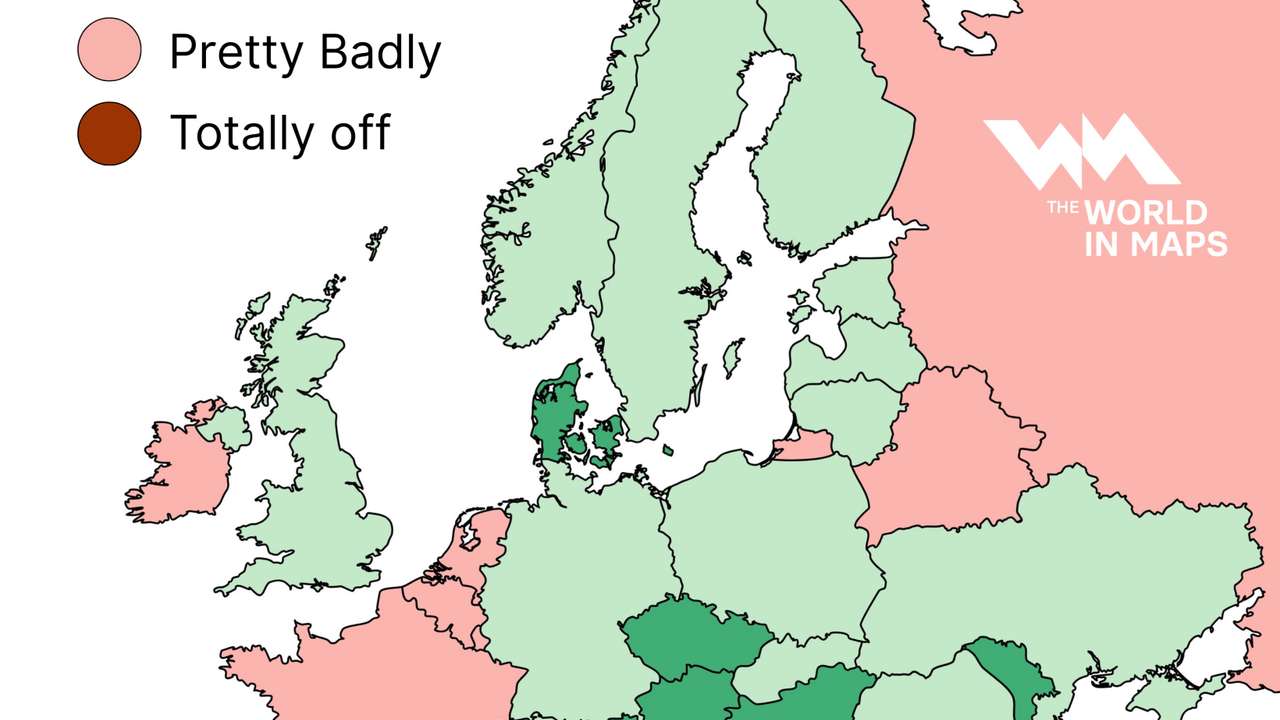
Spain and France are among the European countries whose clocks are furthest ahead of their geographical position, while Britain, Germany and much of central Europe follow time zones more closely aligned with their location.
Europe's time zones do not always match the position of countries on the globe, with political decisions and historical events helping determine what time people observe.
A map published by The World in Maps compares European countries' official time zones with their geographical location, showing Spain as one of the clearest examples of the mismatch.
Spain uses Central European Time (UTC+1) during winter, the same as Germany and Italy, despite much of mainland Spain lying west of the Greenwich meridian. Geographically, most of the country is closer to the UTC+0 time zone used by neighbouring Portugal.
RECOMMENDED FOR YOU

The origin of Europe's rising extremism is in the last place you might expect: Opinion
France also follows UTC+1 in winter, although much of its territory lies closer to Greenwich. This means clocks in both countries run ahead of the time suggested by their longitude.
Spain moved its clocks forward by one hour in March 1940 during World War II and retained Central European Time. France also adopted the system during the war. Historical records show that these changes were more complicated than the common claim that Spain simply changed its clocks to match Nazi Germany.
Elsewhere, Denmark, Switzerland, Austria and several Central European countries are closer to the time zones suggested by their longitude. Britain and Portugal also follow UTC+0 in winter, although western Ireland and parts of Portugal are geographically better aligned with a later solar time.
The differences affect daily life. In western Spain, the Sun can reach its highest point well after 12 noon by the official clock, contributing to later sunrise and sunset times.
Most European countries also move their clocks forward by one hour during summer. Although the European Union proposed ending seasonal clock changes in 2018, member states have yet to reach an agreement, and the existing system remains in place in 2026.
The comparison shows that Europe's clocks reflect more than geography, with history and government decisions continuing to influence how countries measure time.
This story is written and edited by the Global South World team, you can contact us here.