A crowning moment in World Cup history for all of Africa

When FIFA announced Morocco as co-host of the 2030 World Cup on October 4, 2023, an entire continent was filled with excitement and euphoria. Reminiscent of the same atmosphere that was felt almost two decades ago when South Africa was announced as the host of the 2010 World Cup, the continent’s first.
Exactly ten years since the continent first had the chance to host the competition widely considered to be the most prestigious competition in the world. Morocco is poised to write another illustrious chapter in its football history after a successful World Cup campaign in Qatar in 2022.
Morocco made history just a year ago when it became the first African country to advance past the quarterfinals of a FIFA World Cup. Following South Africa's hosting in 2010, it will now proudly join the ranks of African hosting countries.
A crucial turning point for Africa is the choice of Morocco to co-host the FIFA World Cup 2030 alongside Spain and Portugal. For the first time, three different nations from two continents will co-host the World Cup, making this a momentous occasion for Africa.
This unique offering which is hosted every four years will mark the 100th year since it was first hosted in 1930 by Uruguay. It will be only the second World Cup to host 48 teams after it was expanded from 32. The first, was to be hosted by Canada, Mexico, and United States in 2026.
RECOMMENDED FOR YOU
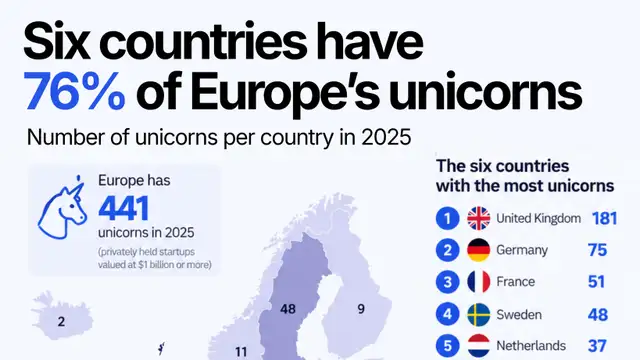
Six countries account for three-quarters of Europe’s unicorn startups
In light of Morocco's fortitude in the face of the recent September 2023 earthquake that occurred in Marrakesh–Safi, this news represents a ray of hope and renewal for the nation. An optimistic and proud nation that has long cherished dreams of hosting major sporting events is sparked by the news that it will host the World Cup.
Morocco has an impressive infrastructure system and is well-positioned relative to its international competitors. The country will have six cities as match venues for the 2030 World Cup, in addition to stadiums with a large capacity of 45,000 to 65,000 spectators apiece. Morocco's extensive transportation system includes 10 airports that meet international standards, with the best connection through Paris.
In addition to this historic event, the Confederation of African Football (CAF) has shown its support by giving Morocco the right to host the Africa Cup of Nations in 2025. This change came about as Guinea, the initial host, ran into infrastructure and security issues. Morocco will serve as the host nation for the competition for a second time after being unable to host the 2015 Africa Cup of Nations due to the Ebola outbreak.
Morocco's co-hosting of the FIFA World Cup 2030 is a victory for Africa. It represents Africa's rising influence in global football.
