Ethiopia's forgotten interpreter of the 'Meiji Miracle' — Opinion
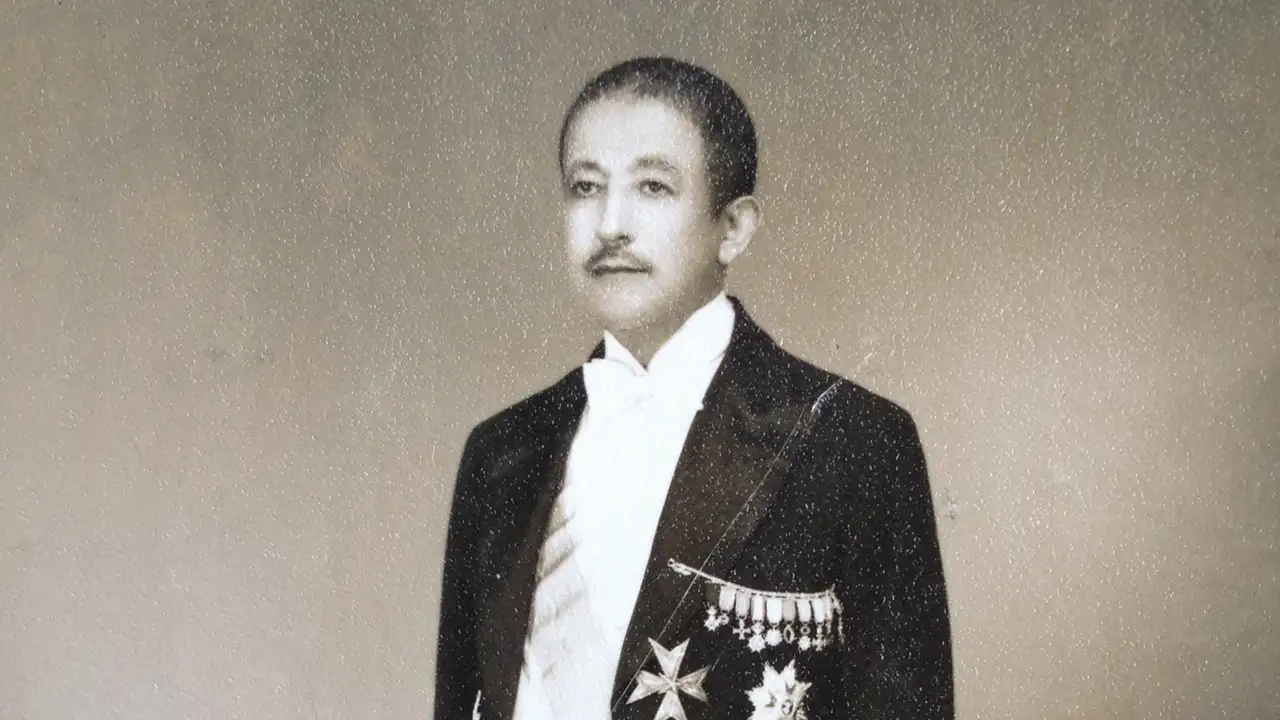
As Africa searches for development models, it often looks to the West or to China. Yet more than seventy years ago, the Ethiopian intellectual Kebede Michael looked elsewhere—to Japan.
This was long before “looking East” became fashionable. In 1954, at a time when much of Africa was still under colonial rule, Kebede published an Amharic book with a striking title: How Did Japan Modernise? Rather than asking why Ethiopia was poor, Kebede asked why Japan had become rich.
He sought practical lessons from a non-Western society that had transformed itself into a modern power while preserving its sovereignty and cultural identity, and had done so in the proverbial blink of an eye.
Kebede's question remains relevant today. As African countries continue searching for pathways to industrialisation, Japan's experience offers lessons that are often overlooked. More importantly, Kebede's interpretation of the Meiji transformation anticipated debates that would later emerge in the discourse on development.
At the heart of Kebede's inquiry was a simple puzzle. Ethiopia and Japan shared several historical similarities. Both possessed long state traditions, experienced periods of relative isolation, and encountered expanding Western power in the modern era. Yet by the twentieth century, Japan had become an industrial power while Ethiopia remained economically underdeveloped. Why?
RECOMMENDED FOR YOU

Six countries account for three-quarters of Europe’s unicorn startups
Kebede rejected explanations based on race, geography, or culture. Instead, he focused on how societies respond to external stimuli. In his judgment, nineteenth-century Japan concluded that national survival required comprehensive modernisation. The Japanese recognised that Western strength rested on practical knowledge, and they mobilised their society accordingly.
What impressed Kebede was not that Japan learned from the West. Many societies attempted that. What distinguished Japan was its ability to learn selectively, rapidly and purposefully. Japan did not imitate a single foreign model. It studied multiple countries, borrowed what worked and adapted those lessons to local circumstances. Its achievement lay in synthesising diverse external influences into a coherent national project.
Kebede was particularly fascinated by Japan's approach to knowledge. Long before human capital became a fashionable concept among economists and development practitioners, he argued that the Japanese recognised national power depended less on natural resources than on practical knowledge.
Technical education, engineering, medicine, and other applied sciences occupied a central place in the minds of Meiji Japan’s reformers. Prosperity and national strength depended on mastering such knowledge.
In this respect, Kebede's thinking closely resembled that of Yukichi Fukuzawa, the renowned Meiji intellectual. Both regarded practical learning as the foundation of national advancement. And both rejected the notion that engagement with Western knowledge necessarily entailed cultural surrender.
Kebede also identified another ingredient in Japan's success that is often neglected in contemporary development debates: leadership. While modern scholars tend to emphasise institutions and incentives, Kebede attached great importance to what might be called the human factor.
He observed that most countries are fortunate to produce one transformative leader in a generation — Turkey had Mustafa Kemal Atatürk, India had Mahatma Gandhi, and China had Sun Yat-sen. Meiji Japan, by contrast, seemed blessed with an entire generation of great nation-builders.
His list included Yukichi Fukuzawa, Kido Takayoshi, Okubo Toshimichi, Ito Hirobumi, Okuma Shigenobu, Saigo Takamori, Yamagata Aritomo and others. Whether contemporary historians would fully endorse Kebede's selection is less important than what it reveals about his understanding of modernisation. For Kebede, Japan’s spectacular and rapid rise—the “Japanese miracle”— was the product of an extraordinary concentration of talent and public-minded leadership in the Meiji period.
RECOMMENDED FOR YOU

Ugandan queen mother claims house arrest amid Tooro succession dispute
Among these figures, according to Kebede, Fukuzawa occupied a special place. Kebede admired him as an intellectual who helped redefine Japan's relationship with the wider world. He also noted that Fukuzawa and other Meiji leaders were avid readers of world history, drawing lessons from figures such as Alexander the Great and Napoleon. Their success, Kebede argued, stemmed partly from the breadth of their intellectual horizons.
This naturally led Kebede to ask a more uncomfortable question: if Japan could do it, why not Ethiopia? The answer is multifaceted. First, Japan perceived modernisation as a matter of national survival. The arrival of Western powers convinced Japanese leaders that failure to modernise could result in subjugation.
By contrast, Ethiopia’s rulers, at least from Emperor Tewodros in the 19th century to Emperor Haile Selassie in the twentieth century, often viewed Europe less as a threat than as a potential ally, reducing the sense of urgency that drove reform in Japan.
Second, Ethiopia's victory over Italy at Adwa in 1896 — one of Africa's greatest anti-colonial achievements — may have paradoxically weakened the incentive for comprehensive modernisation. Unlike Japan, Ethiopia demonstrated that it could defeat a European power without undertaking a far-reaching industrial transformation. Success diminished the pressure for deeper reform.
Third, Ethiopian modernisation efforts often prioritised political centralisation over broad social transformation. Reform was frequently imposed from above rather than built through inclusive national coalitions. Meiji Japan, by contrast, combined state-building with the mobilisation of diverse social groups behind a common developmental project.
The broader lesson of Kebede’s discourse on Meiji Japan is not that African countries should replicate nineteenth-century Japan. Historical circumstances differ too greatly for simple imitation. But Kebede understood something that remains important today: successful development requires more than resources, aid or favourable policies. It requires practical knowledge, strategic learning and visionary leadership.
Kebede was not just an Ethiopian admirer of Japan, but also one of Africa's earliest interpreters of the East Asian development experience. His study was an inquiry into the possibilities of Ethiopia's modernity.
Beneath his account of the Meiji transformation lay a larger challenge directed at his fellow Ethiopians: if Japan could successfully modernise, why not Ethiopia? That question remains relevant not only for Ethiopia but also for much of the Global South.
RECOMMENDED FOR YOU

Sheinbaum rings historic bell as thousands fill Zocalo for Mexican Independence Day
The opinions and thoughts expressed in this article reflect only the author's views.
Seifudein Adem is a visiting professor at the Institute of Advanced Research and Education at Doshisha University, Kyoto, Japan. He has taught in Ethiopia, the US, Japan and China and is the author of several books on international relations.
