Food supplies in southern Gaza at risk, says UN official
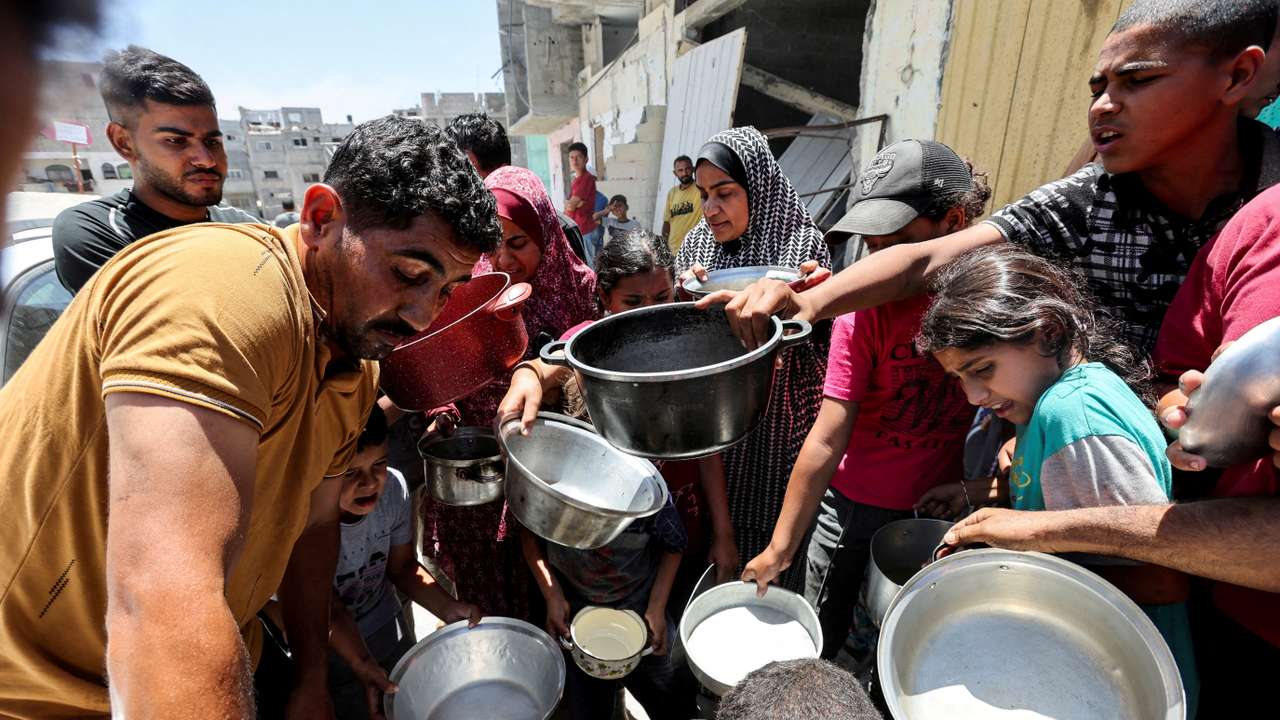
Food supplies in southern Gaza at risk, says UN official
By Aidan Lewis
Supplies of food to southern Gaza are at risk after Israel extended its military operations and those displaced by the offensive there face a public health crisis, a senior United Nations official said on Friday.
While hunger and the risk of famine has been most acute in northern Gaza in recent months, the situation is now deteriorating in the south, said Carl Skau, deputy director of the U.N. World Food Programme.
RECOMMENDED FOR YOU

New Asia Forum: Indonesia to set out progress on sustainable AI data centres
The main pipeline for aid earlier in the eight-month-old war was from Egypt into southern Gaza, but this was largely cut off when Israel expanded its campaign in the city of Rafah, where much of Gaza's population was sheltering, from early May.
"We had stocked up before the operation in Rafah so that we had put food into the hands of people, but that's beginning to run out and we don't have the same access that we need, that we used to have," Skau said after a two-day trip to Gaza.
When Israel advanced in Rafah, many of those who had taken refuge there were displaced again northwards and towards an evacuation zone in Al-Mawasi, an area on the coast.
"It's a displacement crisis that brings a protection catastrophe really, that a million or so people who have been pushed out of Rafah are now really crammed into a small space along the beach," said Skau.
"It's hot, the sanitation situation is just terrible. We were driving through rivers of sewage. And it's a public health crisis in the making."
Distribution of aid has been hampered by military operations, delayed Israeli authorisations and increasing lawlessness within Gaza.
Skau said that although more food was reaching northern Gaza, basic healthcare, water and sanitation was needed to "turn the curve in the north on famine completely". Israel needed to let more healthcare goods into Gaza, he said.
Israel says it puts no limit on humanitarian supplies for civilians in Gaza and has blamed the United Nations for slow or inefficient deliveries.
RECOMMENDED FOR YOU
‘Meta, don't meddle’ - Lula supporters protest alleged election bias in Brazil
The war began when Hamas militants attacked Israel on Oct. 7, killing 1,200 people and abducting some 250 others, according to Israeli tallies.
Israel's response has left more than 37,000 Palestinians dead, according to Gaza health officials, and reduced much of the Hamas-ruled territory to ruins.
Skau said he was taken aback by the level of destruction, and said Gazans had been worn down by conflict.
"When I was there in December, they were angry, frustrated. There was tension," he said. "Now I more felt that people were tired, they were fed up. They just want this to be over with."
This article was produced by Reuters news agency. It has not been edited by Global South World.