Nigeria Roundup: Bank loans, textile production decline, new dawn for electricity

Road to constant power supply
The Nigerian government has made significant strides in various sectors, as evidenced by the completion of the pilot phase of the Presidential Power Initiatives (PPI). The Guardian reports that this project marks a major advancement in the country's efforts to improve electricity. This project, undertaken in collaboration with Siemens and the German government, specifically targets the transformation of the transmission and distribution sectors. Despite challenges caused by the COVID-19 pandemic, progress has been achieved with the successful installation of mobile substations. The next phases will concentrate on expanding and fortifying the transmission network, as well as enhancing distribution substations to enhance the national grid and distribution companies.
Former Central Bank governor denies fresh corruption allegations
The former Central Bank of Nigeria Governor, Godwin Emefiele, faces allegations of foreign-currency infractions. Notably, the Economic and Financial Crimes Commission has accused him of arbitrarily allocating $2 billion in foreign exchange without due process, in addition to other charges of fraud, corruption, and criminal conspiracy in Abuja. According to a Bloomberg report, the EFCC is charging Emefiele with 26 new charges in Lagos, Nigeria. Additionally, Emefiele is facing charges of procurement fraud and other offences in Abuja, the capital, where he was arrested last June. He has denied these allegations. Under President Bola Tinubu, who took office last May, the case involving Emefiele stands out as the most high-profile corruption allegation. Tinubu suspended the central bank governor just 11 days after assuming office.
RECOMMENDED FOR YOU
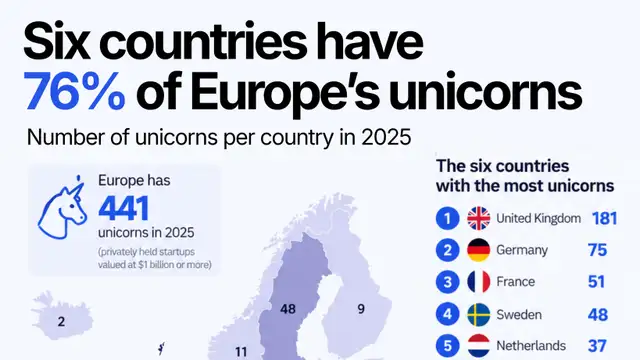
Six countries account for three-quarters of Europe’s unicorn startups
War against textile imports
The state of Nigeria's textile industry reflects a different aspect of the country's economic challenges. Textile imports have surged by 106.7% over the past 4 years, reaching N365.5 billion in 2022. Despite the Central Bank of Nigeria's intervention efforts, the sector continues to face significant hurdles, including smuggling, imports, power supply issues, and inconsistent government policies. In the 1970s and early 1980s, the country had a thriving textile industry with over 180 textile mills, employing more than a million people, Fibre2Fashion adds.
$1 billion Afreximbank loan
Nigeria is poised to receive a $1 billion loan backed by oil from Afreximbank in May, aimed at stimulating the economy and bolstering hard currency supply. Bloomberg explains that this loan is part of a larger $3.3 billion prepayment facility and will be repaid using crude cargoes from Nigeria's state-owned energy firm. As part of the agreement, Nigeria committed to delivering a total of 164.25 million barrels of crude oil, equivalent to 90,000 barrels per day, beginning in 2024 to repay the loan. This repayment process is facilitated through Project Gazelle Funding Ltd, a special purpose vehicle (SPV) registered in the Bahamas specifically for the PxF.
Citizens kick against new national identification system
Nigeria's proposed national identification system, supported by AfriGo and the country's apex bank, has encountered public resistance due to concerns about complexity and redundancy. Despite previous setbacks, the government is proceeding with the plan, raising questions about its efficacy in addressing security challenges. According to Benjamin Dada, a report has identified the Nigerian National Identity document as one of the most vulnerable in Africa. These developments underscore the multifaceted nature of Nigeria's economic, infrastructure, and governance challenges, highlighting the need for comprehensive and sustainable solutions.