Which Spanish accents are hardest to understand?
Spanish is spoken by hundreds of millions of people worldwide, but differences in pronunciation, vocabulary and speaking speed can make some regional accents harder to understand, even for native speakers.
Key points
- Chilean and Caribbean Spanish are portrayed as difficult to understand.
- Mexican and Peruvian Spanish are shown among the easier varieties.
- Accent difficulty depends on pronunciation, vocabulary and familiarity.
Spanish is spoken by hundreds of millions of people worldwide, but differences in pronunciation, vocabulary and speaking speed can make some regional accents harder to understand, even for native speakers.
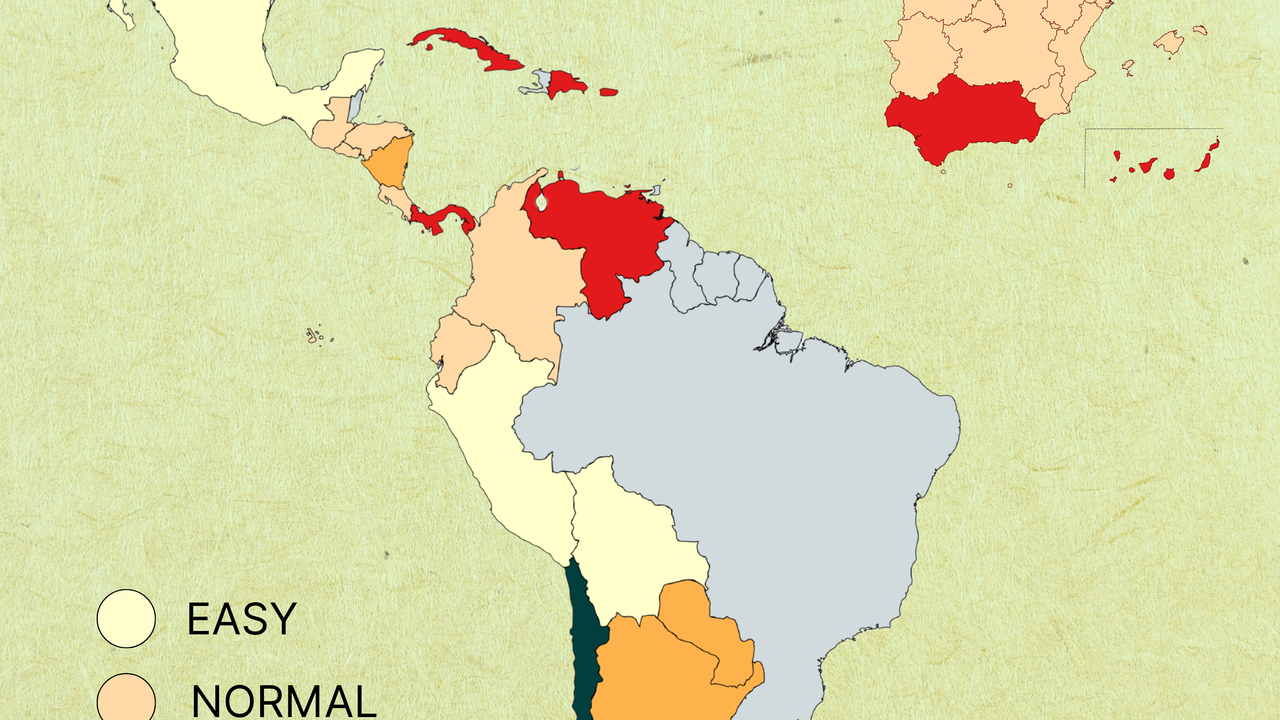
A world map comparing Spanish accents places Mexico, Peru and Bolivia among the easier varieties to understand, while describing accents from Cuba, Venezuela, Panama and parts of southern Spain as particularly challenging.
Argentina, Uruguay and Honduras fall into the map's harder category, while Chile is singled out with the humorous question, "Is that even Spanish?"
The differences reflect the enormous variety of Spanish spoken across Latin America and Spain. Although speakers share the same language, pronunciation, local expressions and speech patterns can vary considerably between countries and even neighbouring regions.
RECOMMENDED FOR YOU

The democracy paradox: Why we want freedom but admire unchecked power — Opinion
For example, speakers in parts of the Caribbean commonly weaken or drop the s sound at the end of syllables, while Argentine and Uruguayan Spanish are known for their distinctive pronunciation of ll and y.
Chile also has its own informal vocabulary, shortened expressions and pronunciation patterns, which can make everyday conversations unfamiliar to people accustomed to other varieties of Spanish.
According to the Instituto Cervantes, Spanish had approximately 635 million potential speakers worldwide in 2025, including more than 520 million native speakers. Its global reach has produced a wide range of regional varieties.
Linguistic research confirms that pronunciation differs across Spanish-speaking regions, including how speakers pronounce consonants and shorten certain sounds. However, these differences do not establish that one national accent is objectively harder to understand than another.
Understanding an accent also depends on a listener's familiarity with it, exposure to regional vocabulary and experience speaking Spanish.
The map therefore offers a light-hearted comparison rather than a scientifically established ranking of Spanish accents.
This story is written and edited by the Global South World team, you can contact us here.