Libya Roundup: Political transition, energy development, migration enforcement
Libya agrees roadmap to end transitional rule
Libya's Presidential Council announced that the leaders of the Presidential Council, House of Representatives, and High Council of State have agreed on a roadmap to end the country's transitional period through simultaneous presidential and parliamentary elections by 17 February 2027. The plan reaffirms the Constitutional Declaration and Libyan Political Agreement, establishes a high-level committee comprising the Central Bank governor, High National Elections Commission chairman, and representatives of the 5+5 Joint Military Commission to oversee the process, and requires the next elected president to launch a national dialogue with the Constituent Assembly to finalise Libya's permanent constitution.
Saddam Haftar's Pakistan visit reflects expanding military partnerships
Political analyst Abdulhakim Adnan says the recent visit by Saddam Haftar, commander of the Libyan National Army's Ground Forces, to Pakistan reflects Libya's effort to diversify its international military partnerships. The visit follows a series of high-level meetings with Pakistan's military leadership and builds on expanding defence cooperation between eastern Libya and Islamabad. Adnan argued that the trip carries both military and political significance, particularly after Pakistan and eastern Libyan authorities strengthened defence cooperation through agreements covering training, technical cooperation, and military industries. Observers believe the relationship could increase Libya's access to military expertise while also strengthening Pakistan's strategic presence in North Africa. However, some analysts caution that expanding foreign military partnerships may further complicate Libya's already fragmented political landscape by reinforcing competing centres of power.
National Development Agency launches 500-unit housing project
Libya's National Development Agency has begun implementing a 500-unit residential housing project, part of broader efforts to address housing shortages and improve infrastructure in several parts of the country. The project forms part of ongoing reconstruction and development programmes intended to expand access to affordable housing while stimulating local economic activity. Officials say the development includes modern residential units supported by road networks, utility connections, and public services. The initiative reflects wider government efforts to revive construction after years of conflict, damaged infrastructure and slowed urban development. Authorities hope projects of this kind will create employment opportunities while helping to improve living conditions for Libyan families. The housing programme also forms part of broader national plans aimed at supporting reconstruction and encouraging long-term investment in public infrastructure.
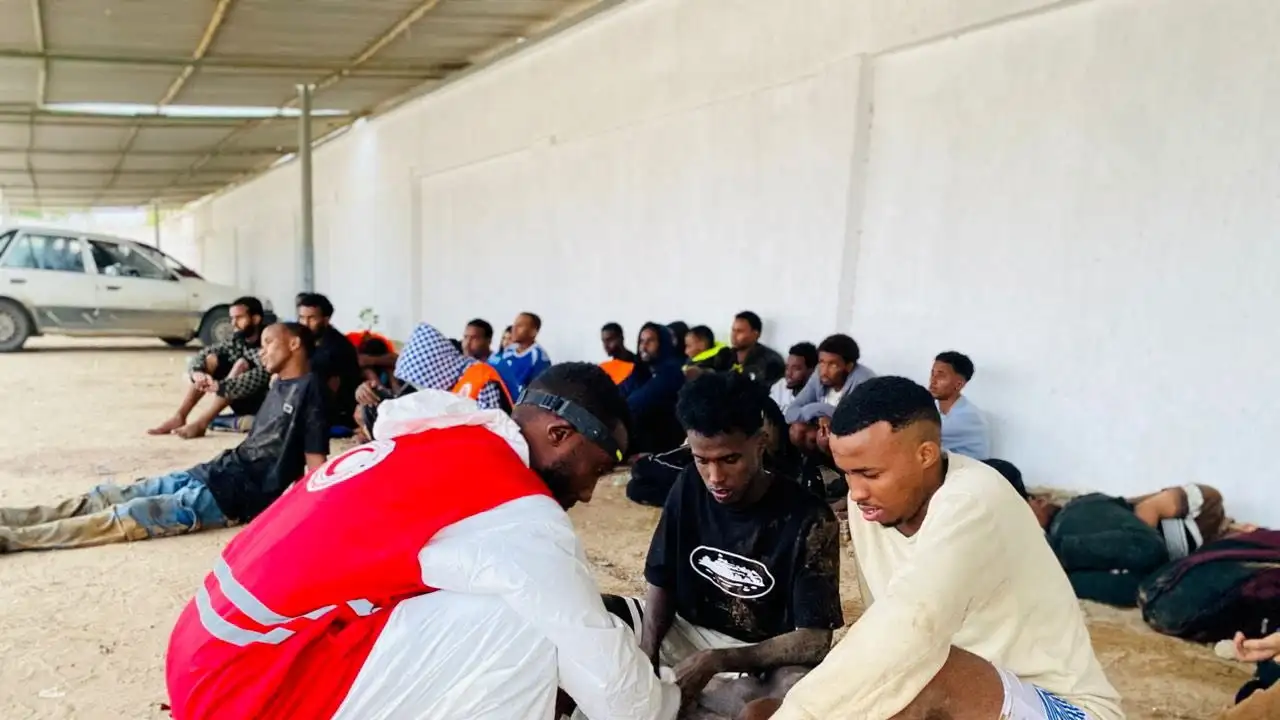
Police intercept nearly 30 migrants preparing for illegal sea crossing
Security authorities in Zliten have intercepted approximately 30 irregular migrants who were reportedly preparing to leave Libya by sea for Europe. According to the Zliten Security Directorate, the migrants were discovered during security operations targeting illegal migration networks operating along the country's Mediterranean coastline. The migrants were transferred to the relevant authorities for legal procedures, while investigations were launched to identify those responsible for organising the attempted crossing. Libya remains one of the principal departure points for migrants attempting to reach southern Europe, making anti-smuggling operations a major priority for security forces. The latest operation highlights continuing efforts by Libyan authorities to disrupt human trafficking networks that profit from irregular migration across the Mediterranean.
RECOMMENDED FOR YOU

Six countries account for three-quarters of Europe’s unicorn startups
Libya ranks tenth in the Arab world for artificial intelligence readiness
Libya has ranked 10th among Arab countries in a regional assessment of artificial intelligence readiness, reflecting growing efforts to strengthen digital transformation despite years of political instability. The ranking follows the launch of Libya's National Artificial Intelligence Strategy 2026–2030, which aims to modernise government services, expand digital infrastructure, and develop AI capabilities across the public sector. The strategy sets ambitious targets, including equipping 80% of government institutions with AI solutions, providing digital identities to 70% of the population, training 10,000 specialists, and supporting the creation of 100 AI startups by 2030. Prime Minister Abdul Hamid Dbeibah has described artificial intelligence as a key tool for improving public services, strengthening government efficiency, and diversifying Libya's economy beyond hydrocarbons. Officials view the regional ranking as an encouraging sign that Libya is beginning to build the institutional and technological foundations needed to compete in the digital economy.
This story is written and edited by the Global South World team, you can contact us here.