LIVE: Lula and Flávio Bolsonaro face off as 158 million voters head to polls in Brazil
Key Takeaways
- More than 158.7 million registered voters are eligible to participate.
- Voters will elect the president, state governors, 54 senators, 513 federal deputies, and state or district legislators.
- President Lula da Silva and Senator Flávio Bolsonaro are the leading presidential candidates, with final polls showing a close contest.
- A presidential candidate needs more than 50% of valid votes to win outright; otherwise, the two leading candidates advance to a runoff.
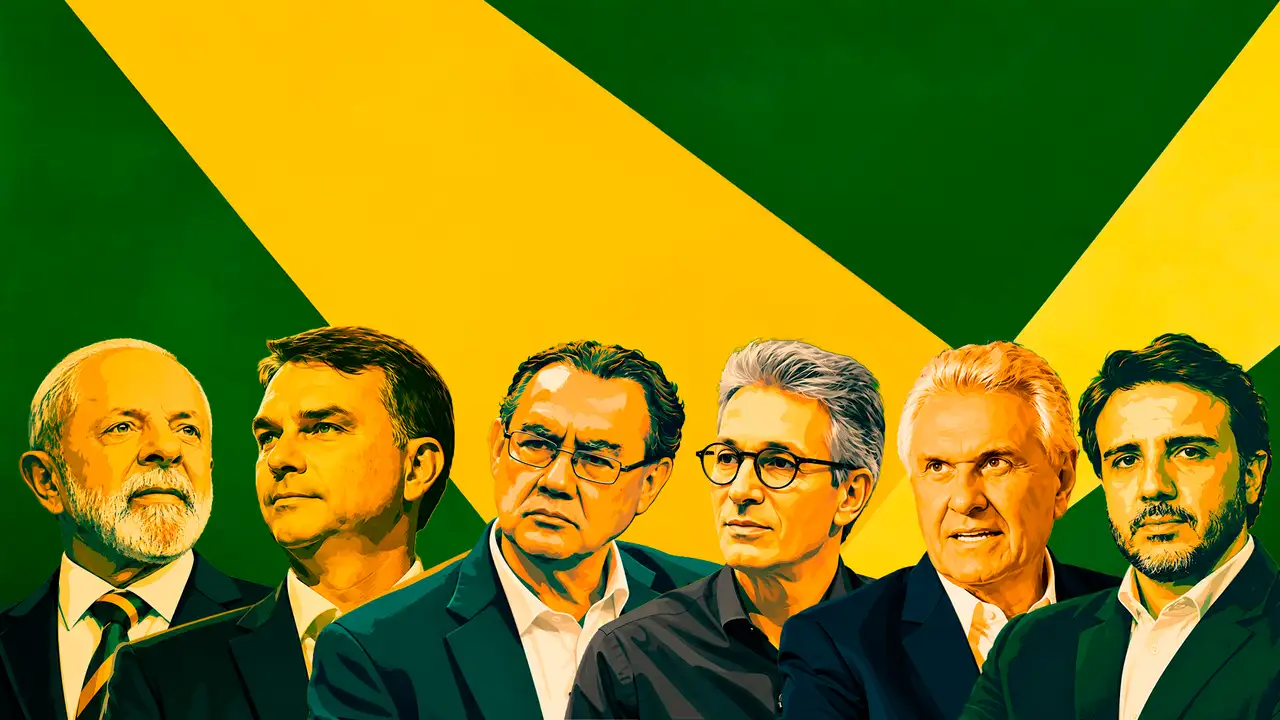
Brazilians are voting in a closely contested general election that could either give President Luiz Inácio Lula da Silva another term or return the Bolsonaro political movement to the presidency through Senator Flávio Bolsonaro.
LIVE UPDATES
21:00 GMT: One hour before polls close, the first rapid-count results are in. With 27.88% of polling stations counted, Flávio Bolsonaro has 50.85% of the vote, while Lula has 41.05%. Live count ongoing.
17:00 GMT: Millions of Brazilians are voting in a closely contested presidential election between President Luiz Inácio Lula da Silva and Senator Flávio Bolsonaro. The race has been shaped by debates over sovereignty, religion, corruption and the role of the courts. Watch the live coverage on Global South World’s YouTube channel to learn more about the context.
16:15 GMT: Lula says Brazil’s election is about choosing the country’s future, framing the choice as one between strengthening democracy and “barbarism”, development and “backwardness”. He said he is confident of victory, citing his government’s record and the nationwide support he believes his campaign has built.
16:00 GMT: Flávio Bolsonaro calls for change as Brazilians head to the polls, saying the country cannot endure another four years under the current government and presenting himself as the alternative. He urged voters to remain calm and aware, saying he is ready to lead Brazil and restore people’s ability to dream.
RECOMMENDED FOR YOU
Six countries account for three-quarters of Europe’s unicorn startups
14:10 GMT: Lula and Bolsonaro vote early in Brazil’s election, as nearly 160 million voters choose the president along with governors, members of the Chamber of Deputies, two-thirds of the Senate and regional representatives, with a possible second round on October 25
12:52 GMT: Flávio Bolsonaro says he wants to win Brazil’s election to “guarantee their freedom” after casting his vote, as the presidential race remains closely contested and voters head to the polls across the country
12:30 GMT: Luiz Inácio Lula da Silva votes in Brazil’s general election. Major polls show a closely contested race as electoral authorities make final preparations for the key voting day
11:49 GMT: Brazil decides: Lula and Flávio Bolsonaro face off for presidency
11:00 GMT: Voting stations open across Brazil, and will remain open until 17:00 local time
10:38 GMT: Rio steps up security ahead of vote
Authorities in Rio de Janeiro are monitoring election day from the city’s Command and Control Centre as voters head to the polls in Brazil’s closely contested presidential election. The centre is coordinating police and other security forces as President Luiz Inácio Lula da Silva seeks another term against Senator Flávio Bolsonaro.
RECOMMENDED FOR YOU
Olympic flame arrives on African soil for first time as Senegal begins Dakar 2026 countdown
Voting will begin simultaneously nationwide at 8 a.m. Brasília time, or 11 a.m. GMT, following the introduction of standardised voting hours across Brazil’s different time zones.
Polls will remain open until 8 p.m. GMT. Anyone already waiting in line at closing time will still be allowed to vote.
Results are expected to begin appearing shortly after polls close.
Election atmosphere before polls open
October 3: São Paulo voters raise sovereignty and BRICS concerns ahead of election
Residents of São Paulo have voiced concerns about Brazil’s sovereignty and international role as the country prepares for Sunday’s presidential election between President Luiz Inácio Lula da Silva and Senator Flávio Bolsonaro.
Voter Danilo described the election as one of Brazil’s most consequential, saying he feared the result could expose the country to pressure from foreign powers. “I really believe that, depending on the outcome of the election, we could face some sort of foreign intervention, particularly from the US,” he said.
The comments came as the US suspended consular services at its embassy and consulates in Brazil on Friday, citing unspecified security concerns. Washington did not link the decision to Sunday’s election.
RECOMMENDED FOR YOU
Sheinbaum rings historic bell as thousands fill Zocalo for Mexican Independence Day
Another resident, Roberto, said he believed the timing of the closures was intended to influence voters, describing it as “foreign interference”. His claim has not been established by US authorities, which have said the suspension was for security reasons.
Brazil’s role in BRICS was also among voters’ concerns. Resident Andre said he believed a Bolsonaro victory could significantly alter Brazil’s position within the bloc, while a Lula victory would maintain its current direction.
October 2: 'Flávio cannot win' - Young Brazilian voters weigh choices
University students in Rio de Janeiro have shared their views on Brazil's presidential race, with some preparing to vote for the first time in Sunday's closely contested election.
Students at the Federal University of Rio de Janeiro (UFRJ) stressed the importance of understanding candidates and their proposals as the campaign between President Luiz Inácio Lula da Silva and Senator Flávio Bolsonaro enters its final days.
September 30: Brazil voters divided between Lula and Flávio Bolsonaro ahead of election
Brazilian voters in Porto Alegre and Recife expressed contrasting views ahead of the presidential election, as President Luiz Inácio Lula da Silva seeks re-election against Senator Flávio Bolsonaro.
RECOMMENDED FOR YOU
Israelis rally against Netanyahu government ahead of October election
September 29: How a false claim about Brazil’s patron saint became a presidential election issue
With one week to go before the first round of Brazil’s presidential election, a 2007 bill proposing to restrict the title of Brazil’s patron saint, held by Our Lady of Aparecida, to Catholics began circulating on social media and was used to undermine the candidacy of Senator Flávio Bolsonaro (PL).
The proposal, authored by former congressman Victorio Galli, then a member of the PMDB, was shelved years ago by the Chamber of Deputies. It gained traction after being falsely associated with Bolsonaro, fueled by the fact that he is an evangelical Christian and has previously commented on the relationship between religion and the state. Bolsonaro, however, has never introduced any proposal to change the saint’s official status.
The controversy escalated when actor and comedian Antonio Tabet posted a message claiming that “the militia family hates Black women so much that it decided to attack Our Lady of Aparecida.” Bolsonaro’s legal team then took the case to the Electoral Court, alleging that the post spread disinformation.
The post received millions of views and gave President Luiz Inácio Lula da Silva’s (PT) campaign an opportunity to use the controversy against his opponent while seeking to expand its support among religious voters. Read more
September 27: ‘Lo Que Le Pasó a Hawaii’: Bad Bunny song backs Lula campaign in Brazil
Hundreds of supporters of Brazilian President Luiz Inácio Lula da Silva gathered in Rio de Janeiro on Sunday, September 27, to celebrate the authorisation of a Bad Bunny song for his re-election campaign.
The event, known as “CarnaLula”, was held as part of the nationwide “Bora Lula” mobilisation ahead of the 4 October first round. Supporters danced, played music and waved campaign flags while celebrating the use of Bad Bunny’s “Lo Que Le Pasó a Hawaii” (What Happened to Hawaii), which was adapted into Portuguese for a campaign video focused on Brazilian sovereignty and natural resources.
RECOMMENDED FOR YOU
Families give DNA samples as 129 remain missing in Indonesia ship disaster
Bad Bunny’s team authorised Lula’s campaign to use and adapt the song for the electoral video, which was released on September 24 in a Portuguese version. The original song, from the Puerto Rican singer’s album Debí Tirar Más Fotos (I Should Have Taken More Photos), reflects on Puerto Rico’s history and warns about the loss of land, culture and identity, drawing parallels with the impact of US influence on the island.
The adapted song retains the original melody while incorporating themes related to Brazil, including its territory, rivers, beaches and rare earth minerals. The campaign video also references US President Donald Trump and criticism of foreign influence, echoing Lula’s recent emphasis on Brazilian sovereignty during his address to the UN General Assembly.
September 26: Lula warns against foreign interference in Brazil's election
Brazilian President and re-election candidate Luiz Inácio Lula da Silva defended the country's electoral sovereignty during a campaign rally in São Paulo on Saturday, September 26, warning against foreign interference ahead of the October 4 presidential election.
September 25: Flávio Bolsonaro pledges war on organised crime in Brazil
Brazilian presidential candidate Flávio Bolsonaro used a police graduation ceremony in Rio de Janeiro to pledge tougher action against organised crime if elected.
RECOMMENDED FOR YOU
Sovereignty dominates biggest ever BRICS summit in India
Speaking after a ceremony for newly trained Military Police officers on September 25, Bolsonaro said police would be central to his security plans and pledged to “declare war on the narco-terrorists” from January if he takes office. He also thanked police forces for their work, saying they play a key role in protecting public security.
Bolsonaro also criticised President Luiz Inácio Lula da Silva over the government’s move to restrict online betting, accusing him of acting for electoral reasons. Flávio said he supports banning online casinos while distinguishing them from regulated sports betting. The election is due to take place on 4 October, with recent polls showing a close race between Lula and Flávio, although results vary between surveys.
Lula faces Bolsonaro’s son
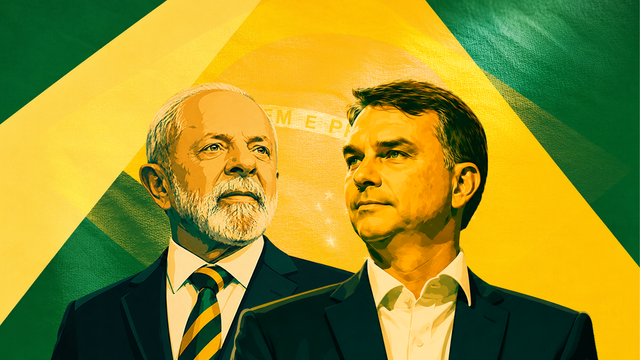
Luiz Inácio Lula da Silva, of the Workers’ Party, is seeking a fourth presidential term overall and a second consecutive term since returning to office in 2023. Vice-President Geraldo Alckmin is again his running mate.
His main challenger, Flávio Bolsonaro of the Liberal Party, is a senator representing Rio de Janeiro and the eldest son of former president Jair Bolsonaro. He is running alongside congressman Alfredo Gaspar and seeking to return his father’s conservative movement to the presidency.
The other candidates
Twelve presidential candidates remain following Leonardo Avalanche’s withdrawal on September 30. Other contenders include Ronaldo Caiado, Romeu Zema, Renan Santos and Augusto Cury.
A Datafolha poll released on October 1 showed Lula with 42% of total voting intentions and Bolsonaro with 38%. Among valid voting intentions, Lula had 45% and Bolsonaro 40%. In a simulated run-off, Lula’s 48% against Bolsonaro’s 45% represented a statistical tie within the poll’s margin of error.
The survey interviewed 2,506 electors between September 29 and October 1, with a national margin of error of two percentage points. The figures leave the outcome uncertain and suggest the contest could continue to a second round.
RECOMMENDED FOR YOU
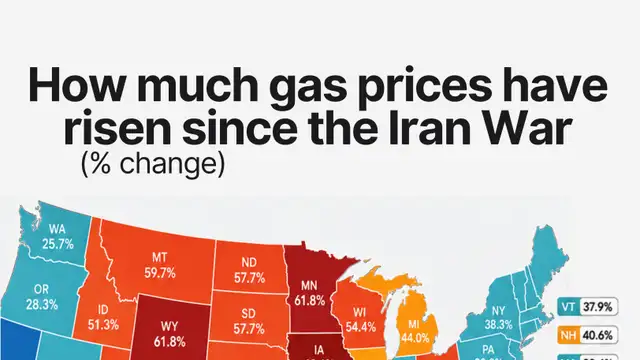
U.S. gas prices surge since Iran war, with Iowa up nearly 70%
How Brazil elects its president
A presidential candidate must receive more than 50% of valid votes to win in the first round. Blank and invalid ballots are not included when calculating that majority.
If no candidate crosses that threshold, the two leading candidates will advance to a runoff on October 25.
The president and vice-president are elected together on a single ticket for a four-year term.
What else is being decided?
Each voter will make six selections:
- Federal deputy
- State or district deputy
- Senator
- A second senator
- Governor
- President
Brazil is electing two senators from each of its 26 states and the Federal District, producing 54 Senate seats in total. Senators serve eight-year terms.
All 513 seats in the Chamber of Deputies are also being contested.
Governors must win more than half of valid votes to avoid a second round. Runoffs may therefore be held in individual states even if the presidential election is settled in the first round.
Why the election matters
The contest will determine the direction of Latin America’s largest economy and most populous country.
RECOMMENDED FOR YOU
Israel's Ben-Gvir calls for dismantling Palestinian Authority and Hamas
The result could affect Brazil’s environmental policy, management of the Amazon, economic reforms and relationships with China, the United States, the European Union and other Global South countries.
The election is also a test of whether Brazil’s political system can move beyond the intense polarisation that has characterised national politics since Jair Bolsonaro’s rise to power.
Possible outcomes
Lula wins in the first round
Lula would need more than half of all valid votes. Final surveys suggest this remains possible but unlikely.
Lula and Bolsonaro advance to a runoff
Polling indicates that this is the most probable outcome. A second-round campaign would run until October 25, with surveys showing little separation between the two candidates.
A surprise performance by another candidate
Augusto Cury, Ronaldo Caiado and Renan Santos remain well behind the two leaders but could influence whether the election proceeds to a runoff and how their supporters vote in the second round.
When will results be available?
Electronic counting can begin once voting ends at 8 p.m. GMT.
Brazil uses electronic voting machines that operate offline during voting. Results are transmitted to the electoral authorities after polls close and are generally counted within several hours.
Official results will be published by Brazil’s Superior Electoral Court.
RECOMMENDED FOR YOU

What you don't know about the latest generation of Chinese robots: Opinion
If required, the second round will take place on Sunday, October 25, 2026, with the same polling hours 11 a.m. to 8 p.m. GMT.
This story is written and edited by the Global South World team, you can contact us here.