New Zealand not close to decision on joining AUKUS pact, minister says

New Zealand not close to decision on joining AUKUS pact, minister says
By Lucy Craymer
New Zealand’s government is continuing "information gathering discussions" on future cooperation with the AUKUS security pact but is "a long way" from being able to make a decision on this, the country’s foreign minister said on Wednesday.
AUKUS is a two-stage defence pact formed in 2021 by the U.S., Britain and Australia as part of efforts to push back against China's growing influence in the Asia Pacific region.
RECOMMENDED FOR YOU

Brazil's electoral court threatens Meta with US$198,000 daily fine over election content
Foreign Minister Winston Peters said New Zealand must better understand the potential opportunities of cooperating with the pact on technologies, weigh up the economic and security benefits, and decide if it is in the national interest.
"The Government is a long way from this point of being able to make such a decision," he said in a speech to the New Zealand Institute of International Affairs in Wellington.
"But we should emphasise that it would be utterly irresponsible for any government of any stripe to not consider whether collaborating with like-minded partners on advances in technology is in our national interest."
The first stage, or "pillar", of AUKUS is designed to deliver nuclear-powered submarines to Australia, while a second pillar is focused on delivering advanced capabilities and sharing technologies across a range of areas.
There is no suggestion that New Zealand, which has a long history of being nuclear-free, would join the first stage.
Peters said before New Zealand could look at participating in Pillar 2, those involved in AUKUS would need to want New Zealand to participate.
"That precondition has not yet been met," he said.
New Zealand has become increasingly vocal about what it sees as growing security risks in the Pacific and more globally.
RECOMMENDED FOR YOU
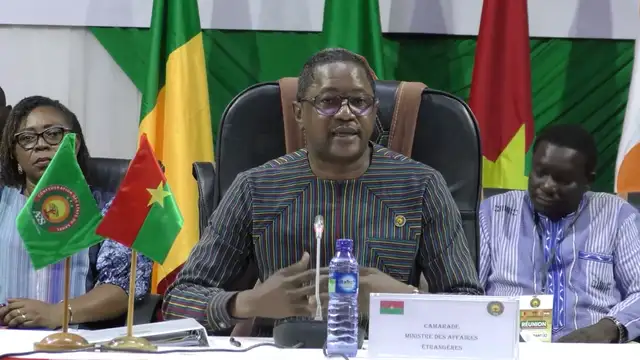
Burkina Faso, Mali and Niger rule out return to ECOWAS ahead of talks
"Remorseless pressure is being exerted across it as beachheads are sought and influence peddled," he said.
Peters stopped his speech at one point to ask a protestor bearing an anti-AUKUS sign to leave the auditorium. The woman was ultimately dragged out by security.
Domestic critics of joining AUKUS include former New Zealand Prime Minister Helen Clark, who has warned it would undermine the country's independent foreign policy.
Others have questioned AUKUS' aim of containing China and raised concern about its impact on New Zealand's anti-nuclear status.
Other countries seen as potential Pillar 2 partners in AUKUS are Canada, Japan and South Korea.
This article was produced by Reuters news agency. It has not been edited by Global South World.