Poland to reintroduce buffer zone at Belarus border, Tusk says
Poland to reintroduce buffer zone at Belarus border, Tusk says
By Pawel Florkiewicz and Barbara Erling
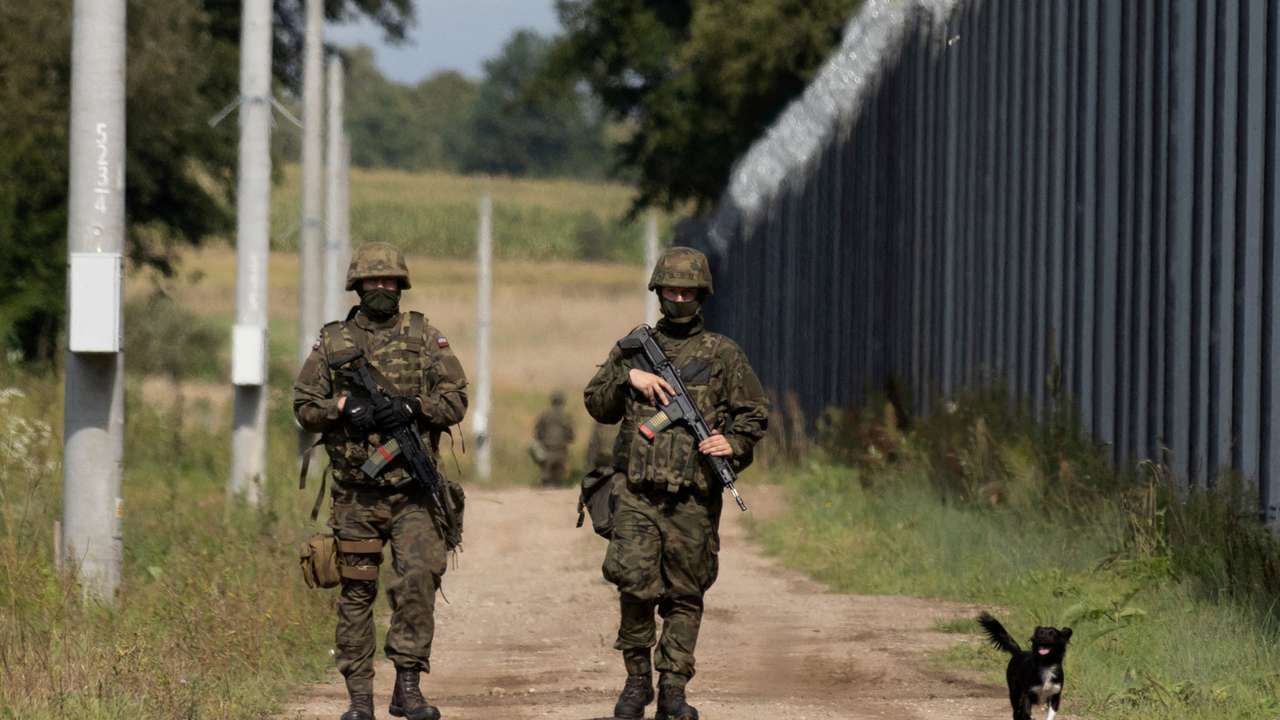
Poland will reintroduce a 200-metre buffer zone at the Belarus border at the beginning of next week, Prime Minister Donald Tusk said on Wednesday, after an attack on a soldier at the frontier left him fighting for his life.
The border has been a flashpoint since migrants started flocking there in 2021, after Belarus, a close Russian ally, reportedly opened travel agencies in the Middle East to offer a new unofficial route into Europe - a move the European Union said was designed to create a crisis.
RECOMMENDED FOR YOU
Zelensky accuses US of diverting missiles to Middle East as Ukraine awaits supplies
Belarus rejects the accusation that it helps to channel migrants to the Polish border. There was no immediate comment from Minsk on Tusk's announcement on Wednesday.
"It was recommended to us that we should quickly restore the 200-metre buffer zone in this area where possible... we are ready to take such a decision at the beginning of next week," Tusk told a press conference near the border.
In recent weeks there has been an increase in the number of migrants trying to cross illegally and border guards have reported a number of violent incidents.
On Tuesday, a Polish soldier was left in a life-threatening condition after he was stabbed through the fence on the border.
"We are not dealing with any asylum seekers here, we are dealing with a coordinated, very careful operation on many levels to break the Polish border and try to destabilise the country," Tusk said.
Poland plans to spend 10 billion zlotys ($2.55 billion) on strengthening its border with Belarus, and Defence Minister Wladyslaw Kosiniak-Kamysz said Poland was ready to increase the number of troops at the border from the 5,500 currently stationed there, but did not say by how many.
A buffer zone was initially introduced in 2021 by the previous nationalist Law and Justice (PiS) government.
At the time human rights advocates and members of Tusk's own Civic Coalition (KO) grouping criticised the move as they said it impeded efforts by aid workers to help migrants, including women and children, trapped on the border.
RECOMMENDED FOR YOU

‘Brazil has no president’ - Flavio Bolsonaro challenges Lula at Sao Paulo rally
Karolina Szymanska from refugee charity the Ocalenie Foundation said Tusk's new stance was "shameful".
"It continues the policy of Law and Justice," she said. "Most people who run away are people fleeing from violence, war and persecution."
The head of Tusk's office could not immediately be reached for comment.
Marcin Przydacz, a PiS lawmaker who served as a deputy foreign minister during the migrant crisis in 2021, said the buffer zone was necessary but it was hypocritical of Tusk to introduce the measure after criticising it in opposition.
This article was produced by Reuters news agency. It has not been edited by Global South World.