Sudan Roundup: Atrocity warnings, deepening security tensions, mounting political divisions

UN Security Council warns of an ‘imminent risk of mass atrocities’ in El Obeid
The United Nations Security Council has issued one of its strongest warnings since the start of Sudan’s war, expressing alarm over the “imminent risk of mass atrocities” in El Obeid, the capital of North Kordofan State. The warning follows reports that the Rapid Support Forces (RSF) have amassed significant reinforcements around the city, raising fears of a major ground offensive against an urban centre that is home to roughly half a million people. Council members demanded that the RSF halt any assault and called on all parties to protect civilians. International concern has intensified because of the precedent set in other parts of Sudan, particularly Darfur, where rights groups and UN officials have documented mass killings, displacement, and alleged war crimes. The crisis comes against the backdrop of what the UN describes as the world's largest displacement and hunger emergency. More than 11 million people have been forced from their homes since the conflict erupted in April 2023, while humanitarian agencies warn that conflict-driven hunger continues to worsen across Sudan and neighbouring states.
RSF deploys forces across Nyala in bid to restore security and control
The RSF has launched a major security deployment across Nyala, the capital of South Darfur, following growing concerns over instability, tribal tensions, and challenges to its authority in the city. According to reports, additional forces have been deployed to key neighbourhoods, transport routes, and strategic locations as the group seeks to strengthen public order and reassure residents. Nyala has become increasingly important politically and militarily since the Sudan Founding Alliance (TASIS) designated it as the administrative centre of its proposed government earlier this year. The city has also experienced heightened tensions after protests linked to the detention of local RSF commander Issam Mukhtar, prompting authorities to move quickly to prevent tribal unrest. The security operation comes as RSF commanders face pressure from multiple fronts, including reported defections, Sudanese army offensives, and continued drone strikes targeting RSF-controlled areas. Analysts say maintaining stability in Nyala is critical to the group's efforts to preserve control across Darfur.
Former Kassala governor accuses Burhan administration of fuelling tribal divisions
Former Kassala Governor Saleh Ammar has accused the administration of General Abdel Fattah al-Burhan of contributing to growing tribal tensions and political fragmentation in eastern Sudan. The criticism reflects longstanding concerns that tribal rivalries are being manipulated for political and military purposes during the country's ongoing conflict. Eastern Sudan has experienced repeated disputes involving tribal identity, citizenship, political representation, and access to resources. Community leaders have previously signed agreements rejecting hate speech and committing to traditional reconciliation mechanisms, yet tensions continue to resurface. The allegations are particularly significant because eastern Sudan has remained strategically important throughout the war. Political observers warn that further tribal polarisation could destabilise areas that have so far avoided the scale of destruction seen in Khartoum, Darfur, and Kordofan. The accusations also add to broader criticism facing Burhan's administration regarding governance, inclusivity, and its handling of regional grievances.
South Sudan election commission allocates funding for December polls
In neighbouring South Sudan, the National Elections Commission (NEC) has announced plans to distribute approximately 5 million South Sudanese pounds to state-level offices as preparations continue for the country's scheduled December elections. The commission has simultaneously appealed for greater institutional and public support to ensure the electoral process proceeds successfully. The announcement comes amid concerns about logistical readiness, political tensions, and funding challenges surrounding South Sudan's long-delayed democratic transition. Electoral authorities argue that stronger cooperation between government institutions, political parties, civil society organisations, and international partners will be necessary to guarantee credible polls. The elections are widely viewed as a critical test for South Sudan's peace process and political stability. Delays or disputes could have implications beyond South Sudan's borders, particularly given the interconnected security and humanitarian challenges affecting both South Sudan and Sudan.
RECOMMENDED FOR YOU
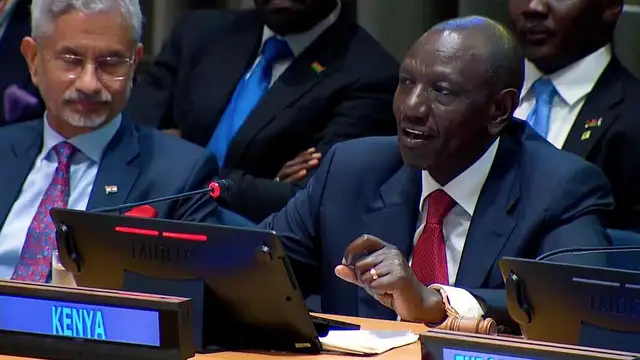
‘Africa cannot remain at the margins’ - Ruto demands UN Security Council reform
South Sudan mourns former Upper Nile Speaker Joseph Deng Faroj
South Sudanese political figures, community leaders, and residents are mourning the death of Joseph Deng Faroj, the former Speaker of the Upper Nile State Legislative Assembly. Faroj was regarded as an influential figure in Upper Nile politics and played a prominent role in regional governance during periods of significant political transition. His death has prompted tributes recognising his contribution to legislative affairs, public service, and political dialogue in one of South Sudan's most strategically important states. Upper Nile has long been central to South Sudan's political and security landscape because of its ethnic diversity, oil resources, and history of conflict. Faroj's passing comes at a sensitive moment as South Sudan prepares for elections and continues efforts to implement key provisions of its peace agreement. Political observers note that the loss of experienced leaders can have a significant impact on local political dynamics during periods of transition. Together, these developments highlight the interconnected crises shaping Sudan and South Sudan: escalating conflict, fears of mass atrocities, tribal tensions, fragile governance, and the continuing struggle to build stable political institutions amid one of the region's most challenging security environments.
This story is written and edited by the Global South World team, you can contact us here.