Battery diversification: The New Asia connection
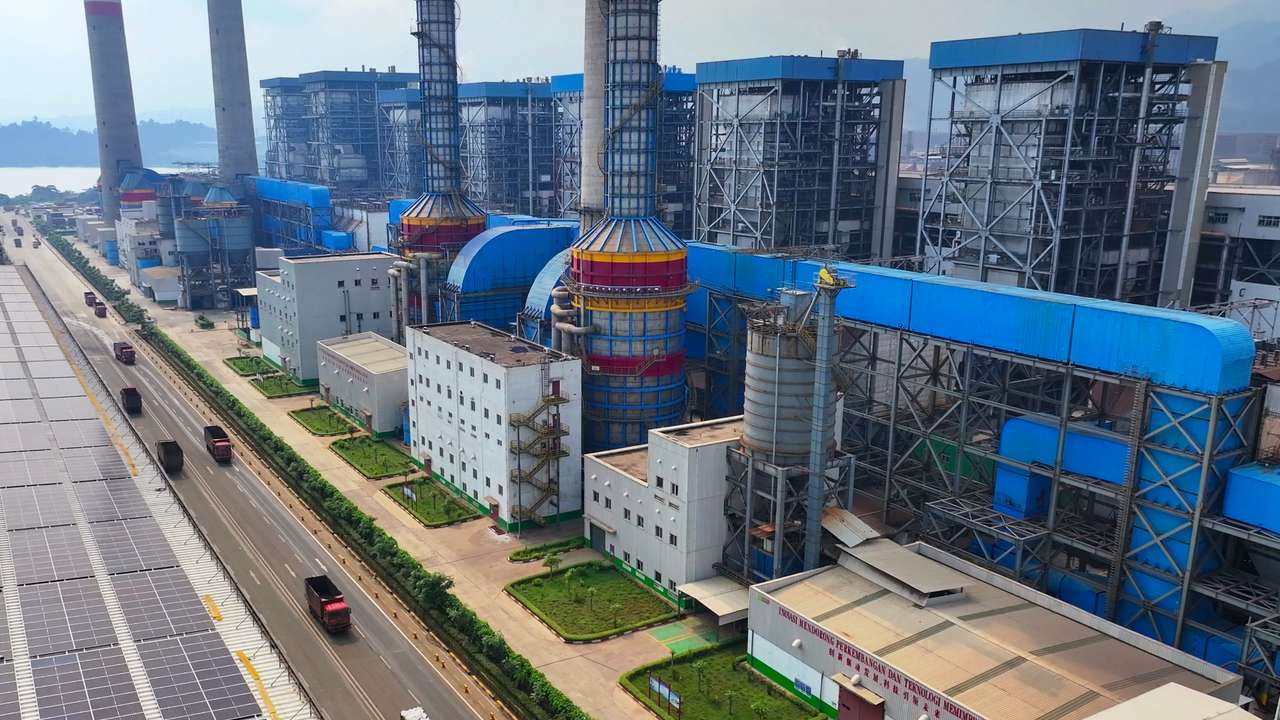
Southeast Asia’s battery industry is expanding, but the investment opportunity is not simply about building more factories.
The real question is whether countries can develop complementary strengths and connect them into a competitive regional supply chain.
Announced investments and manufacturing capacity make impressive headlines. Yet a factory may operate below capacity, while a country exporting processed minerals may capture only a limited share of the technology and value created.
The International Energy Agency’s (IEA) Energy Technology Supply Chains in Southeast Asia report offers a useful starting point. The region had around 40 gigawatt-hours (GWh) of battery-cell manufacturing capacity in 2025; announced projects could lift this above 100 GWh by 2030, if they materialise.
More than half of the region’s existing capacity is linked to companies headquartered in China, a share that could reach three-quarters by 2030. Chinese investment has been a major driver in building this capacity across Southeast Asia, and host countries are now adding their own strengths: suppliers, engineering talent, research and export platforms. The result is a more diversified and resilient regional supply chain.
RECOMMENDED FOR YOU
Why so much of the world's waste never gets recycled
Vijay Rao, vice-president of Frost & Sullivan Asia-Pacific in Sydney, points out that different countries have different strengths to offer.
“The most important factors are supplier depth, engineering capabilities, infrastructure, energy reliability, logistics efficiency, policy consistency and access to export markets,” he said.
These determine whether factories can remain competitive after incentives attract investors. Production yields, quality, energy costs and reliable customer demand matter more than installed capacity alone.
Indonesia: Beyond nickel
Indonesia illustrates how a strong resource base can become the starting point for a wider industry.
The United States Geological Survey estimated that Indonesia produced 2.6 million metric tonnes of mined nickel in 2025, approximately two-thirds of global output, with reserves of 62 million tonnes.
Its downstreaming strategy has attracted investment in smelting, refining and battery manufacturing, including HLI Green Power in Karawang, West Java.
The joint venture’s first phase has reported annual cell production capacity of 10 GWh, and production began in 2024.
The next opportunity lies beyond processing volumes, in the industrial capability the country builds around them.
RECOMMENDED FOR YOU

What is APEC's 'Heart to Heart Connectivity'? Opinion
Farid Wijaya, research manager for sectoral decarbonization at Indonesia’s Institute for Essential Services Reform (IESR), said: “Indonesia should not measure downstreaming success simply by tonnes of nickel processed or investment announced.”
That points to the next stage of the strategy: ensuring that export growth is matched by domestic companies gaining technology, skilled employment and stronger positions in the supply chain.
Indonesia now has the opportunity to develop local suppliers, engineering expertise, industrial research and technology transfer, building capabilities that reach beyond nickel.
Battery chemistry widens that opportunity. Nickel-rich batteries remain important where energy density is critical, but lithium iron phosphate (LFP) batteries accounted for more than 55% of electric-vehicle batteries deployed globally in 2025, according to the IEA.
Farid argues that Indonesia’s battery strategy should be “technology-neutral and market-led.”
For investors, this broadens the opportunity: Indonesia’s competitiveness can rest on supplier networks, skills and technology as well as on nickel.
Technology choices can then follow customer requirements, cost and performance.
Thailand and Vietnam: Different strengths, complementary roles
Beyond raw materials, Southeast Asia has already been able to develop large-scale expertise through the automotive industry. Thailand, for instance, hosts important supplier networks and vehicle manufacturing facilities.
RECOMMENDED FOR YOU
South Africa election results 2026: ANC suffers historic defeat as DA and MK Party gain ground
Chinese electric-vehicle manufacturers are expanding there, while Japanese manufacturers retain a significant industrial footprint, particularly in hybrid technology.
These capabilities create opportunities in power electronics, thermal management, vehicle components and manufacturing services. Suppliers able to serve different vehicle platforms may be better positioned than those dependent on a single manufacturer or technology.
Vietnam offers a strong foundation in electronics manufacturing and export integration. By the end of June 2026, Samsung’s cumulative investment in Vietnam had reached about US$24 billion, while its cumulative mobile-phone exports from the country had reached US$500 billion, according to Vietnam Government News.
Samsung’s US$220 million research and development centre in Hanoi, opened in 2022, also demonstrates the potential to move beyond assembly into more knowledge-economy industries.
Electronics manufacturing is not interchangeable with battery production. Nevertheless, Vietnam’s engineers, suppliers and export-oriented industrial base could support battery-related electronics, control systems and equipment.
The opportunity is for countries to build on different strengths, then connect them commercially rather than manufacture the same products.
From national projects to regional integration
A competitive battery economy across New Asia requires more than factories scattered across neighbouring countries.
Materials and components must move efficiently across borders, supported by reliable energy, skilled workers, compatible standards, predictable policies and access to export markets.
RECOMMENDED FOR YOU
Brazil leads 2025 fertiliser imports
Investors should therefore assess utilisation, production yields, repeat orders, exports, local procurement, skilled employment and profitability.
Governments should also examine how much technology and supplier spending remains in the domestic economy, and whether projects can survive without continuous public support.
Countries such as Thailand, Vietnam, Indonesia and Malaysia need not replicate one another’s industries.
Their opportunity lies in developing complementary capabilities across materials, cells, electronics, vehicle assembly, power systems and stationary energy storage.
New Asia has the industrial base, engineering talent and growing markets to play a larger role in the global battery economy.
However, more factories and investment announcements alone will not secure that position.
The real measure of success is whether projects can produce competitively, build local capabilities and connect into reliable cross-border supply chains.
New Asia Forum is New Asia's annual investment platform. It is powered by Danantara Indonesia and produced by Richard Attias & Associates.
RECOMMENDED FOR YOU

Lebanon's Aoun demands Israeli withdrawal, warns Iran against interference
New Asia Forum. Gateway to the New Asia. Where Vision is Invested. Request an invitation
