Five lessons from Go Global South for entrepreneurs expanding across borders

This article was produced in partnership with Go Global South
For many founders, an international business is the key to successfully scaling, but moving to unfamiliar markets can be daunting.
At IQ Digital Summit Bucharest, Radu Georgescu, founder of GECAD and chairman of SeedBlink, and Lucian Despoiu, president of IMPACTUM Group, opened up about their own experiences to help aspiring entrepreneurs capitalise on the opportunities of internationalisation. Their conversation offers five practical lessons for new business leaders looking beyond their home markets.
Quotations have been translated from Romanian unless originally spoken in English.
1. Test your international ambition against your customers
Georgescu’s test for a founder’s global ambitions comes down to a simple question: “Where are your customers now?” Watch the discussion.
RECOMMENDED FOR YOU

What is APEC's 'Heart to Heart Connectivity'? Opinion
For entrepreneurs, that illustrates the importance of testing international expansion early on. Speaking to potential customers abroad can reveal whether a product solves a real-world problem and provide insight into pricing and future development.
Defining a specific customer group in another country allows a business to discover and analyse its needs. Those conversations give founders the data they need to focus effort - whether that be through financial resources or management attention.
2. Choose your next market around the opportunity
Despoiu described how his work brought him to markets including Indonesia, the Philippines, Mexico and Brazil. His experience raises a question for other founders: where could their existing skills and capacities address a need they understand? Watch the discussion.
For an entrepreneur considering expansion, market selection is about much more than simply population size, infrastructure or costs.
Assess the customers you could realistically reach, the alternatives they use right now and the difficulty of delivering there. A potential audience only becomes a business opportunity when you understand the triggers that will initiate a purchase.
3. Combine confidence with a willingness to learn
Even when he speaks in his native Romanian, Despoiu uses the English words “humble” and “bold” to encapsulate the attitudes he feels international business requires. His account of working in Indonesia emphasises the need to understand local expectations and ways of building relationships. Watch the discussion.
The key is to make learning part of growing. For instance, ask local customers and partners how they make purchasing decisions, what they look for in partners and where foreign businesses get it wrong.
Bring a clear proposition, then encourage challenges to those assumptions. Experience - yours or others’ - will help define better questions but local knowledge is the essential ingredient in finding the answers.
RECOMMENDED FOR YOU
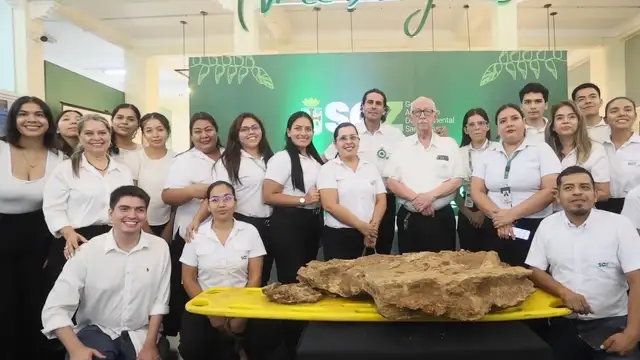
Bolivia presents fossils estimated to be up to 650 million years old
4. Put financial discipline alongside growth
Reflecting on advice he would give his younger self, Despoiu said: “Get yourself a finance person who will rein you in.” Watch the discussion.
That means preparing a transparent budget with clearly established assumptions: from the cost of acquiring customers through payment delays and the resources needed to support commercial operations. When decisions need to be taken about further investment, the criteria for a green light should already have been established.
Financial scrutiny should be welcomed by founders because it offers a clearer basis for committing to growth.
5. Choose partners whose judgment and values you trust
Discussing business partnerships, Despoiu put the emphasis on people: “The person is the key.” It’s not just around skills, ability and experience but crucially also values.
That means that choosing a partner requires looking beyond the CV or address book.
Talk about how you would handle disagreement, financial challenges and diverging priorities. Agree in advance on who takes decisions and the best way to split responsibilities. Through conversations like this, founders can learn which relationships will deliver resilience when times inevitably get tough.
This article was produced in partnership with Go Global South
The Go Global > South programme, developed by Upgrade 100 and IMPACTUM Group, is seeking up to ten technology start-ups based in Romania and Central and Eastern Europe that want to expand internationally, initially focusing on Southeast Asia.
RECOMMENDED FOR YOU
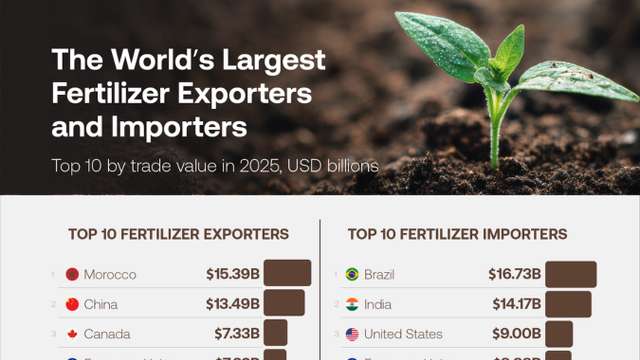
Brazil leads 2025 fertiliser imports
The programme offers mentoring, connections to investors and support in understanding target markets. It primarily targets companies between seed and Series A, although advanced pre-seed businesses may qualify. Participation requires neither giving up equity nor paying a success fee.
Applications close on 15 December 2026. Eligible founders can complete the official application form, submitting a pitch deck and explaining their product, the problem it solves and their ambitions for international growth.
This story is written and edited by the Global South World team, you can contact us here.
