Portugal's government loses confidence vote, election looms
By Sergio Goncalves and Andrei Khalip
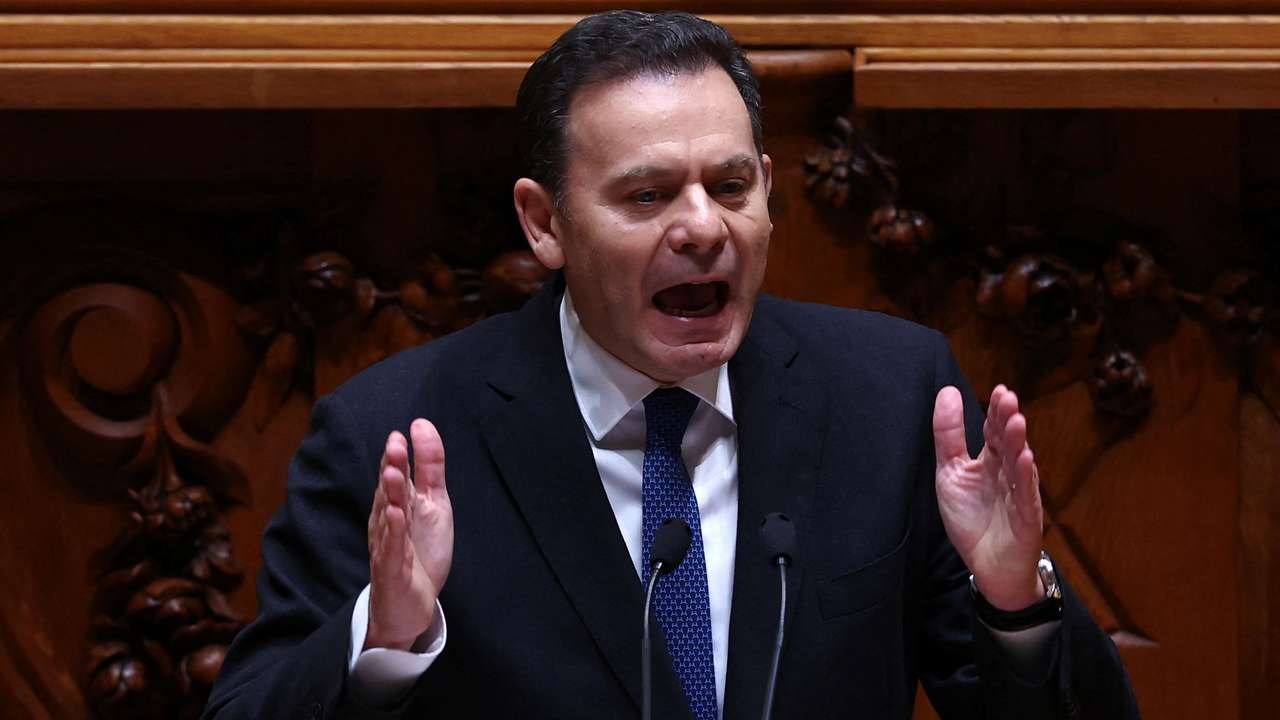
Portugal's centre-right minority government collapsed on Tuesday after losing a vote of confidence, with the country now likely to head into its third early general election in as many years.
Lawmakers voted 142-88, with zero abstentions, against the motion of confidence that was presented last Thursday by Prime Minister Luis Montenegro, in his job for 11 months. He called the vote after the opposition questioned his integrity over the dealings of a consultancy firm he founded which is now run by his sons.
Montenegro has denied wrongdoing or any ethical shortcomings by the firm, which has contracts with private companies.
RECOMMENDED FOR YOU

LIVE: Lula stays in power, beats Bolsonaro in stunning comeback
"The insinuation that I mixed my business and political activity is completely abusive, and even insulting. A repeated falsehood does not become the truth, but it contaminates the political environment... this is what populism feeds on," he told parliament before the vote.
Montenegro's administration now assumes a caretaker role. It is up to President Marcelo Rebelo de Sousa whether to call a parliamentary election after he consults the main political parties on Wednesday and his advisory Council of State on Thursday. He has said a new ballot could be held in mid-May.
"We tried everything to avoid a snap election," Montenegro told reporters after the vote. His administration had tried to convince the main opposition Socialists to abstain from the vote, or to agree on terms for the government to withdraw the motion.
Montenegro said he had proposed that he face a parliamentary committee inquiry into his family's company that would last up to two months, something he had previously ruled out, but the Socialists refused to negotiate setting a time limit.
Any lengthier investigation would have worn out the government, Montenegro said.
Socialist leader Pedro Nuno Santos labelled the attempts to negotiate just minutes before the vote "desperate and shameful", saying that Montenegro was the only one to blame for the crisis and "unfit to govern".
STABILITY SEEN ELUSIVE, VOTERS WEARY
An early ballot is all but inevitable but analysts see no strong mandate for any political force emerging from it.
RECOMMENDED FOR YOU

New Asia Forum: Indonesia to set out progress on sustainable AI data centres
Voters are already showing election fatigue and disillusionment with politicians.
"This seems like a joke, no one understands why there's a new election so soon. Politicians blame each other, but all of them are being irresponsible," said Joao Brito, a 70-year-old retired civil servant in downtown Lisbon.
Political scientist Adelino Maltez of Lisbon University said opinion polls showed very little change in voter preferences from the March 2024 election, which Montenegro's Democratic Alliance (AD) won by a slender margin, securing 80 seats in the 230-seat house.
The AD and the Socialists, who now have 78 seats, are neck-and-neck in most surveys.
"The problem is that the new election will not be conclusive... The AD and the Socialists are tied. It is a situation that will be difficult for them to navigate," Maltez said. A centrist pact between Montenegro's Social Democrats and the Socialists was the only solution, despite the differences in their policy proposals, he said.
The two main rivals only had such an accord in parliament once, in 1983-1985.
"If they don't do it, it will be more of the same instability," Maltez said.
This article was produced by Reuters news agency. It has not been edited by Global South World.