Who is Zanetor Agyeman-Rawlings, the Ghanaian minister who challenged COP31’s president?
Key Takeaways
- Agyeman-Rawlings practised medicine in Ireland before entering Ghanaian politics.
- She won her first parliamentary election in 2016 after a court challenge.
- At COP31, she pressed for climate grants and a timetable for delivering them.
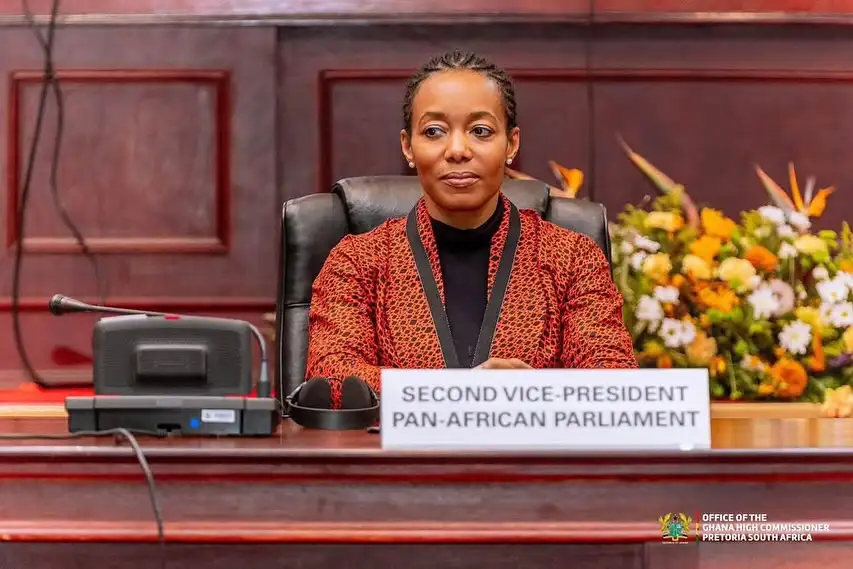
Zanetor Agyeman-Rawlings had changed her flights twice to stay for the end of the UN climate talks in Antalya, Turkey.
She broke the internet when COP31 President Murat Kurum interrupted her at the closing session; she pointed out that another delegate had been allowed to finish. She returned to the floor and completed the statement. Kurum later apologised to her and the African Group of Negotiators, which Ghana chairs.
At the previous summit in Belém, countries had called for efforts to at least triple funding by 2035 to help developing countries prepare for climate impacts. But Agyeman-Rawlings wanted to know what figure they were tripling, how much they would deliver each year, and whether the public could track it. She called for grants so countries could pay for protections such as flood defences without adding to their debt.
The Accra disaster that drew her into politics
Agyeman-Rawlings, 48, is the eldest of four children of Jerry John Rawlings, Ghana’s former president, and Nana Konadu Agyeman-Rawlings, a former first lady who founded the 31st December Women’s Movement and ran for president in 2016. In an interview during her first parliamentary campaign, she recalled reaching for the first-aid box when someone got hurt.
She considered joining the air force because she loved flying, but chose medicine. She qualified at the Royal College of Surgeons in Ireland in 2003 and spent about a decade in general practice and family medicine.
RECOMMENDED FOR YOU
'All these governments have the same aim': a Palestinian perspective on Israel's settler expansion
In June 2015, flooding and a petrol station fire killed more than 150 people in Accra, Ghana. Agyeman-Rawlings helped survivors and became more involved in community work in Klottey-Korle. The following year, as a parliamentary candidate, she joined a clean-up near the disaster site and spoke about the health risks she knew from medicine, including cholera. She won the seat for the National Democratic Congress in 2016 and secured a third term in 2024 with nearly 63% of the vote.
From Ghana’s Parliament to continental leadership
After chairing Ghana’s parliamentary committee on security and intelligence, Agyeman-Rawlings took on a continent-wide role. In April 2026, lawmakers meeting in Midrand, South Africa, elected her second vice-president of the Pan-African Parliament, the African Union’s legislative body. She held West Africa’s seat on the Bureau, the leadership team that sets draft agendas, coordinates committees and prepares the parliament’s draft budget.
Weeks later, she represented the parliament’s president at a meeting of the African Commission on Human and Peoples’ Rights in Banjul, The Gambia. She described rights in everyday terms, including whether a child can get to school safely, whether a woman can access medical care and whether she can take part in public life without fear.
President John Dramani Mahama swore her in as Ghana’s minister for environment, science and technology in August. During her vetting, she called for government agencies to work together more closely on illegal mining and its effects on public health. By October, the Pan-African Parliament referred to her as its former second vice-president. At COP31 the following month, she spoke as Ghana’s environment minister on behalf of the African Group of Negotiators.
Why her demand matters beyond Ghana
At the same summit, Palau’s Minister of State Gustav Aitaro spoke for small island countries about rising seas and the reefs that sustain fishing communities. The UN Environment Programme estimates that developing countries will need about $305 billion a year by 2035 to adapt to climate impacts. Even if international public funding triples by then, the agency estimates it would cover less than a third of that need.
African negotiators also sought more funding to help communities recover after climate disasters destroy homes and livelihoods. Countries agreed to improve access to technical assistance for those losses, but COP31 ended without agreement on its main political text. When the talks move to Addis Ababa in November 2027, the questions Agyeman-Rawlings raised in Antalya will still matter to countries far beyond Ghana. How much money is available, when will it arrive and how much will come as grants?
This story is written and edited by the Global South World team, you can contact us here.